Refund Guaranteed


Why choose us
1060 Steel
Forged Blade
Collector Quality
Trusted Globally
Inspired by Japan
Hana Sakura Katana - 桜花刀
Included with your order
Note: Engraving placement and orientation may vary by blade model (hamon, geometry, and flat area).
Free Shipping over $250
No Bots, No AI
Refund Guaranteed
Free Shipping over $250
No Bots, No AI
Our team is here to help with any questions or concerns.
We’re always happy to assist you — don’t hesitate to reach out.
Why choose us
1060 Steel
Forged Blade
Collector Quality
Trusted Globally
Inspired by Japan

Hana Sakura Katana - 桜花刀
Specifications
- Full tang in handle
- SHARP
- Hand-forged
- Blade material: 1060 carbon steel
- Habaki material: Brass
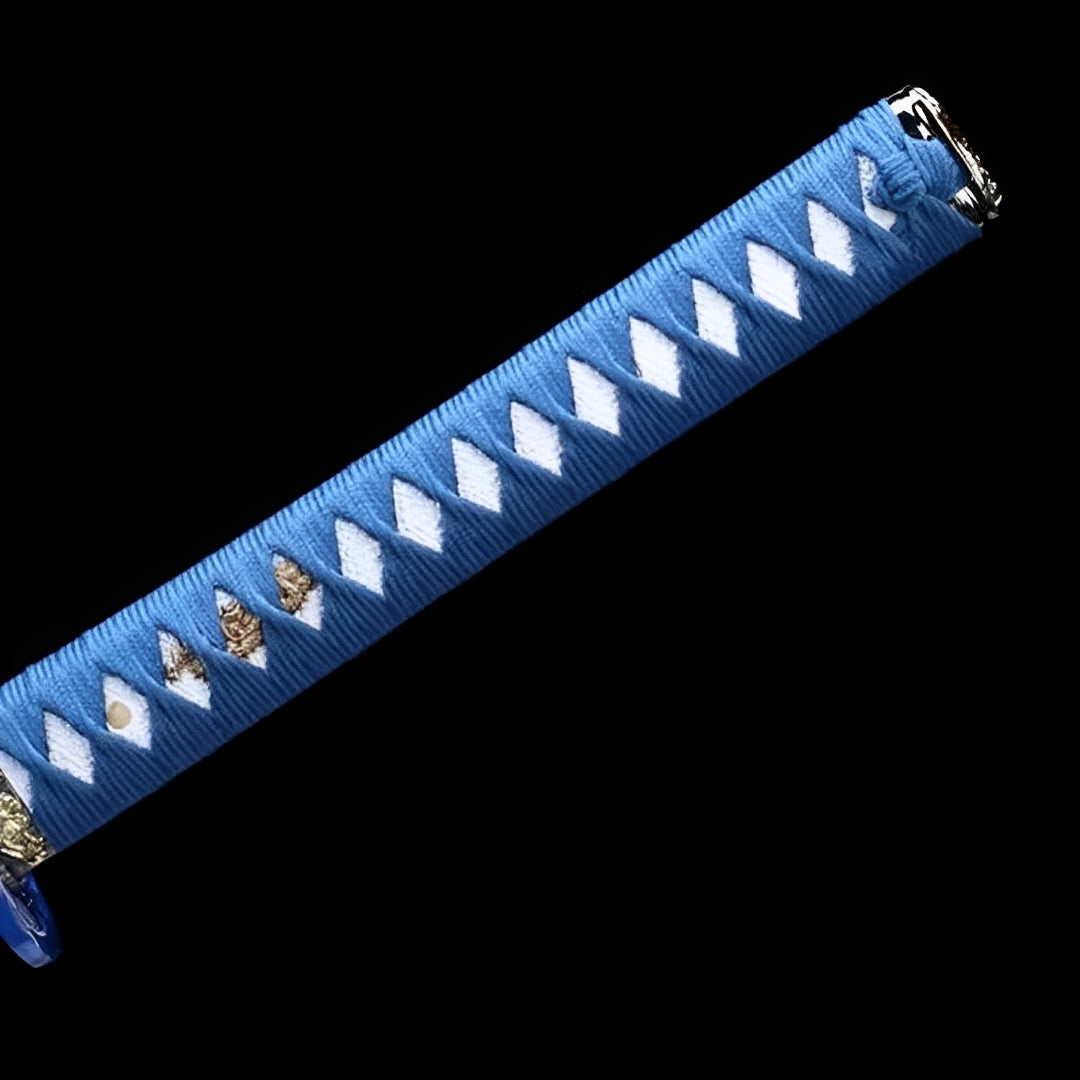
- Synthetic ray skin on tsuka
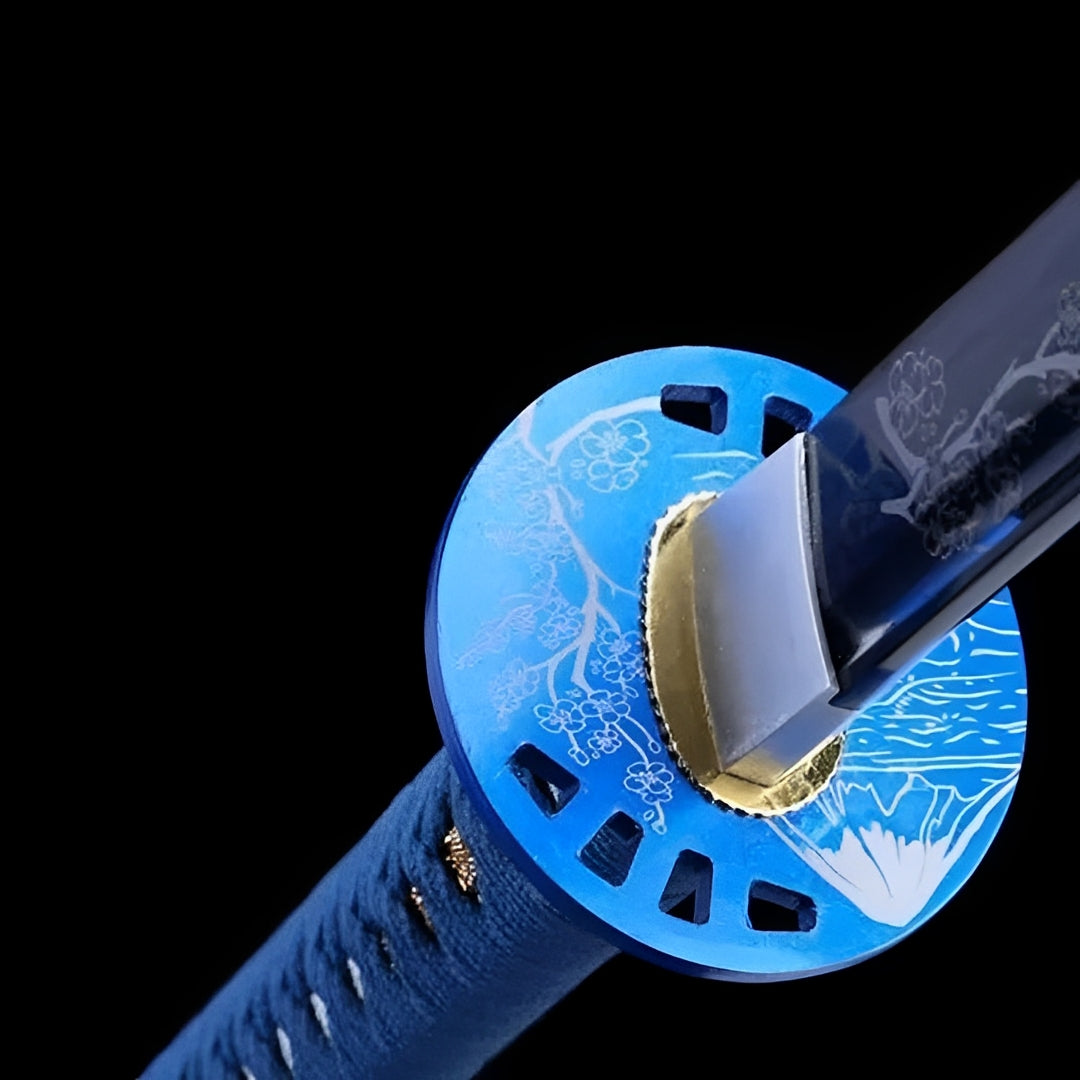
- Tsuba in finely sculpted iron alloy
- Tsuka-ITO in cotton
- Overall size: 105cm
- Blade size: 72cm
- Blade width: 3.2cm
- Blade thickness: 0.7cm
- Handle size: 30cm
- Includes: Katana and scabbard
Hana Sakura Katana - Hanami Celebration Festival Blade
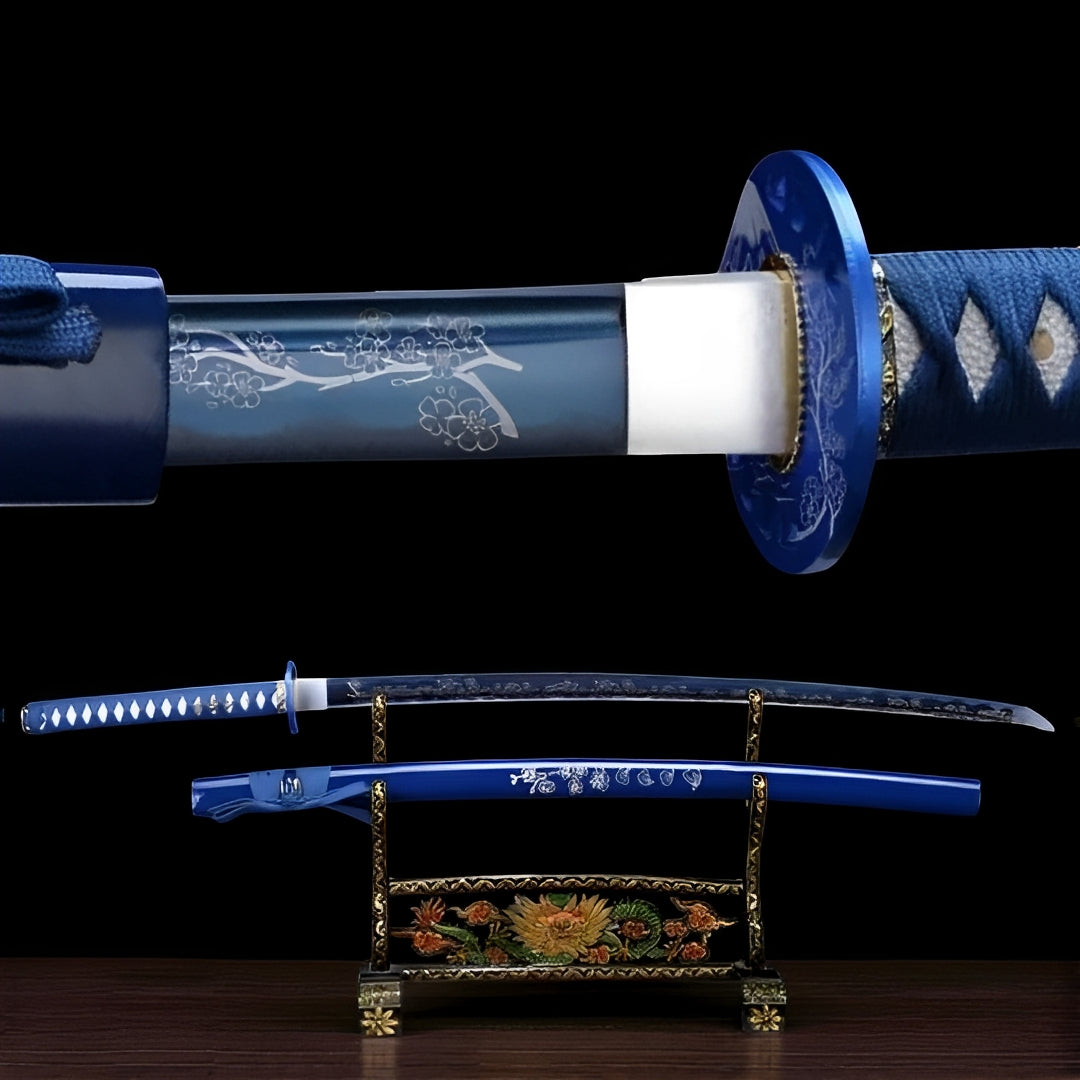
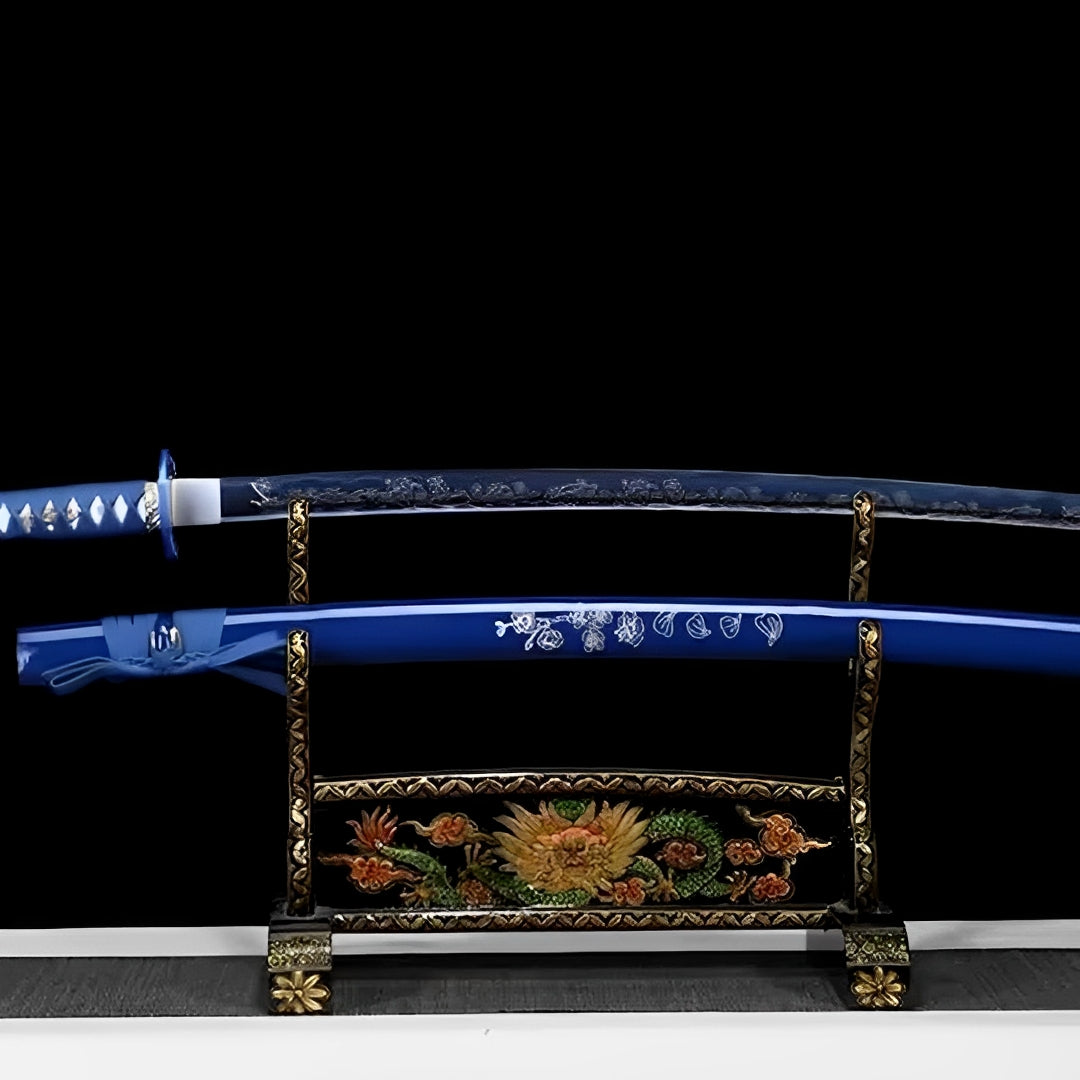
Celebrate ephemeral joy with Hana Sakura Katana, blade honoring Japan's most beloved social ritual. This festive cherry blossom celebration sword refuses melancholy - midnight blue evoking twilight picnics under blooming branches, silver-etched sakura capturing that perfect moment between bud and scatter, the entire aesthetic embodying hanami's essential philosophy: gather friends, spread blankets beneath flowering trees, drink sake, laugh loudly, celebrate beauty precisely because it won't last, asking whether you'll spend cherry blossom season contemplating impermanence philosophically or celebrating transience joyfully through communal revelry under petals falling like spring snow.
Hanami Social Tradition
While previous cherry-themed blades explored philosophical melancholy (mono no aware), Hana Sakura celebrates hanami (花見 - "flower viewing") - Japan's centuries-old tradition of gathering beneath blooming cherry trees for festive outdoor parties. This social celebration blade captures hanami's essential spirit: yes, blossoms last only days, but that brevity makes celebration urgent, the fleeting beauty becomes excuse for gathering, the impermanence transforms into reason celebrating rather than cause for mourning.
Hanami specifically began as aristocratic practice during Heian period, became samurai tradition during medieval era, democratized during Edo period when commoners joined, eventually becoming national obsession where weather forecasters track "cherry blossom front" moving across Japan, where companies reserve prime viewing spots weeks in advance, where entire nation's social calendar revolves around week-long petal peak. This national ritual sword honors tradition where nature's beauty becomes catalyst for human connection.
The tradition's specific practices matter: spreading blue tarps beneath trees (that blue echoing this saya's color), sharing food prepared specially for occasion, drinking sake, singing songs, bonding with coworkers/friends/family, the cherry blossoms themselves becoming backdrop for human celebration rather than isolated object of aesthetic contemplation. That social emphasis distinguishes hanami from solitary cherry viewing - it's not about alone poet composing melancholy haiku but about dozens of people laughing together under flowering branches.
Traditional samurai specifically practiced hanami as warrior bonding ritual - the blossoms' brief beauty mirrored samurai lives potentially ending any battle, the celebration affirming life through acknowledging mortality, the communal gathering reinforcing clan bonds necessary for coordinated warfare. The warrior bonding blade connects to that martial tradition where cherry viewing served tactical social function strengthening unit cohesion.
Contemporary collectors increasingly appreciate Japanese traditions emphasizing community and celebration over individual angst, recognizing that mono no aware's philosophical depth risks becoming depressive rumination without balancing it against hanami's joyful acceptance that beautiful things should be enjoyed not just contemplated.
Midnight Blue Festivity
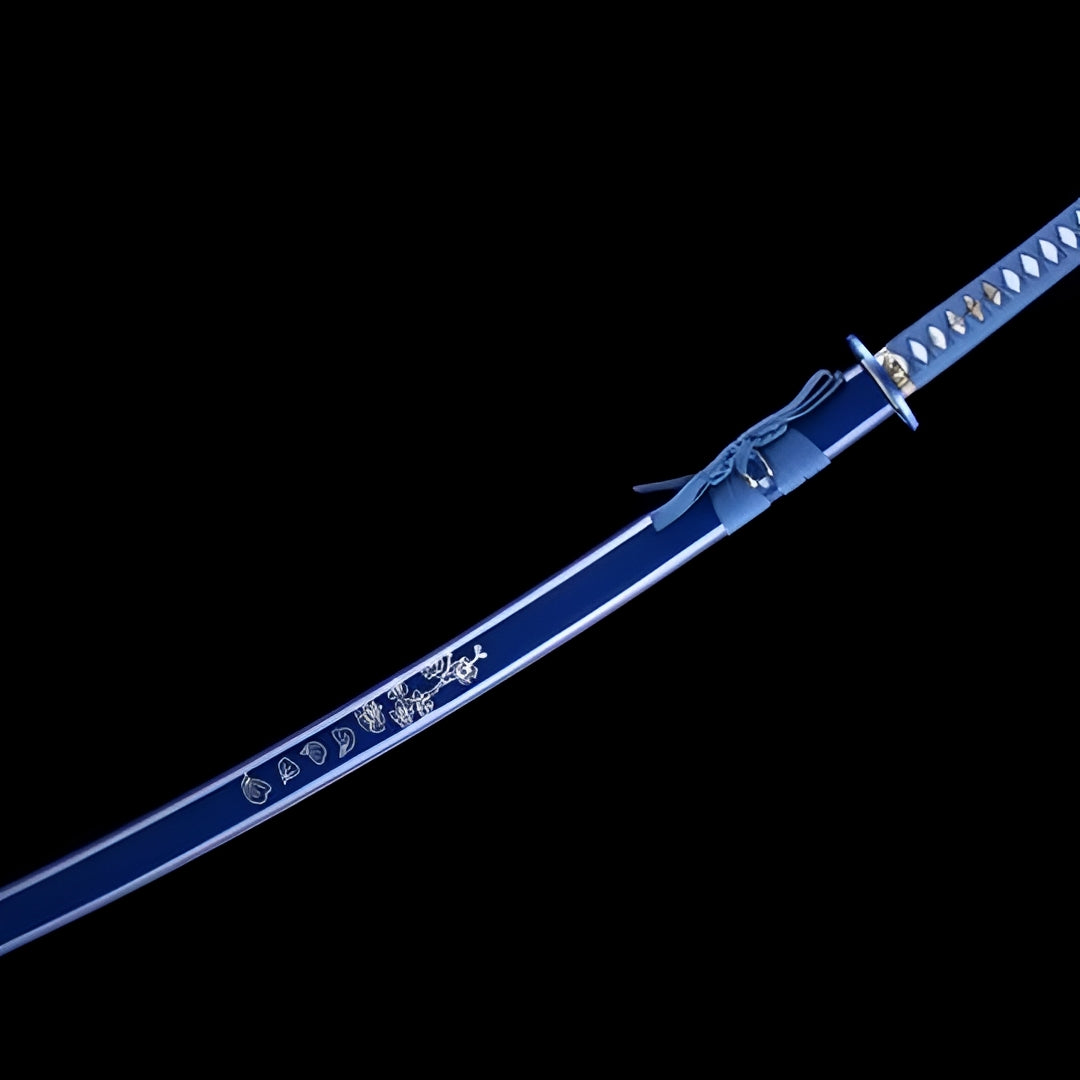
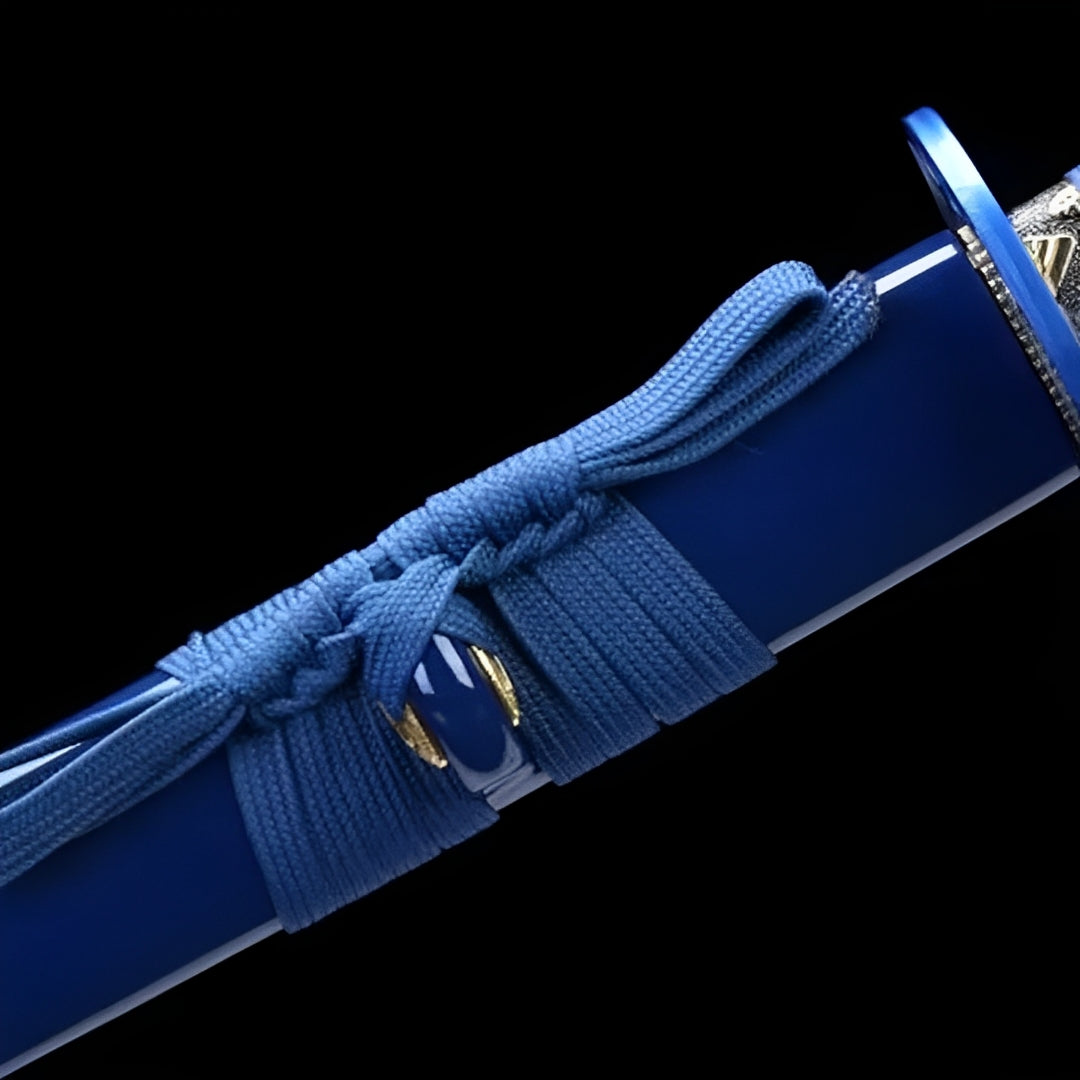
The deep navy-to-royal blue creates this blade's defining feature - not bright cheerful blue suggesting daytime optimism but twilight blue evoking those magical hanami moments when day yields to evening, when lanterns illuminate trees, when alcohol warmth combines with spring breeze chill, when celebration peaks as darkness enhances cherry blossoms' ethereal glow. This twilight party blade captures hanami's most beloved atmosphere: yozakura (夜桜 - night cherry viewing) where artificial light transforms white blossoms into glowing apparitions.
Unlike Hizakura's paradoxical white blade representing night cherries conceptually, this blue captures actual experience of hanami at twilight - the darkening sky's deep blue providing canvas against which pink-white blossoms seem to float luminously, the specific atmospheric color any hanami veteran remembers from best evenings spent beneath flowering trees. The memory color sword channels that precise shade etching itself into memory: the blue of spring twilight, sake-warm contentment, friendship laughter, petals occasionally drifting down adding perfect randomness to carefully planned celebrations.
Traditional Japanese color aesthetics specifically celebrated ai (藍 - indigo blue) as sophisticated alternative to bright primaries, the deep blue suggesting both elegance and accessibility (unlike royal purples or elite golds). Hanami democratization meant everyone participated regardless of class, the blue therefore becoming "people's color" - refined enough for nobles, affordable enough for commoners, beautiful enough satisfying universal aesthetic hunger.
The specific shade also suggests festivity without frivolity - not childish bright blue but adult sophisticated blue, not aggressive attention-seeking but confident self-assured blue, not desperate "look at me" but calm "yes, this is celebration and we're comfortable with joy" blue. The mature celebration color proves that adults celebrating beauty don't require loud garish announcements; deep blue whispers "we know how to party with sophistication."
Silver Sakura Etching
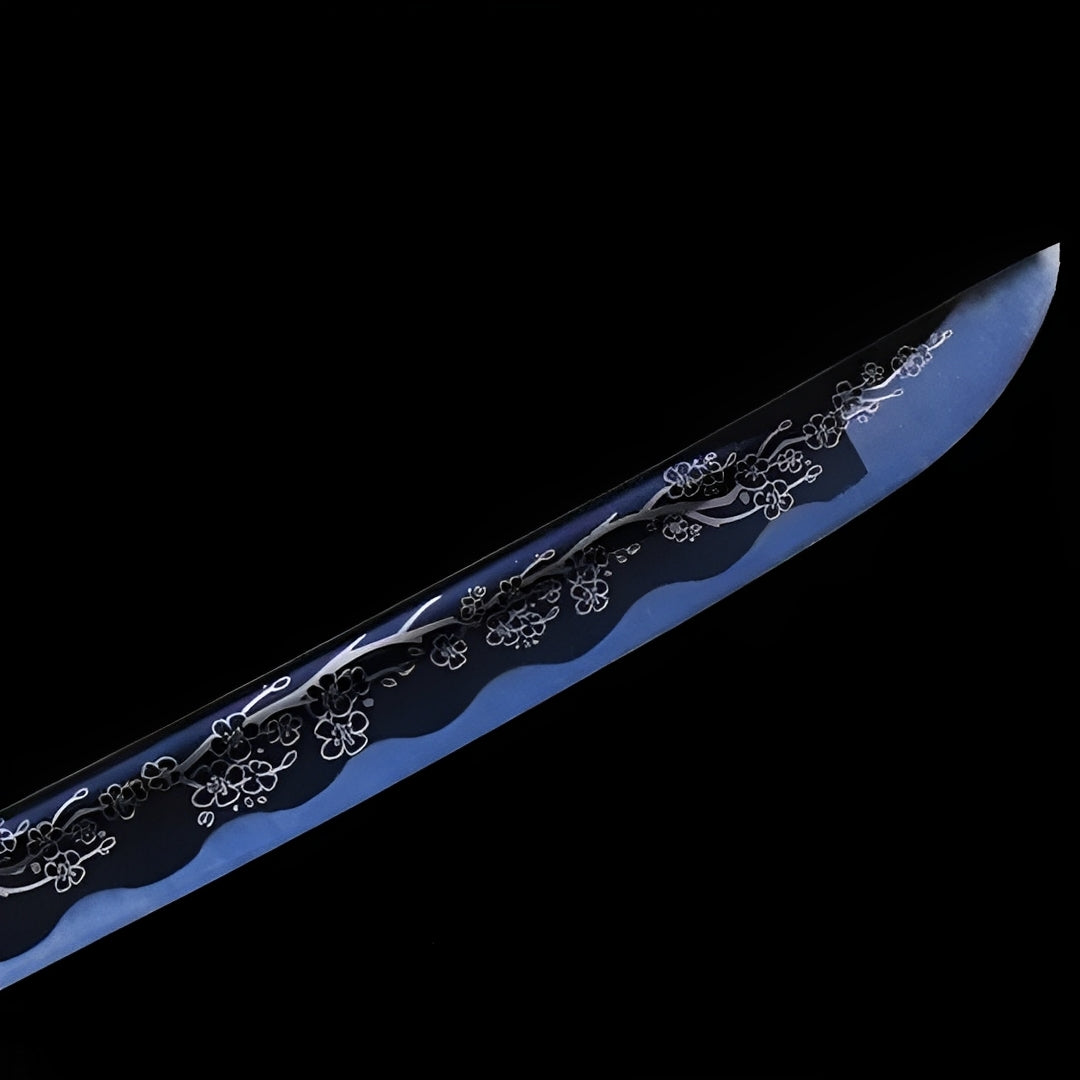
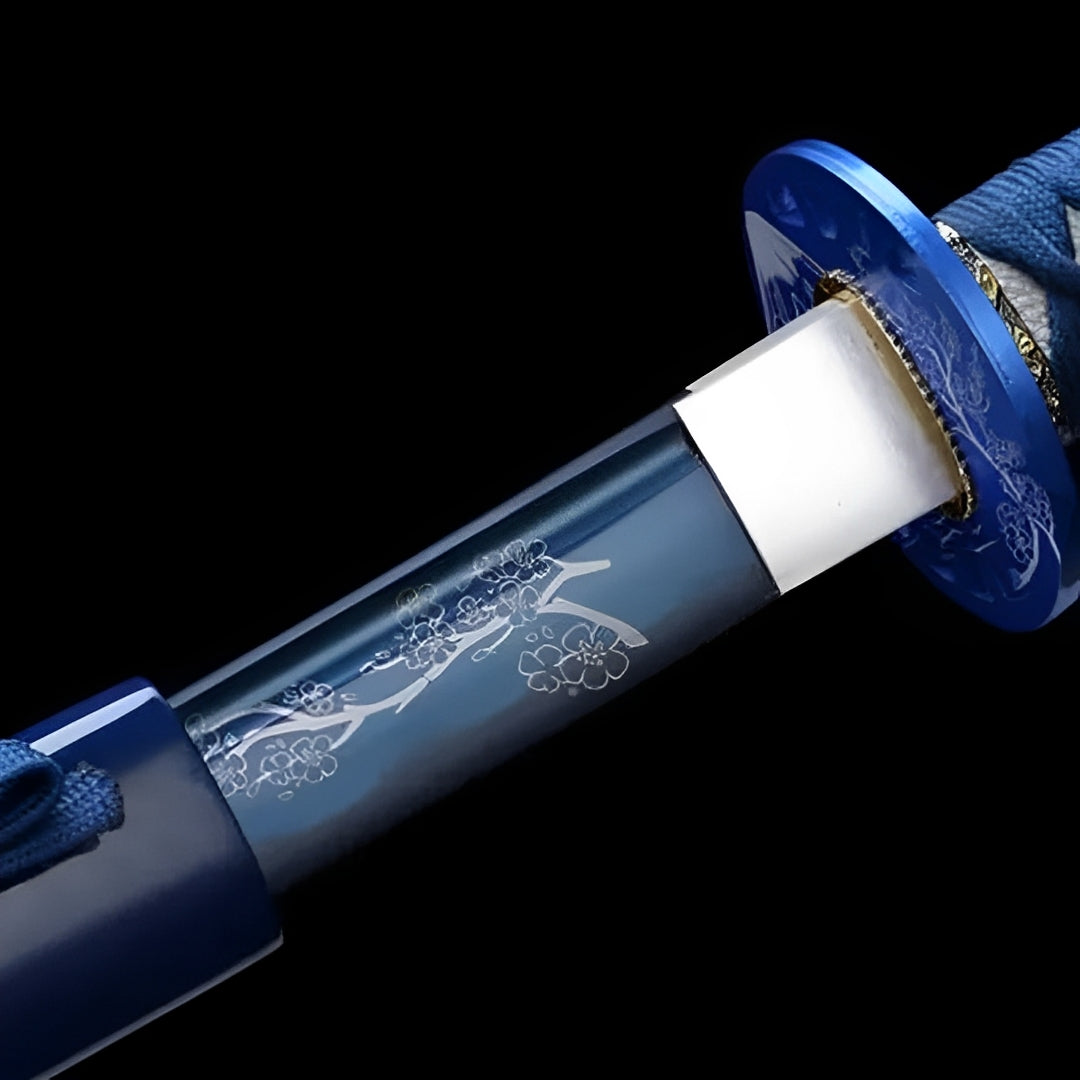
The engraved cherry blossoms create this sword's most artistic element - delicate branches and flowers appearing through negative space technique where artist removes background revealing lighter steel beneath, the sakura emerging through absence rather than addition. This negative space art blade demonstrates sophisticated understanding that sometimes beauty reveals itself through what you take away, that cherry blossoms' delicate nature demands delicate representation, that screaming "LOOK, CHERRY BLOSSOMS!" through bold painting would violate subject's essential character.
Traditional Japanese metalworking specifically developed techniques for subtle decoration - damascene inlay, relief carving, acid etching - all methods creating dimensional effects without garish paint. The silver-on-blue etching continues that tradition, proving decoration can enhance without overwhelming, that ornamentation can serve aesthetic function without becoming decorative excess.
The specific branch patterns matter - not random flower placement but compositional arrangement following natural growth patterns, the branches flowing organically rather than geometrically, the blossoms clustered realistically rather than spaced evenly. That botanical accuracy separates thoughtful design from generic "put flowers on it" decoration, demonstrating artist understood cherry trees' actual growth habits rather than just knowing "cherry blossoms = Japan."
The engraving technique also creates tactile element - running fingers along saya reveals dimensional depth, the carved areas feeling different from smooth sections, transforming visual art into multisensory experience. That haptic engagement matters for collectors who handle pieces regularly, who appreciate swords offering more than visual beauty, who understand finest craftsmanship engages multiple senses simultaneously.
Celebration Over Contemplation
Where philosophical blades explore cherry blossoms' fleeting nature teaching about impermanence (mono no aware), Hana Sakura celebrates opposite response: "Yes they're temporary SO LET'S PARTY!" That fundamental philosophical difference - melancholy acceptance versus joyful celebration - creates entirely different relationship with same natural phenomenon. The joy philosophy blade proves that acknowledging transience doesn't require sadness; sometimes best response to beautiful temporary thing involves gathering everyone you love and celebrating enthusiastically before it disappears.
Contemporary psychology increasingly recognizes that excessive focus on impermanence and mortality can become unhealthy rumination; balanced approach acknowledges life's temporary nature then chooses joy anyway, embracing celebration despite (because of?) knowing it won't last. Hanami tradition embodies that healthy balance - yes, we understand these blossoms fall within week, now pass the sake and let's sing loudly because understanding brevity makes celebration more urgent not less appropriate.
Traditional Japanese culture actually maintained both philosophical contemplation AND festive celebration, the balance preventing either extreme - neither constant party ignoring life's serious aspects NOR constant meditation ignoring life's joyful possibilities. The balanced wisdom sword represents that middle path where you can simultaneously appreciate beauty's transience philosophically AND celebrate beauty's presence festively without contradiction.
The specific choice making hanami about gathering rather than solitude matters enormously - it positions cherry blossoms as catalyst bringing people together rather than isolating them in individual contemplation. That social emphasis proves nature's beauty serves human connection, that aesthetic appreciation needn't be solitary pursuit, that sharing experience amplifies rather than diminishes it.
Festival Gathering Collection
This communal celebration piece serves collectors who appreciate Japanese traditions emphasizing social bonds, who recognize that not every beautiful thing requires philosophical heaviness, who understand joy deserves equal respect alongside contemplation. The blue-and-silver aesthetic creates sophisticated party vibe - not cheap garish festivity but elegant refined celebration, not drunk foolishness but sake-enhanced revelry.
Display contexts specifically suit spaces where people gather - living rooms hosting friends, dining areas sharing meals, outdoor spaces enabling literal hanami parties where sword becomes conversation piece about tradition it honors. Unlike contemplative blades requiring quiet spaces, this celebratory sword thrives amid laughter, conversation, communal enjoyment.
Photography benefits from festive contexts - position near sake bottles, with cherry blossom branches (real or artificial), surrounded by blue picnic elements creating complete hanami scene. That thematic photography tells story rather than just documenting object, creating images that communicate tradition's spirit alongside blade's beauty.
Investment value favors pieces representing cultural traditions with sustained contemporary practice - hanami isn't historical curiosity but living tradition millions participate in annually, that ongoing relevance ensuring lasting collectible appeal. Unlike traditions existing only in museums, hanami remains vital cultural practice creating emotional connections for anyone who's participated.
The living tradition blade particularly appeals to collectors who've experienced hanami personally, who remember specific twilight evenings beneath flowering trees, who understand blue-and-silver perfectly captures those memories, who want sword evoking those joyful celebrations rather than philosophical abstraction. That experiential connection transforms collecting from aesthetic appreciation into memory preservation.
Care Instructions: Maintain this celebration blade understanding it represents joy deserving respect equal to sorrow. The deep blue finish benefits from gentle cleaning preventing damage to color depth. The silver cherry blossom etchings require careful attention - use soft brushes removing debris from carved areas without abrading delicate details. Polish golden fittings maintaining warm accent against cool blue. Handle knowing this represents specific tradition where gathering matters more than individual contemplation, where celebration proves legitimate response to transience, where acknowledging beauty's brevity becomes reason for party not cause for sadness. Display where it prompts remembering best celebrations you've attended, where it reminds that sometimes correct response to temporary beauty involves calling everyone you love and saying "let's gather beneath these flowers before they fall, let's drink and laugh and celebrate precisely because this won't last, let's choose joy over melancholy when both are valid but only one creates memories of laughter." The sword teaches: impermanence makes beauty urgent, urgency makes celebration appropriate, celebration creates bonds lasting longer than cherry blossoms ever could.
Petals fall. Friends gather. Sake flows. The hanami tradition celebrates transience through communal joy.
Legal Disclaimer
By purchasing from Katana Corp, you acknowledge and agree that:
- You are at least 18 years of age (or the age of majority in your jurisdiction).
- You are solely responsible for verifying and complying with all local laws and import regulations before placing an order.
- Some countries prohibit the importation of swords entirely. Katana Corp is not responsible for orders delayed, seized, or refused by customs authorities.
- All katanas and related products are sold strictly as decorative and display items. They are not intended or certified for combat use.
- Depending on the jurisdiction, swords may legally be considered bladed weapons, subject to specific restrictions or prohibitions.
- Katana Corp disclaims all liability for any injury, damage, or legal consequences resulting from misuse, abuse, or unlawful use of its products.
For full details, please refer to our Terms of Service.
Care & Maintenance
To maintain your katana's appearance and performance over time, we recommend:
- Regularly wiping the blade with a soft cloth to remove fingerprints and moisture.
- Applying a light coat of choji oil to prevent rust (for carbon steel blades).
- Storing the sword in a dry place, preferably inside its saya.
- Avoiding direct contact with hard surfaces to preserve sharpness and finish.
For more care tips, check our full maintenance guide in the FAQ section.
Behind the Blade
Every katana we offer carries the essence of centuries-old craftsmanship.
More than just a weapon, the katana symbolizes discipline, honor, and mastery.
Our artisans draw inspiration from traditional forging methods to ensure each blade reflects the spirit of the samurai — strength, precision, and soul.
Owning one is not just about aesthetics — it’s about carrying a piece of that legacy.
User Experience
This katana is designed to offer a perfect balance between blade and handle.
Its ergonomic tsuka (handle) allows a secure two-handed grip, while the weight distribution ensures smooth, fluid movement.
Whether for training, display or cutting practice, handling feels natural and precise.

The Art of Traditional Forging
Each katana we craft is born from centuries of samurai tradition.
Our master smiths shape every blade by hand, folding the steel to achieve unmatched strength, flexibility, and beauty.
This time-honored process is not just about creating a weapon? it’s about preserving a legacy of discipline, honor, and artistry.

Materials Chosen Without Compromise
We select only the highest-grade steels and authentic fittings to ensure every katana is both a masterpiece and a reliable companion.
From the flawless hamon line to the perfectly balanced tang, each detail is carefully inspected to meet the highest standards of performance and aesthetics.

More Than a Sword, A Lifelong Legacy
Owning a handmade katana is an experience that goes beyond the blade itself. It’s holding history, tradition, and craftsmanship in your hands.
Whether displayed as a work of art or wielded with precision, your katana will stand as a symbol of timeless skill and dedication for generations to come.
-
Key Destinations
United States: 5–7 days
Canada: 5–7 days
Australia: 6–9 days
Denmark: 4–6 days
Netherlands: 3–5 days
Sweden: 4–6 days
Switzerland: 3–5 days
Finland: 5–7 days
Singapore: 6–8 days -
Central European Partners
France: 2–3 days
Germany: 3–5 days
Spain: 4–6 days
Italy: 4–6 days
Belgium: 3–5 days
Austria: 4–6 days
Ireland: 4–6 days
Poland: 4–6 days
Portugal: 4–6 days -
Extended EU Network
Czechia: 4–6 days
Hungary: 4–6 days
Slovakia: 4–6 days
Slovenia: 5–7 days
Romania: 5–7 days
Bulgaria: 5–7 days
Croatia: 5–7 days
Serbia: 5–7 days
Estonia: 5–7 days
Latvia: 5–7 days
Lithuania: 5–7 days
Luxembourg: 3–5 days
Greece: 5–8 days -
FAQ’s
Visit our FAQs page to find answers to common questions.