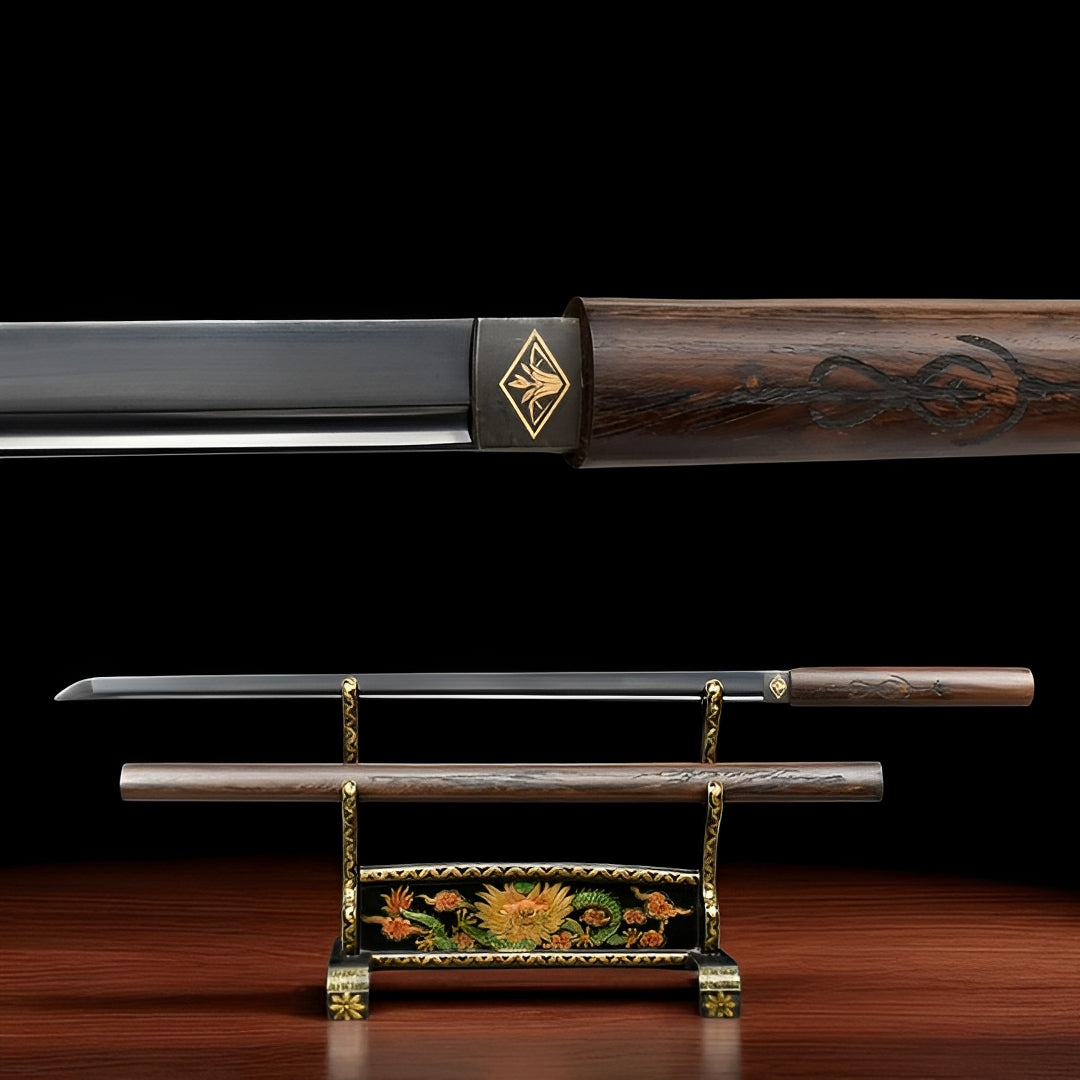
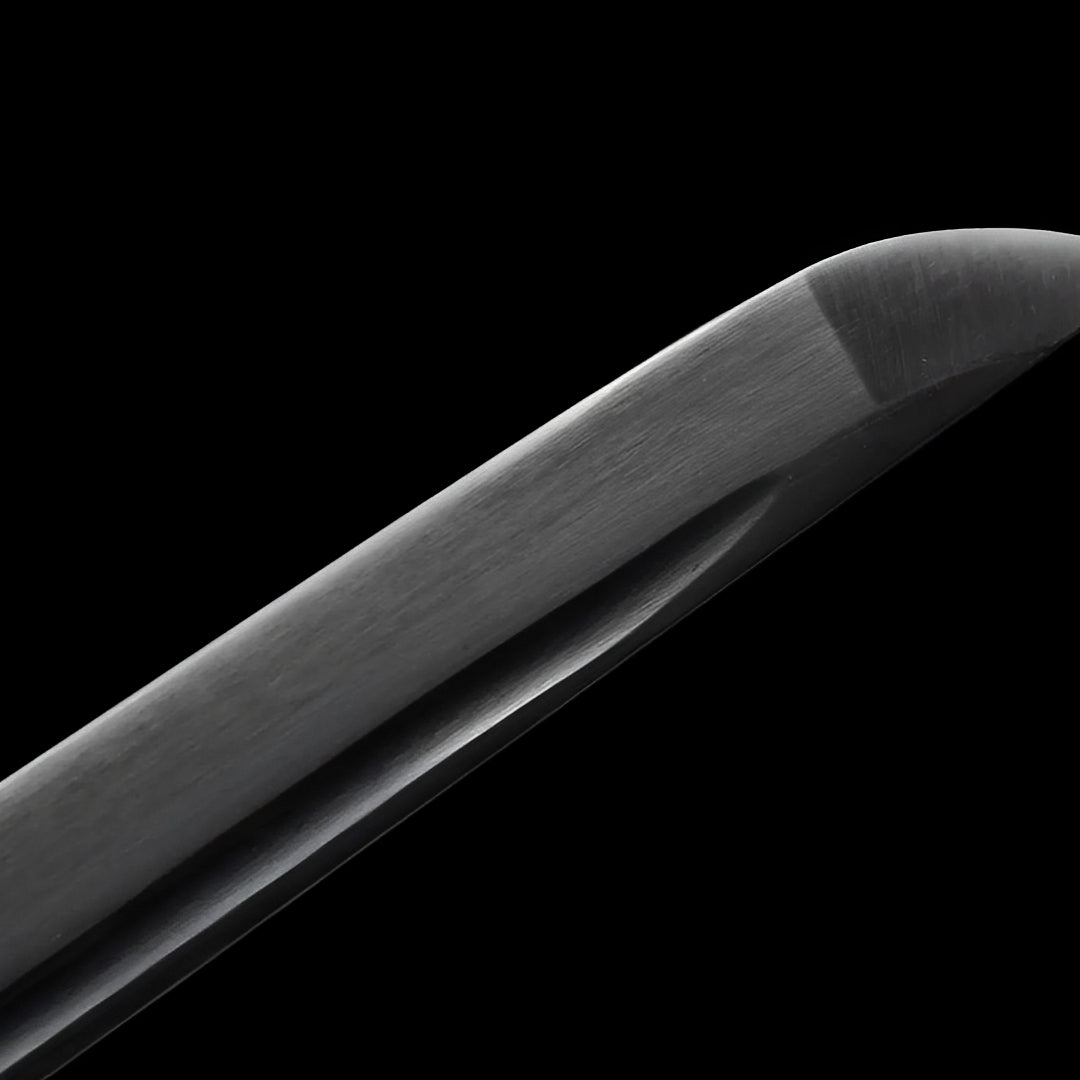
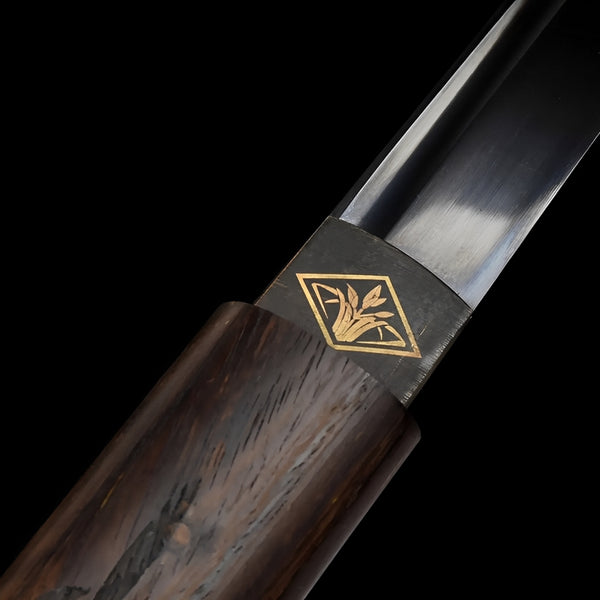
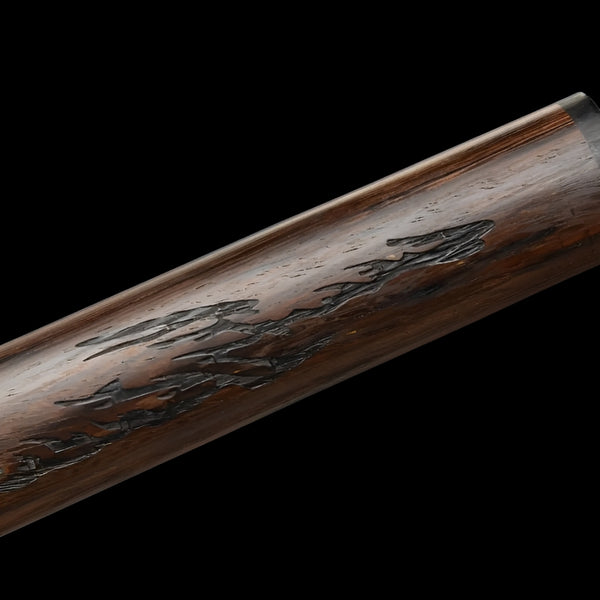
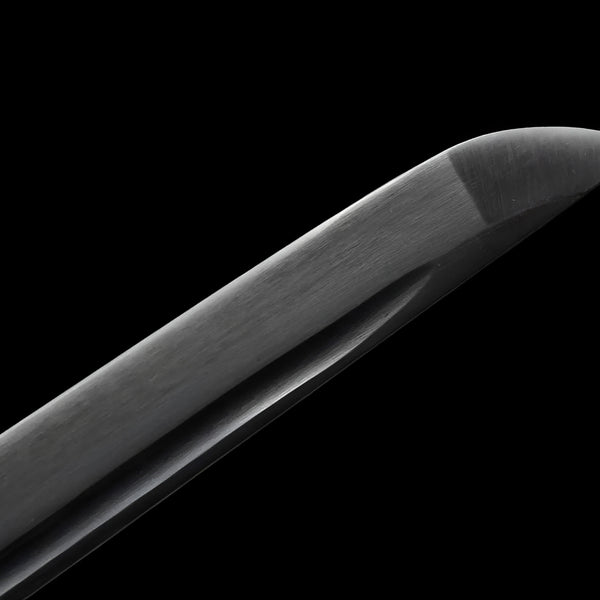
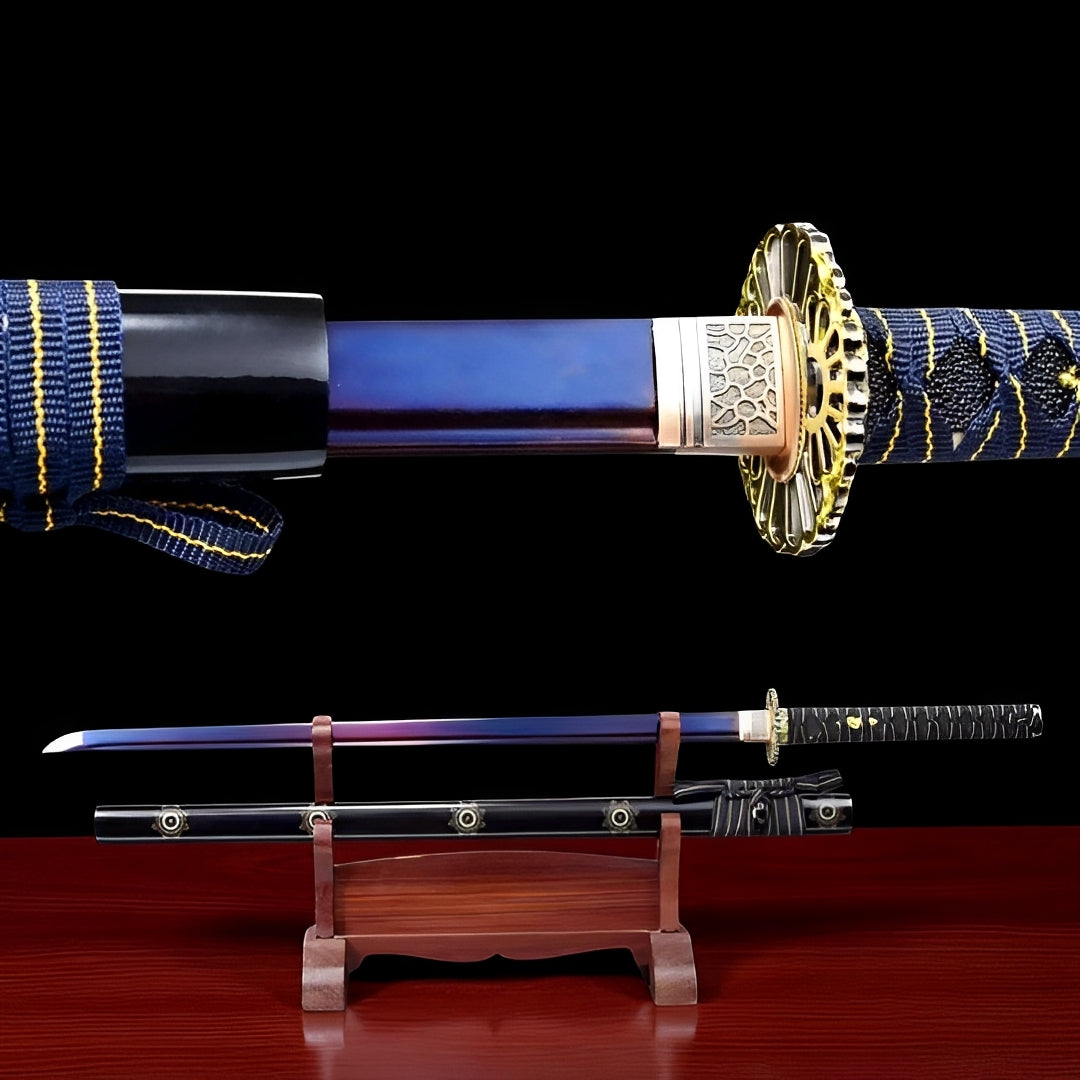
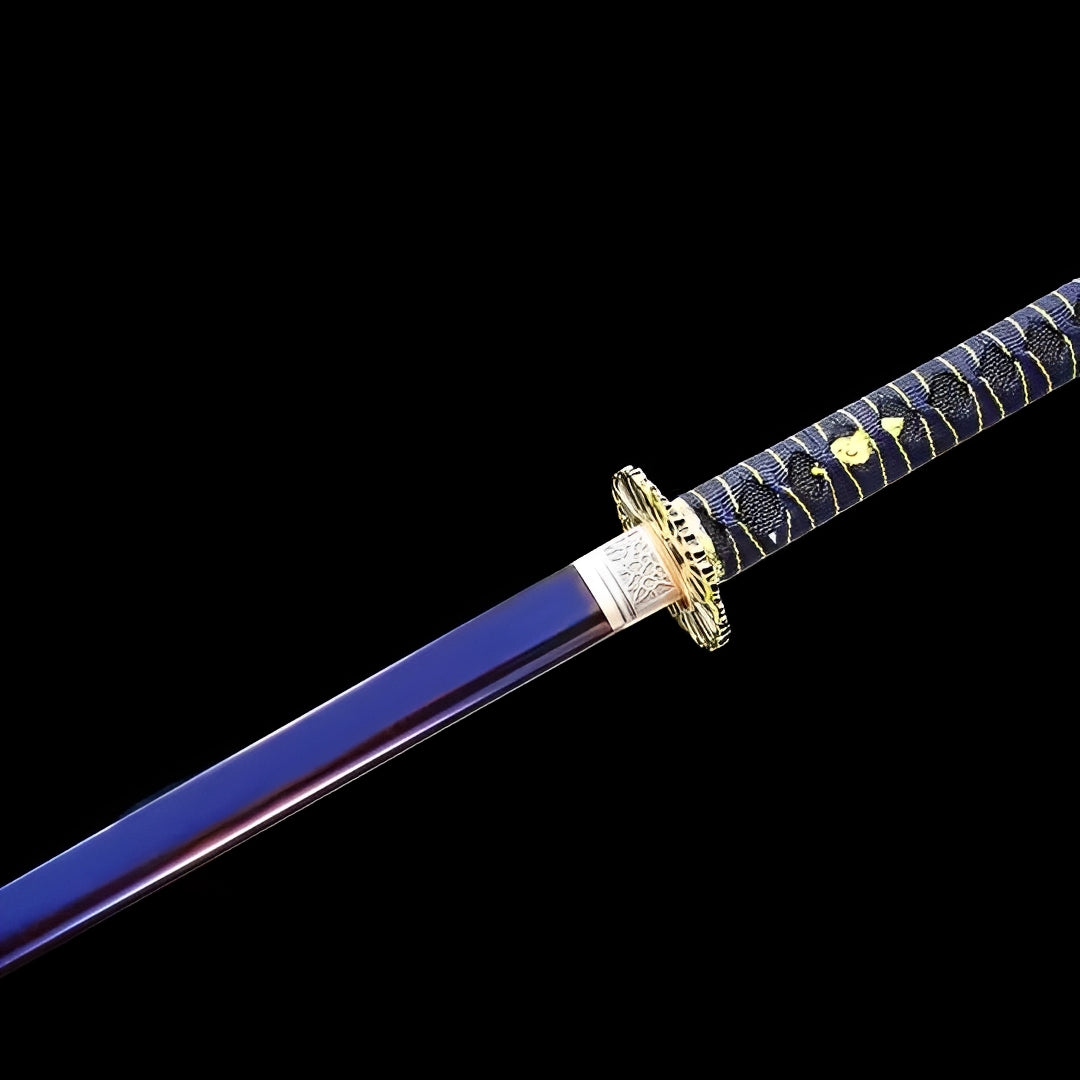
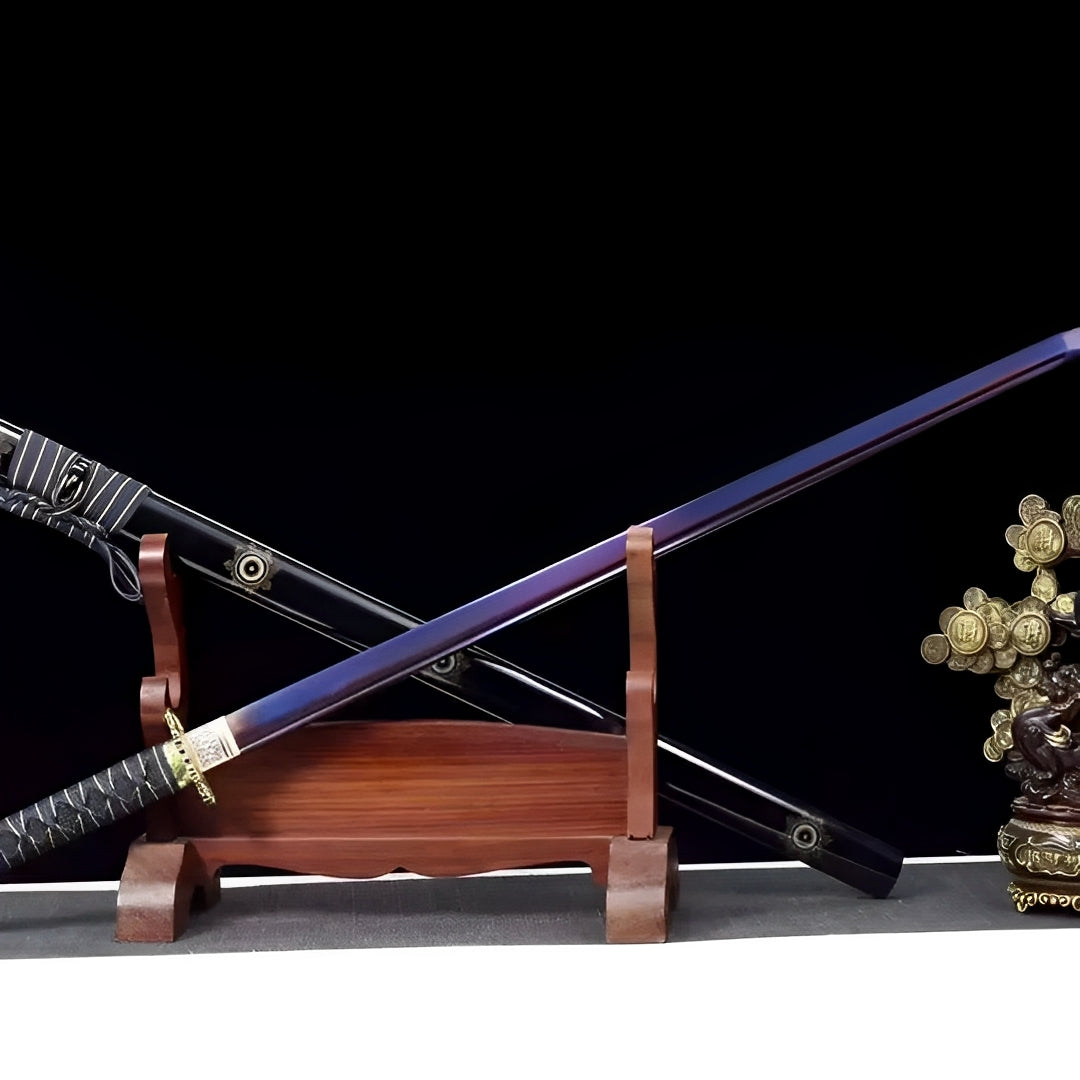
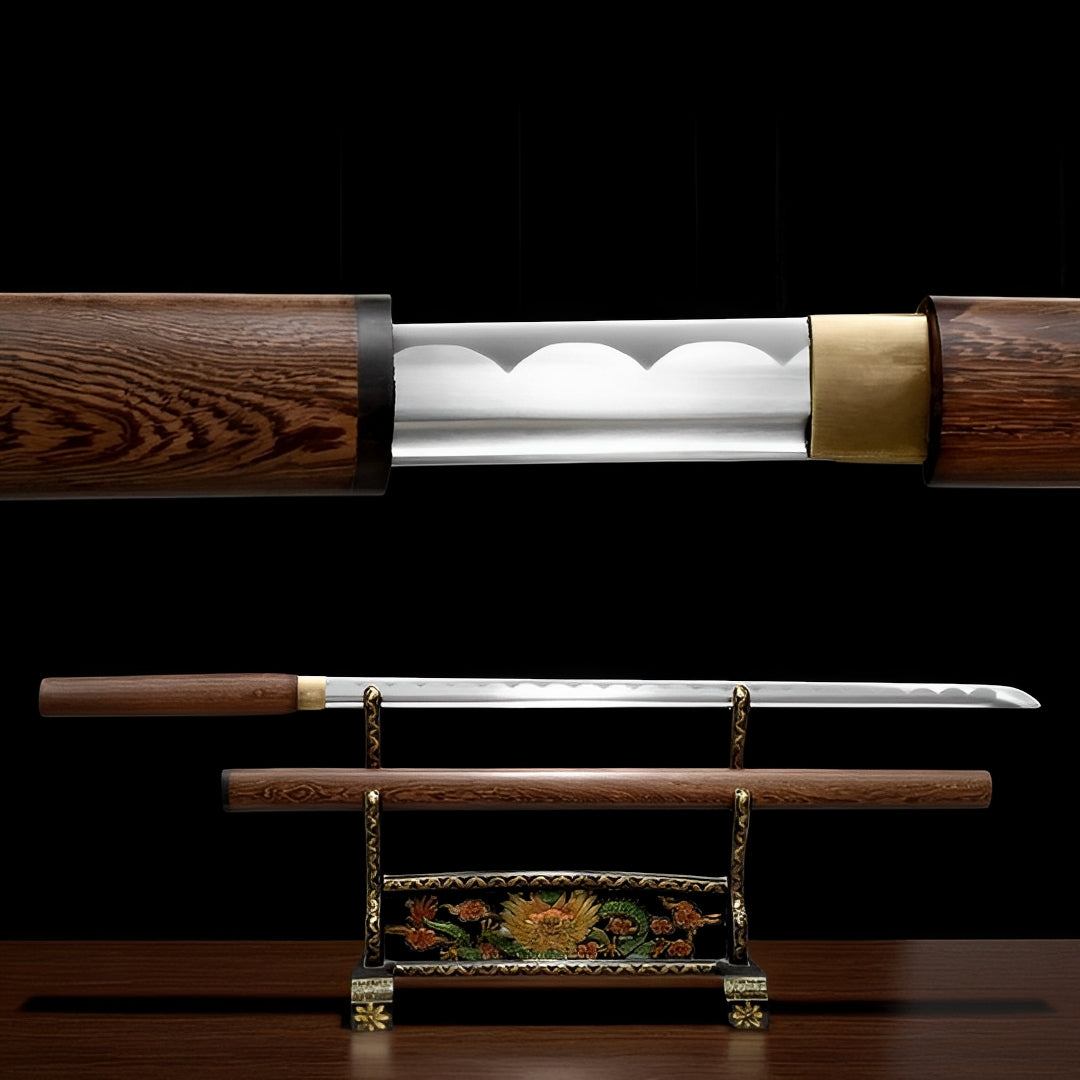
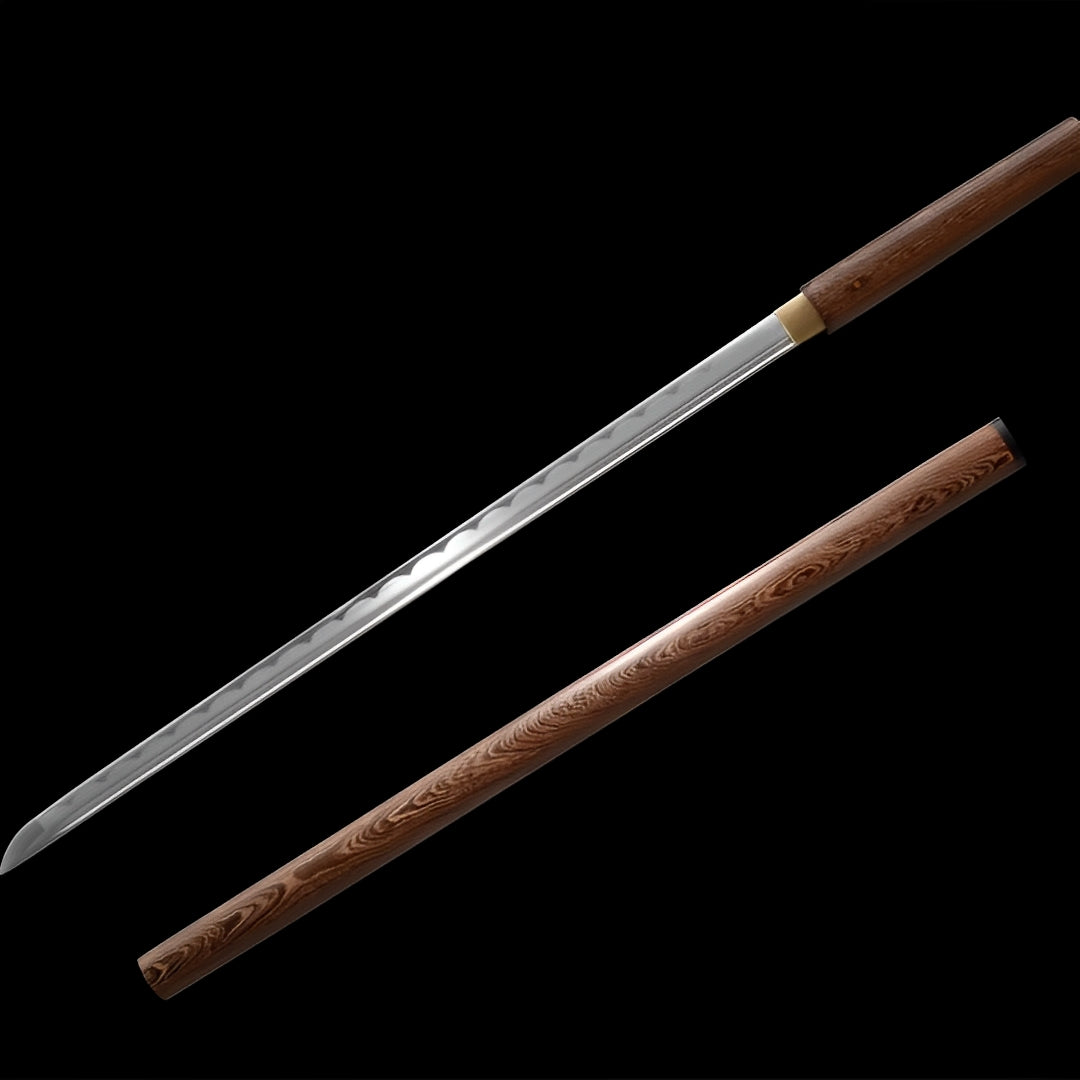
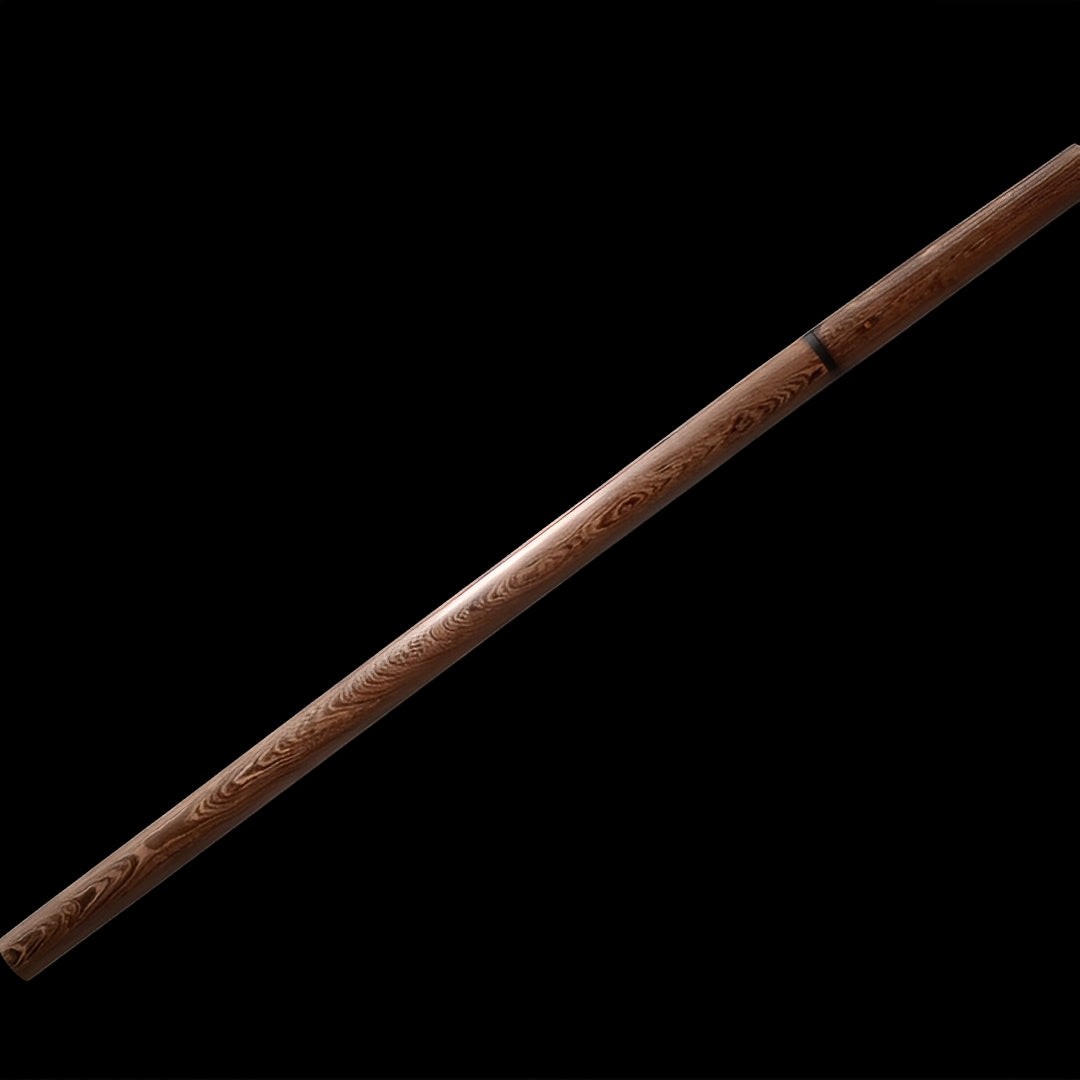
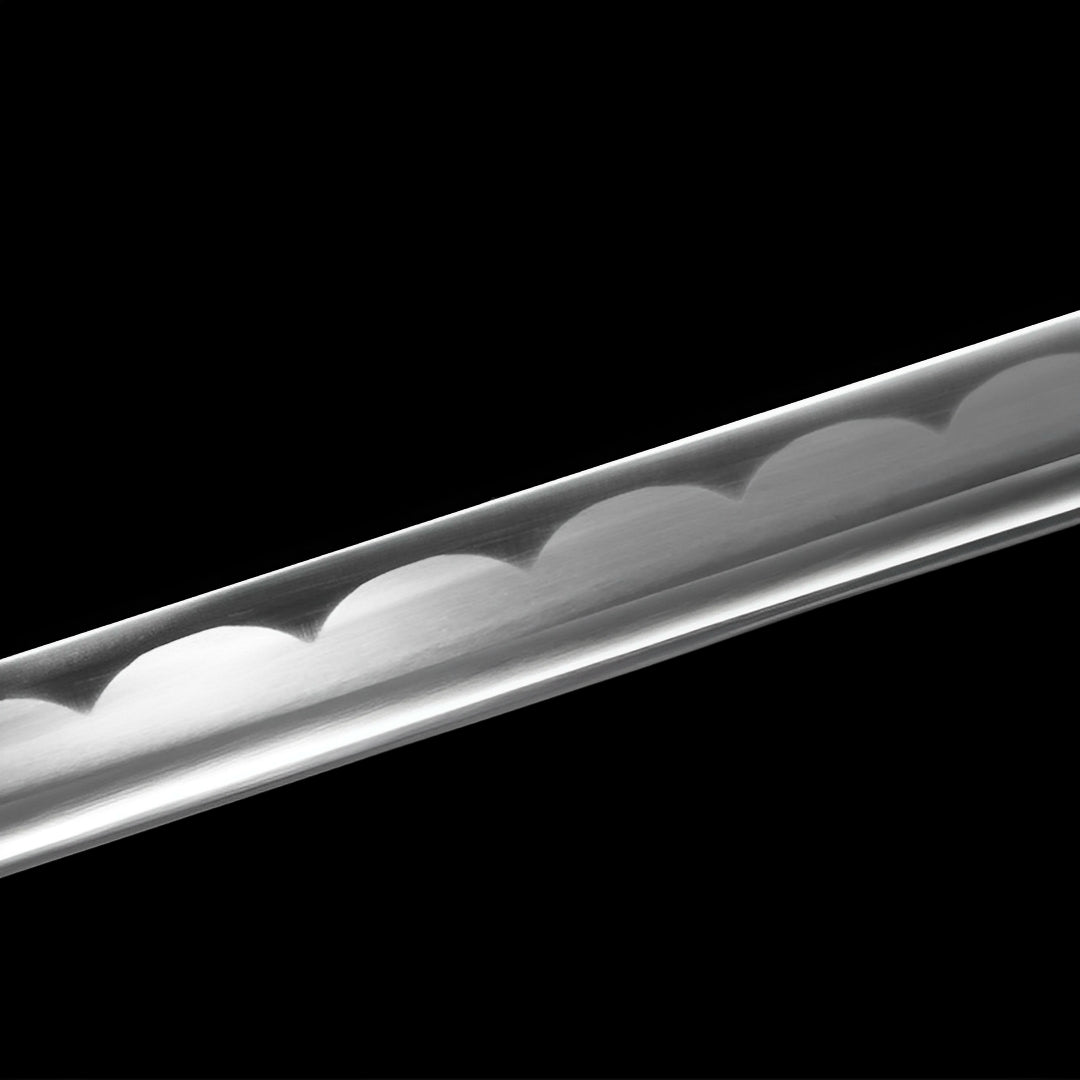
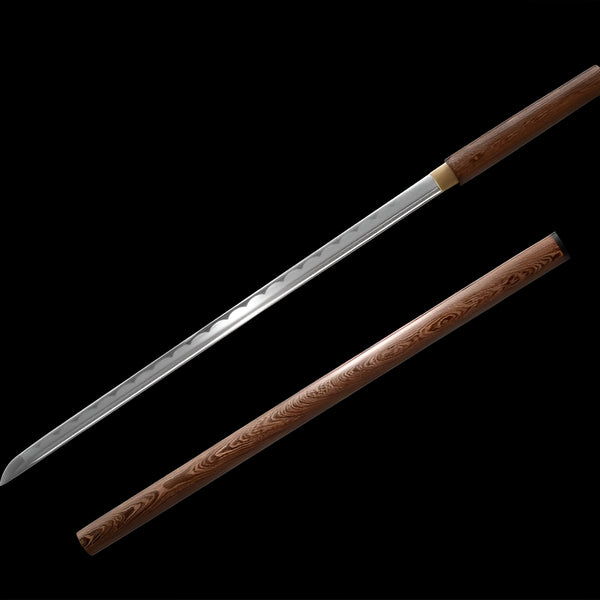
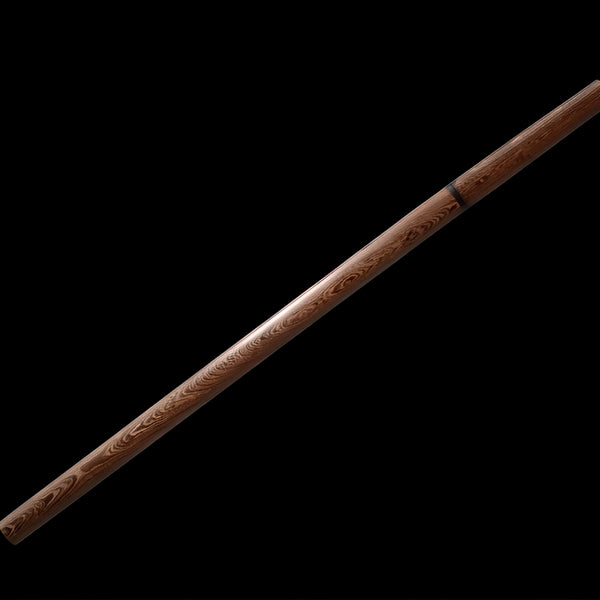
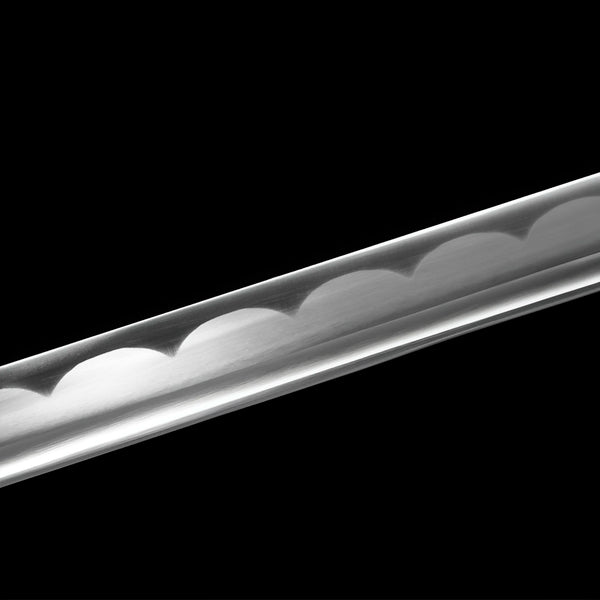
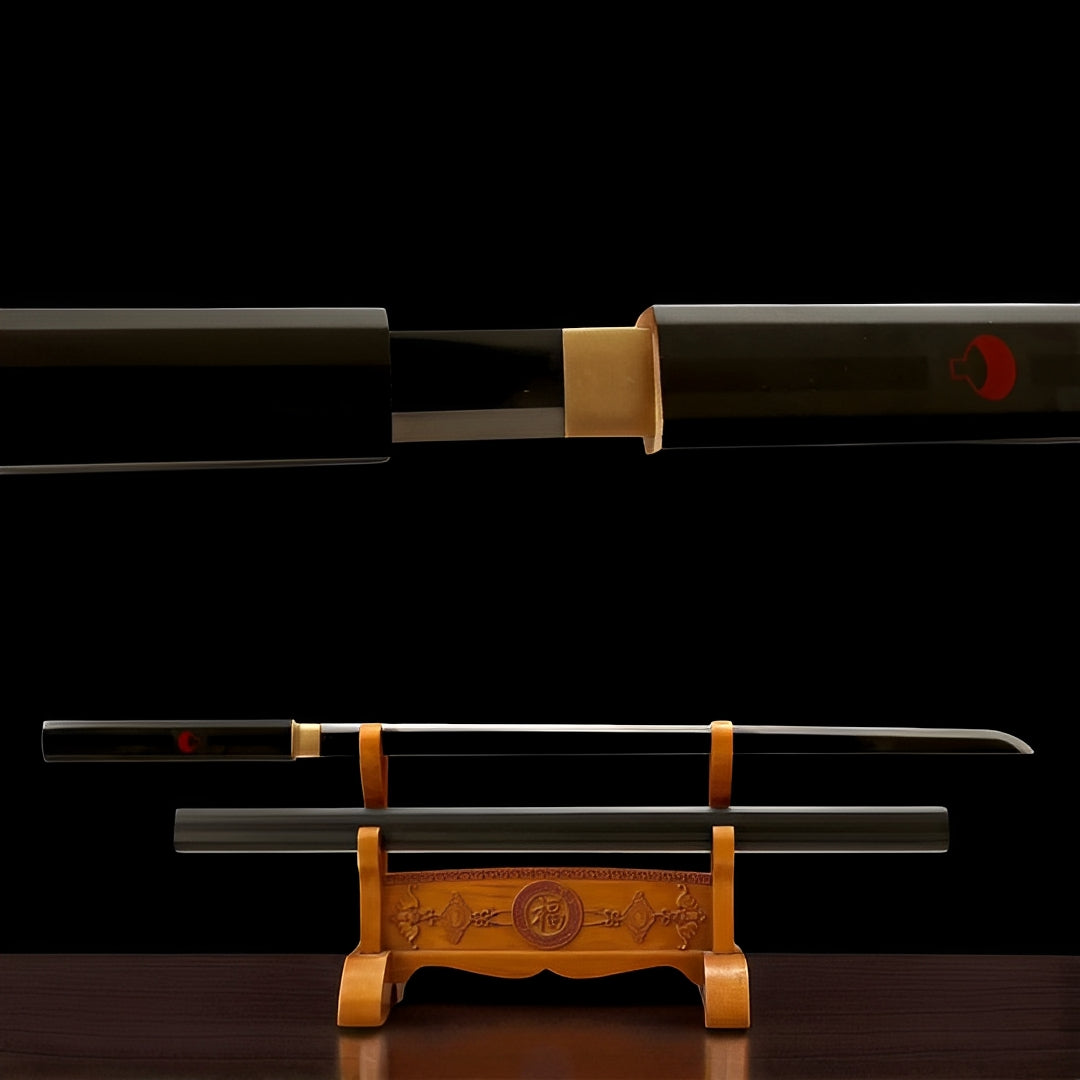
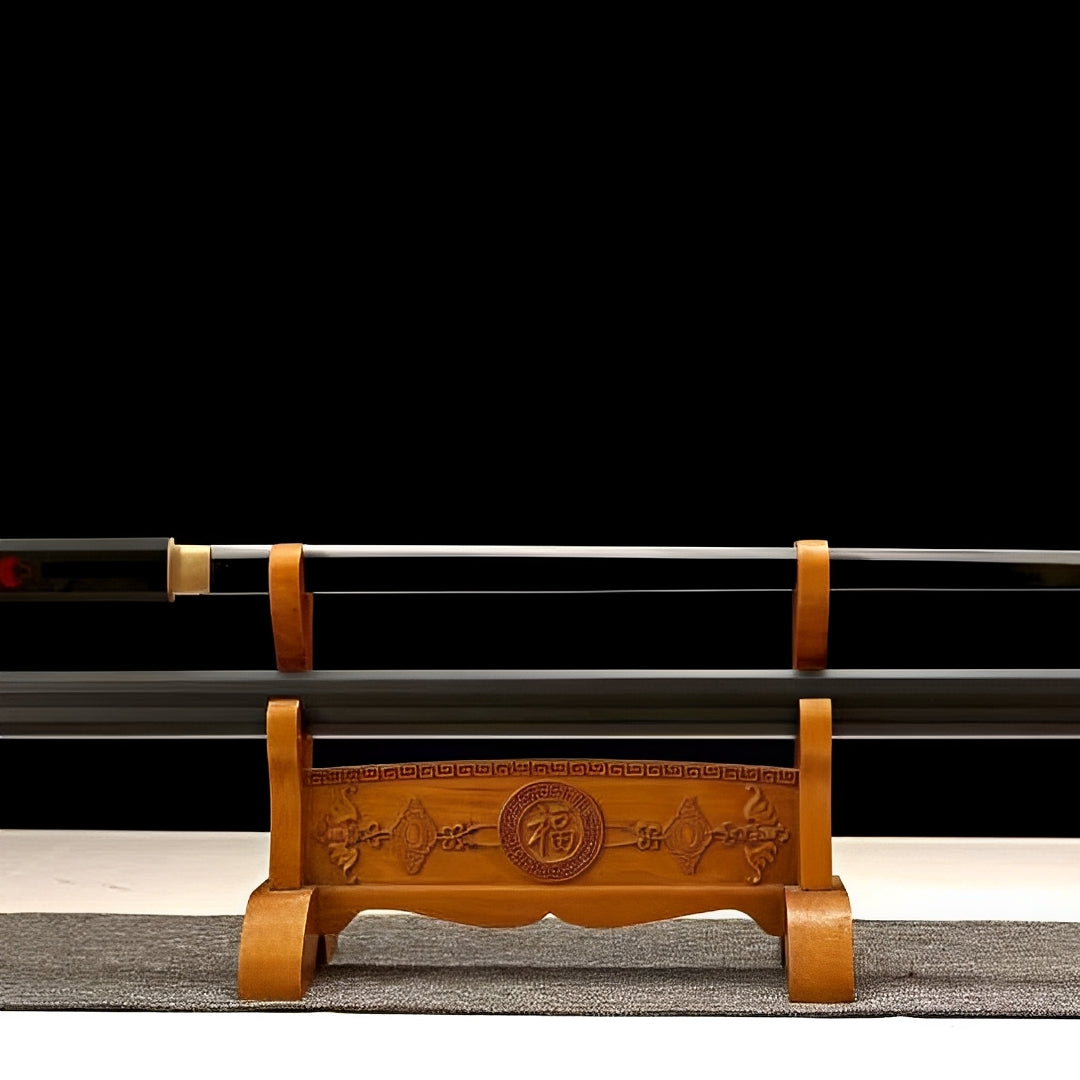
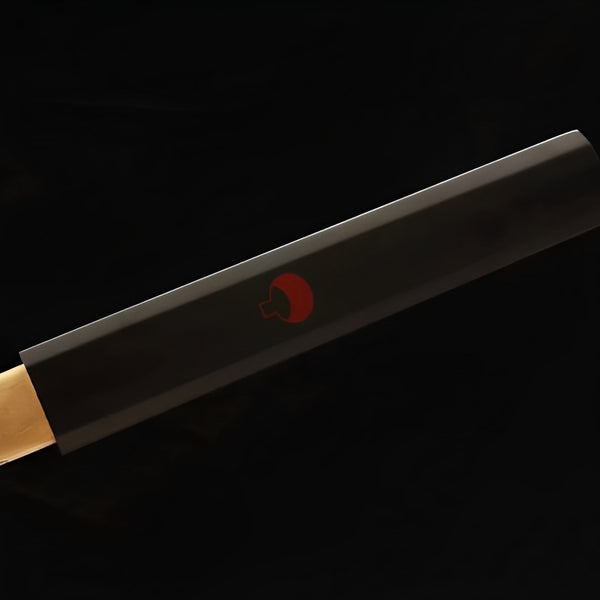
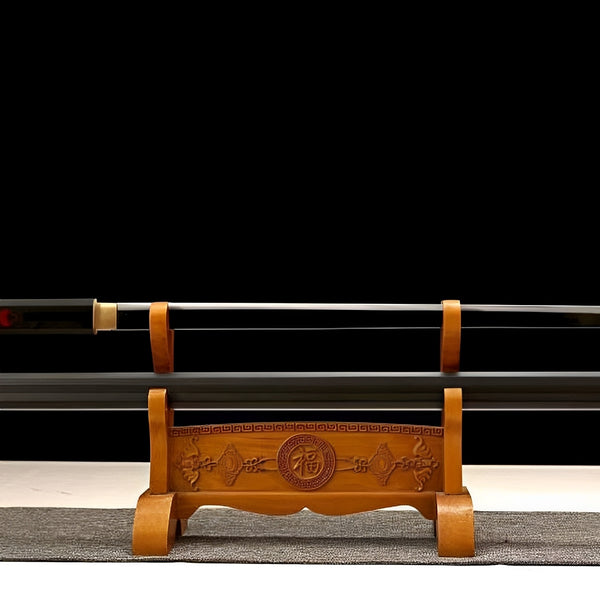
The first difference you will notice is the blade. The ninjato models here have a straight profile, while a katana has a curve. That changes the outline of the whole sword, whether you display it drawn or inside its scabbard.
A straight blade does not necessarily mean a shorter sword. All four models in this collection measure 105 cm overall, about 41 inches, with a 72 cm blade, about 28 inches. Check those measurements against your available space rather than assuming a ninja sword will be compact.
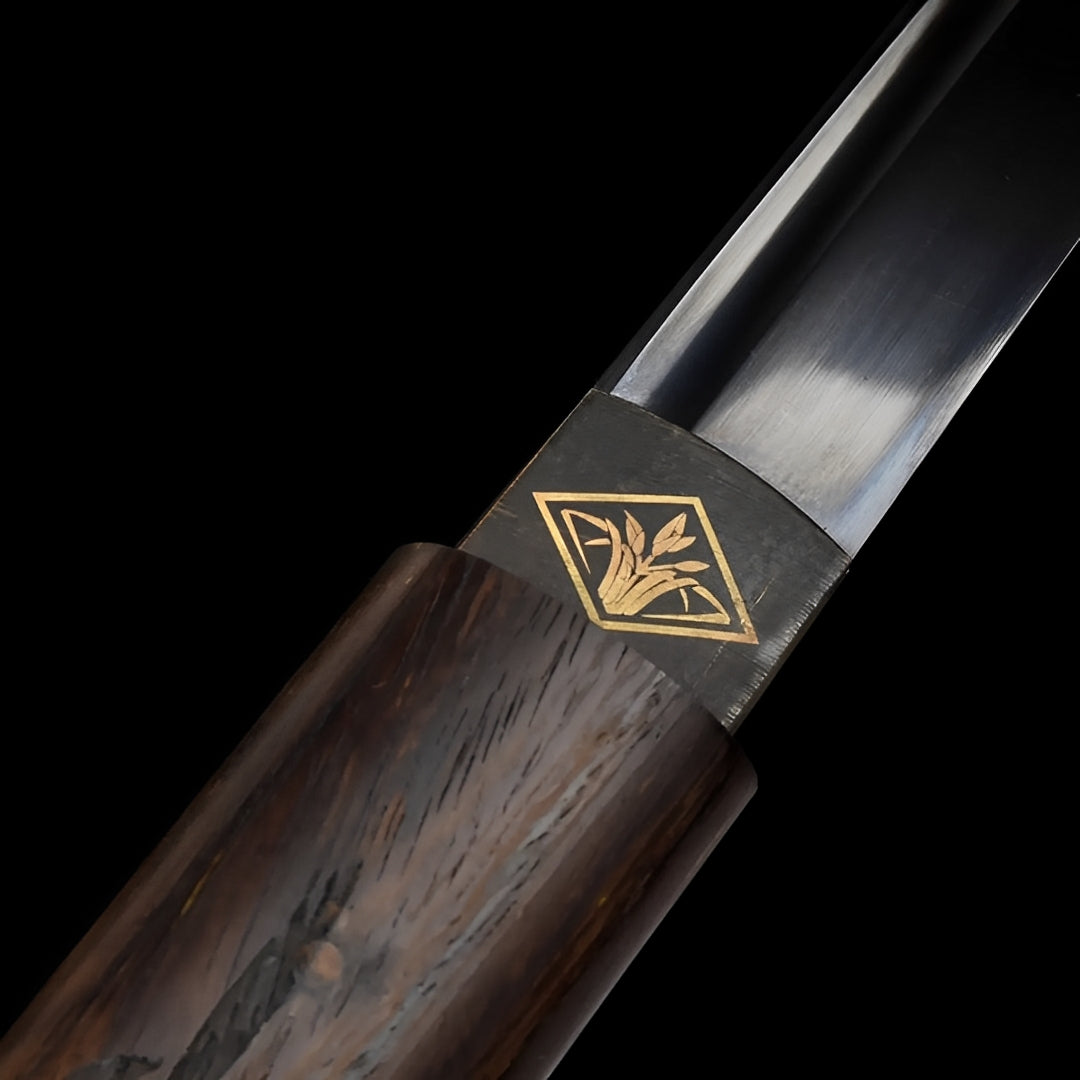
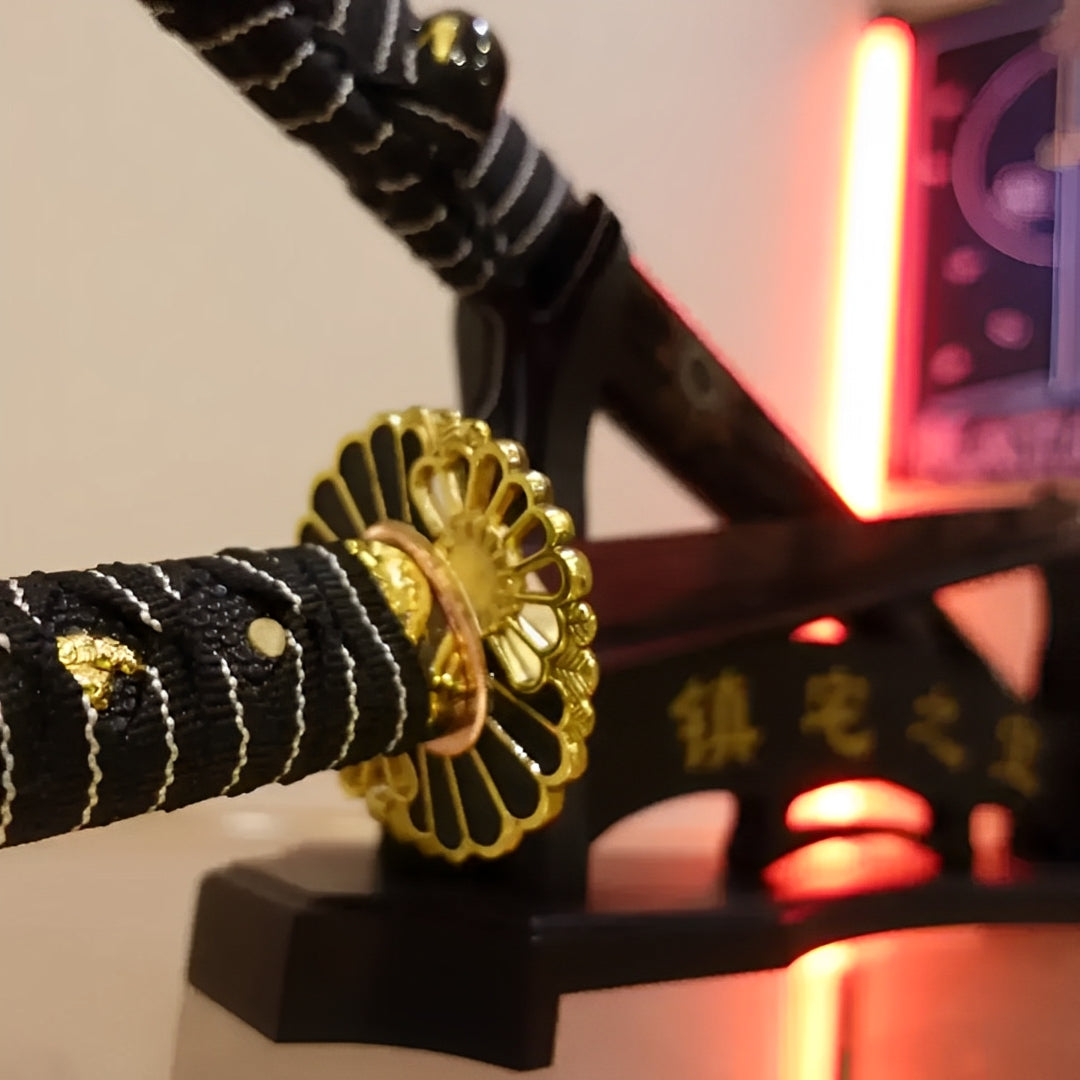
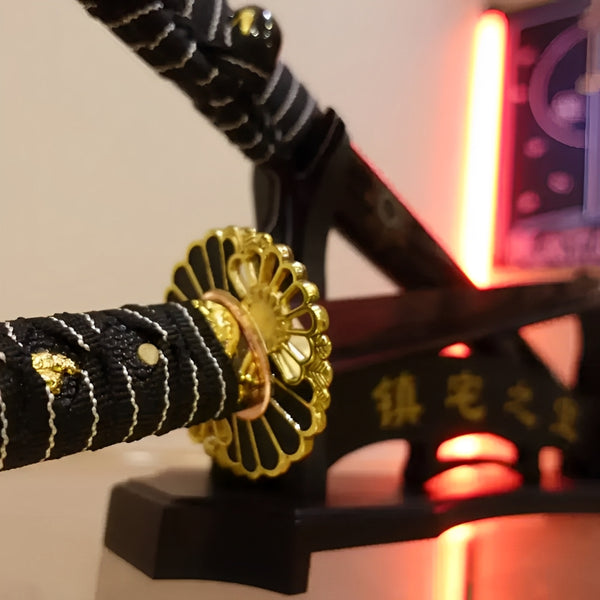
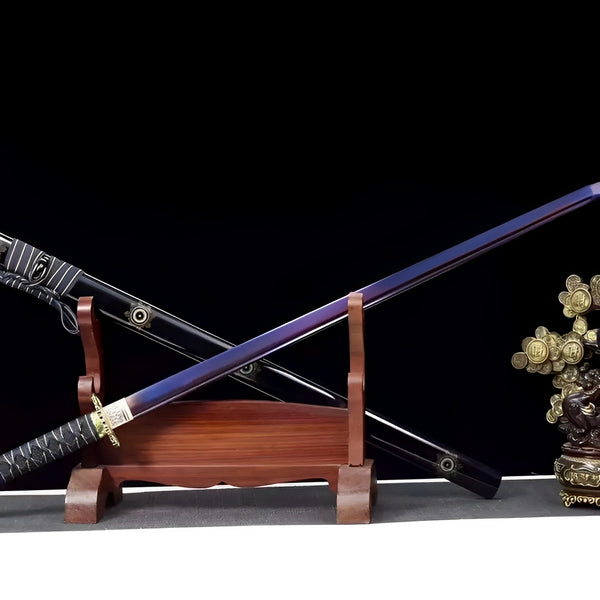
The guard varies too. Kagehana has a brass guard with a geometric cutout, Yoru no Kage has circular openwork, Shizen has a simple iron-alloy guard and Sasuke has no guard. There is no single square-guard design across this collection. For a curved blade instead, compare the katana collection.
Shizen and Sasuke use 1060 carbon steel. Kagehana and Yoru no Kage list manganese steel. The steel guide explains those names, while each product's specification table gives its materials and dimensions.
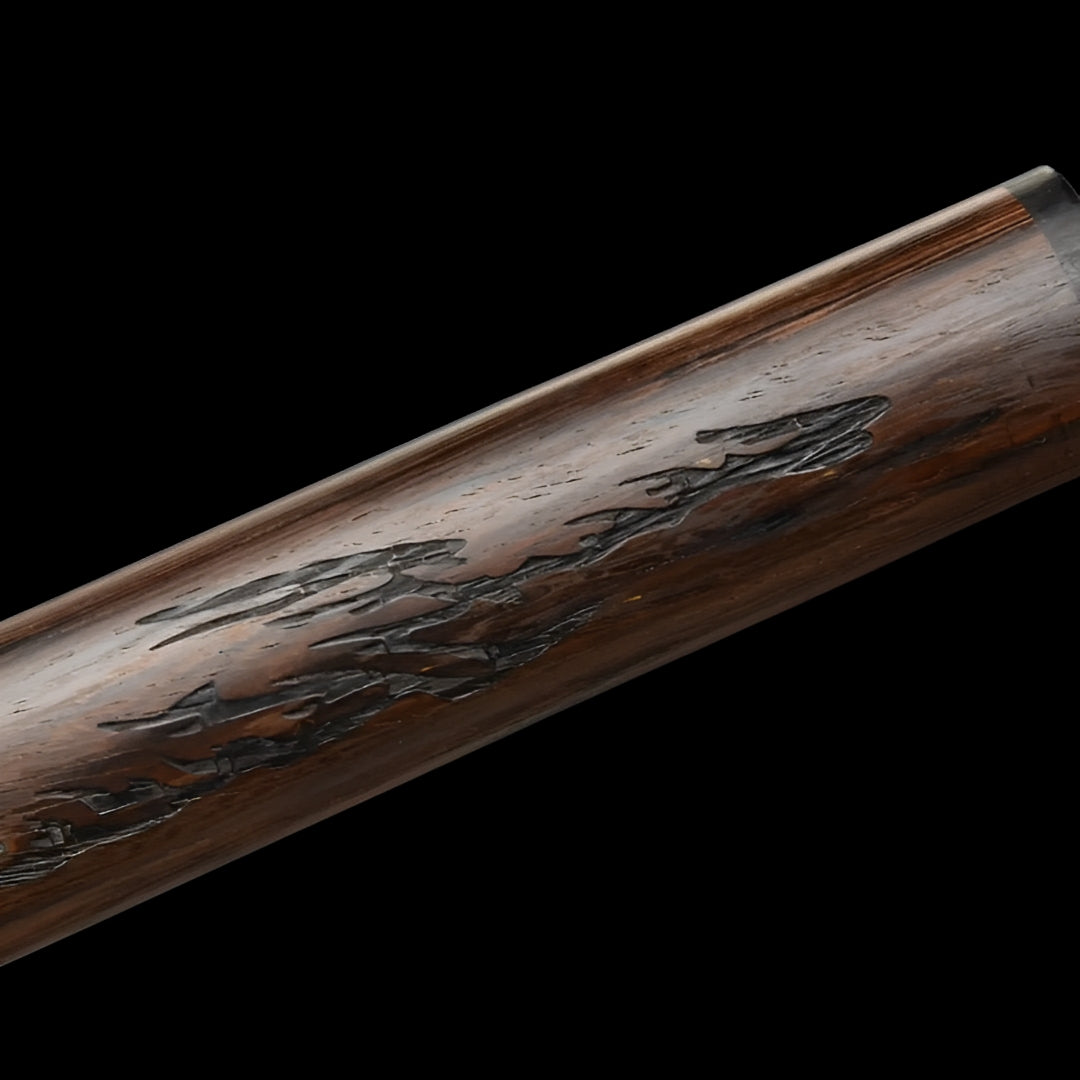
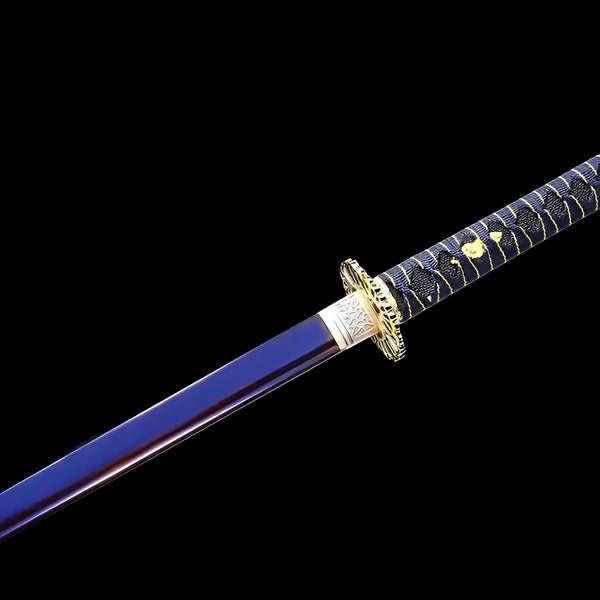
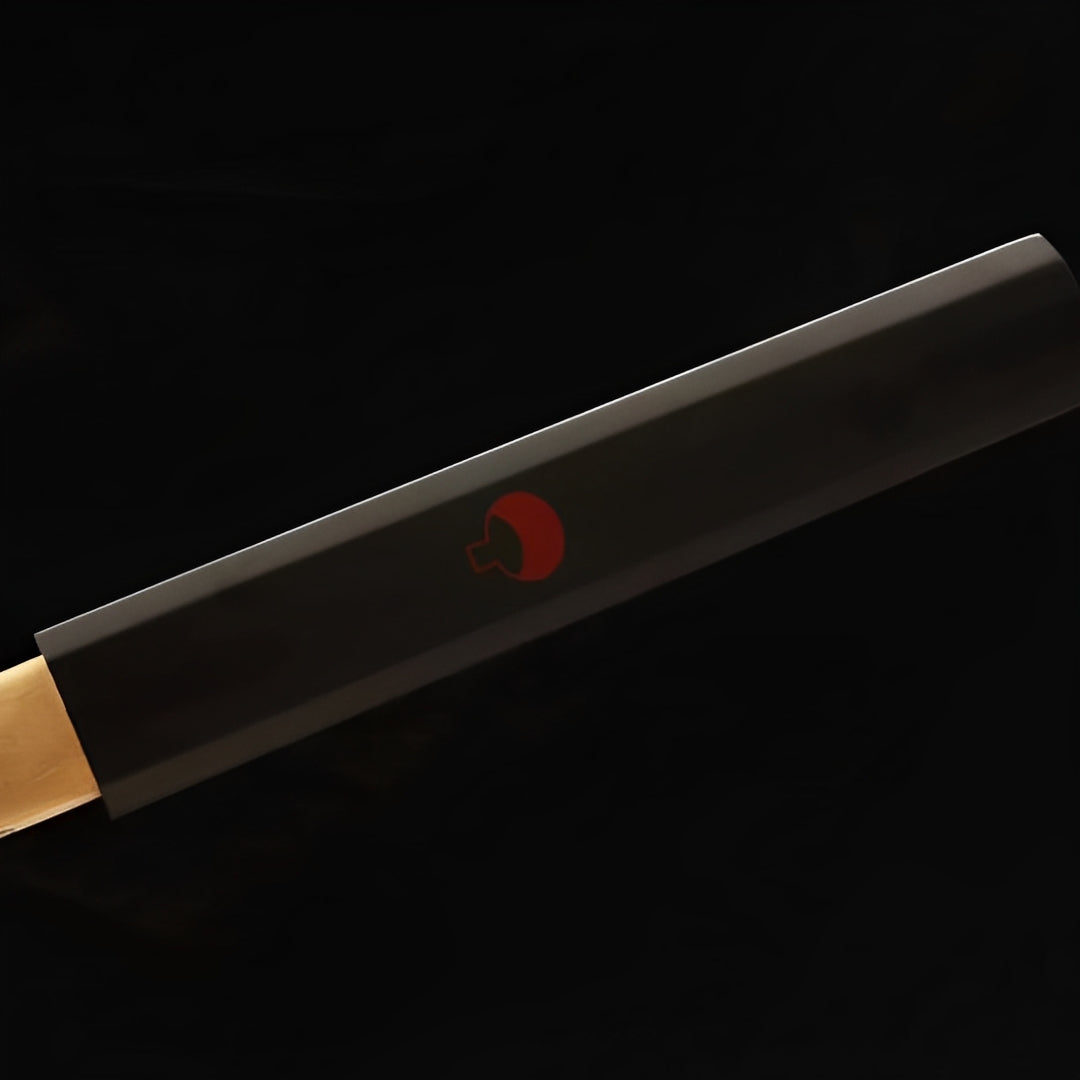
For display, the finish often makes the decision easier. Yoru no Kage brings color to an exposed blade; Shizen lets the wood grain stand out when sheathed. A blade's color or visible pattern does not by itself establish its heat treatment or a particular steel grade.
Keep steel dry, avoid touching the blade with bare fingers and follow the care instructions for the model you choose. Use a soft cloth on wood and lacquer, and avoid abrasive polish on colored finishes.