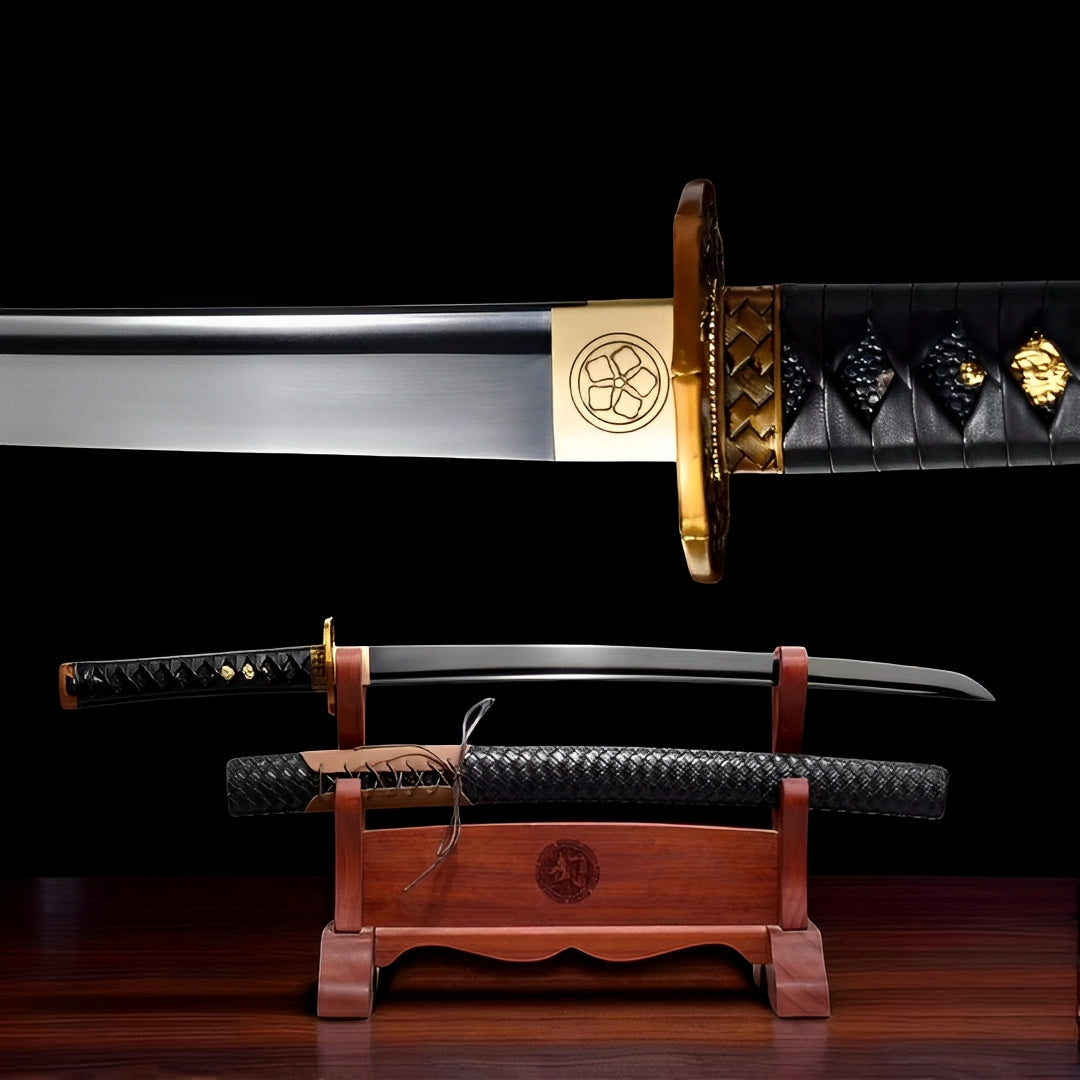
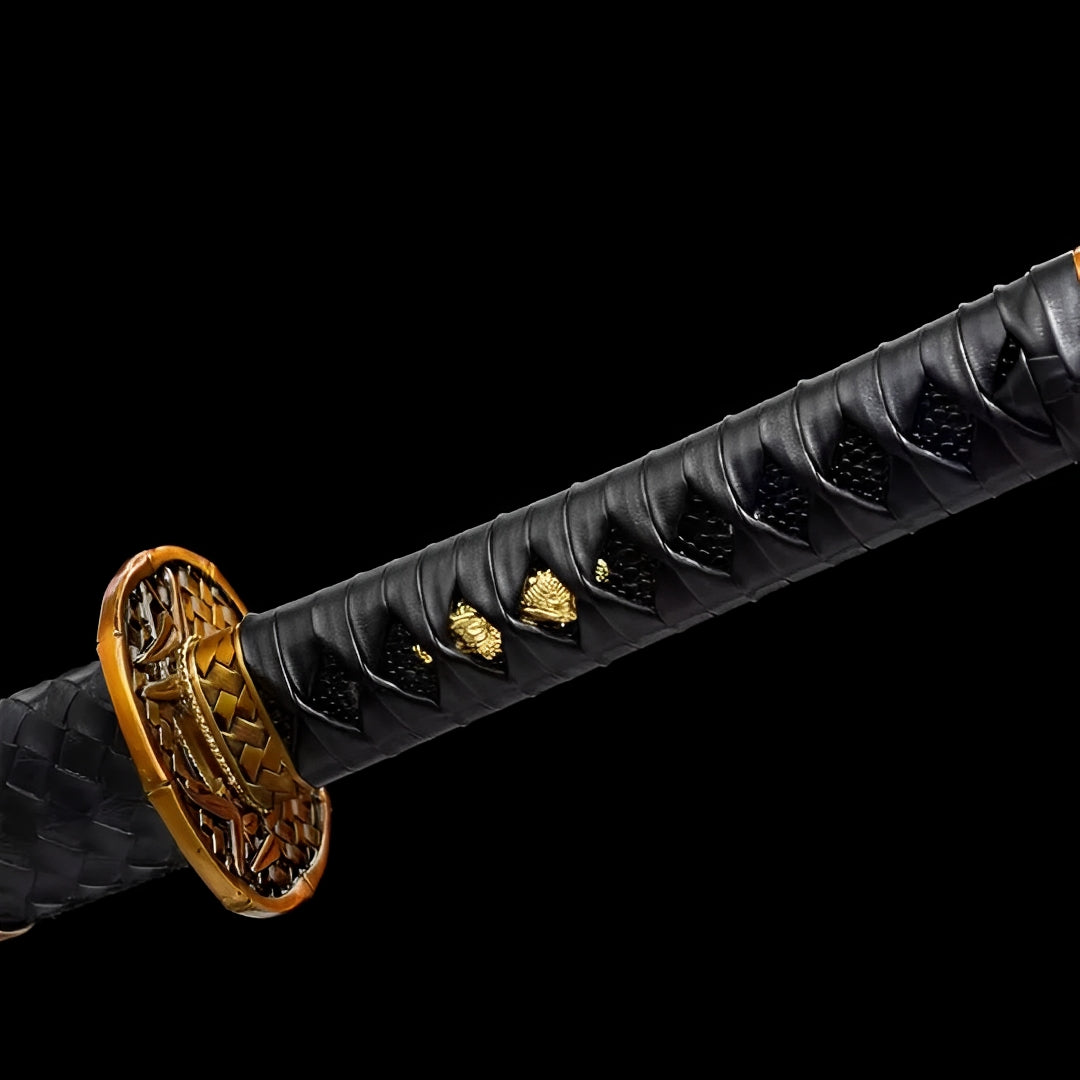
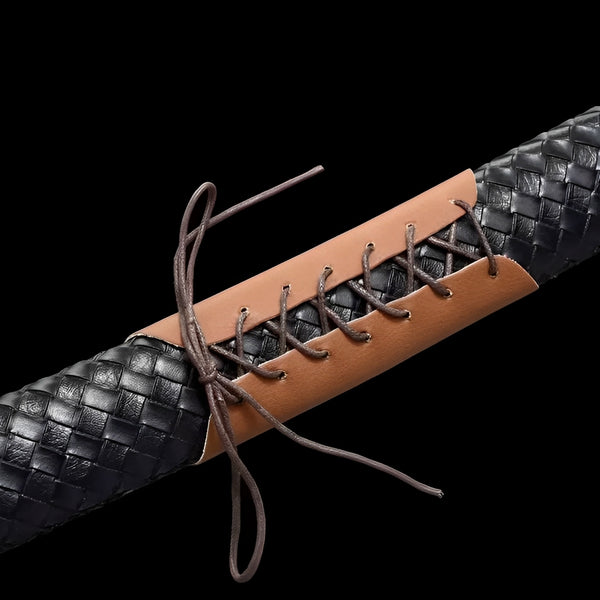
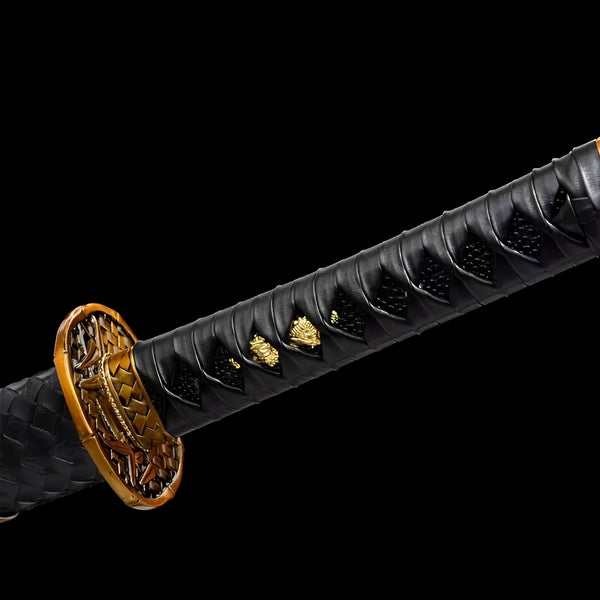
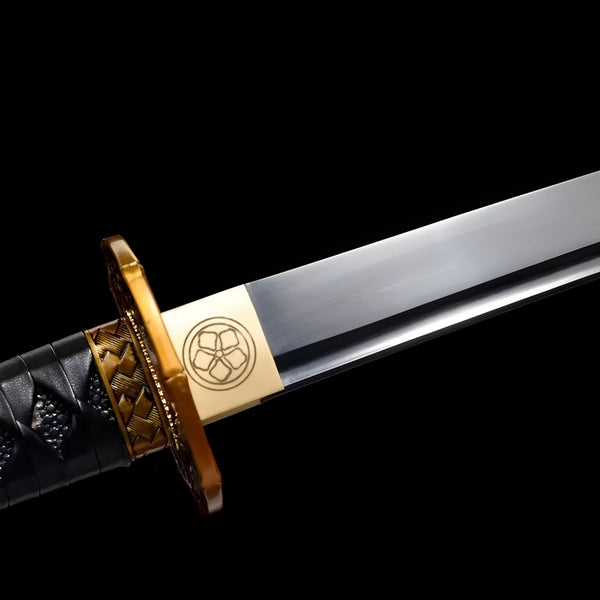
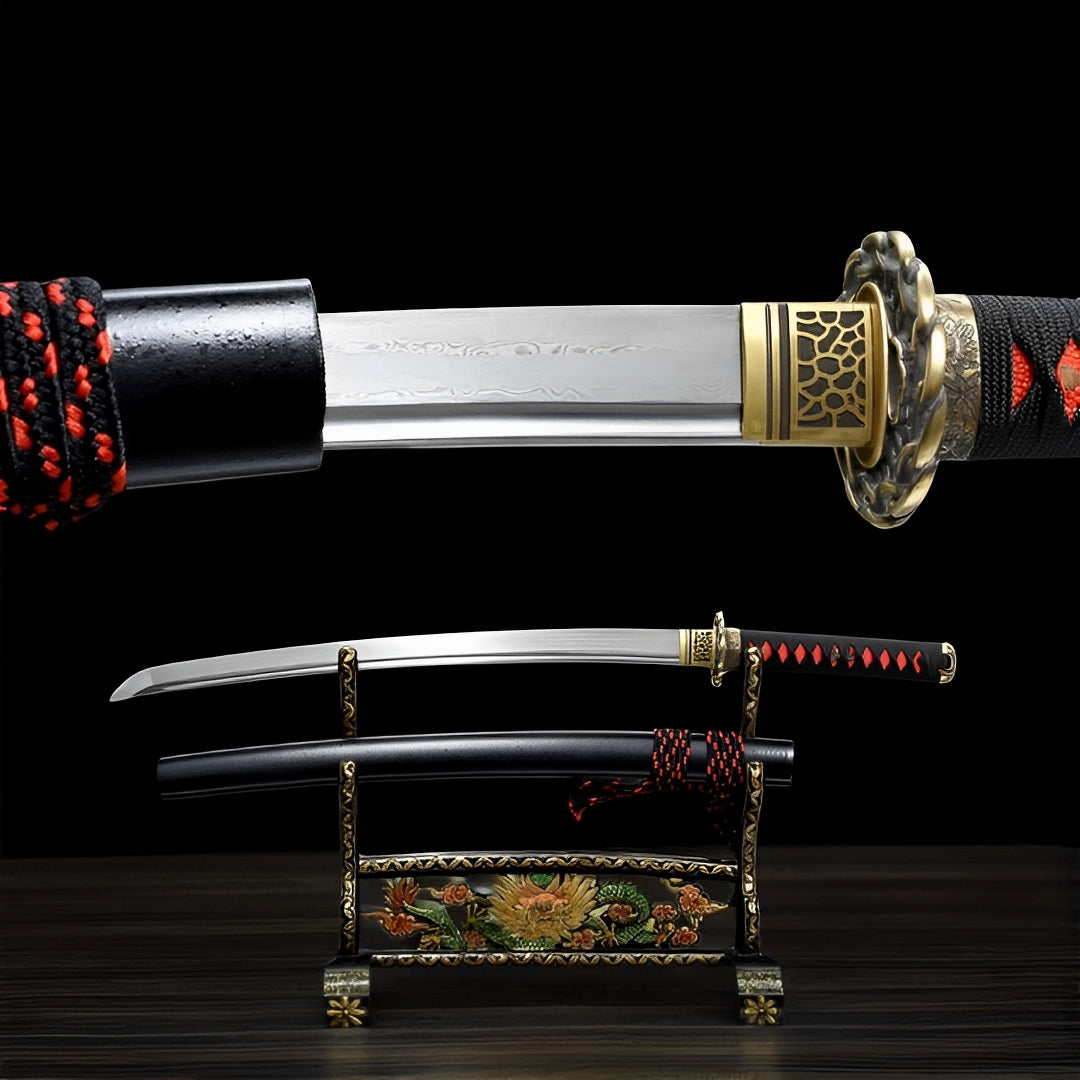
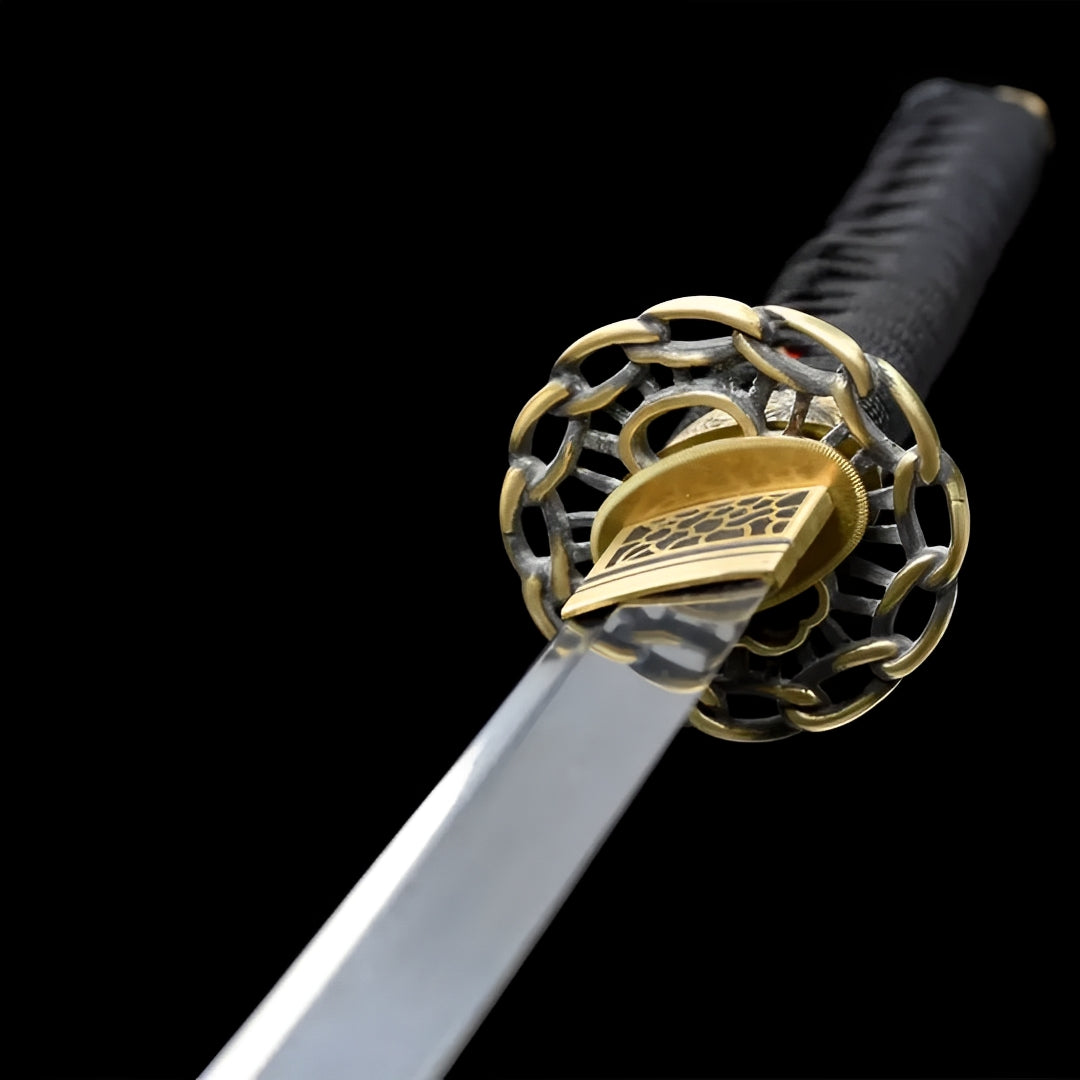
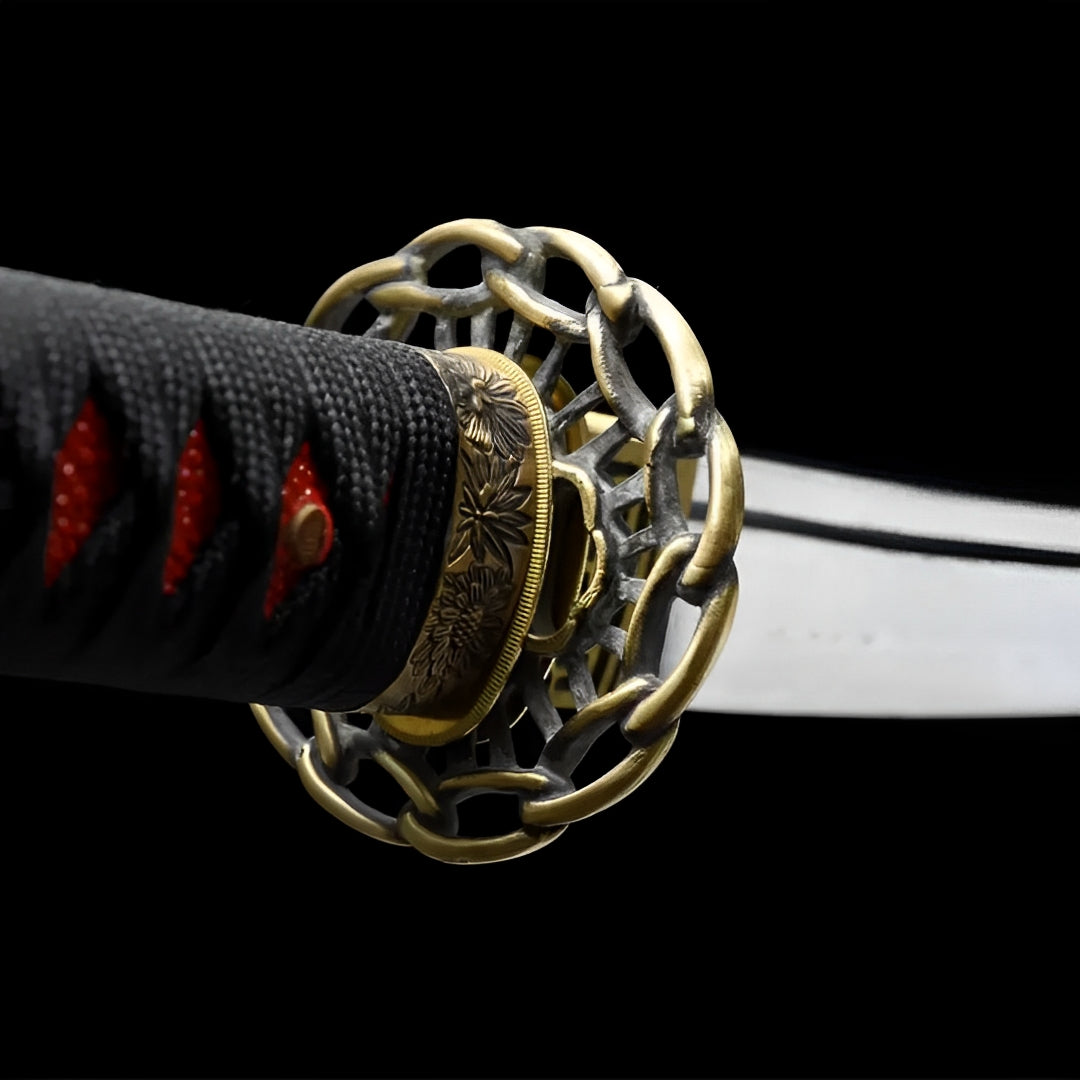
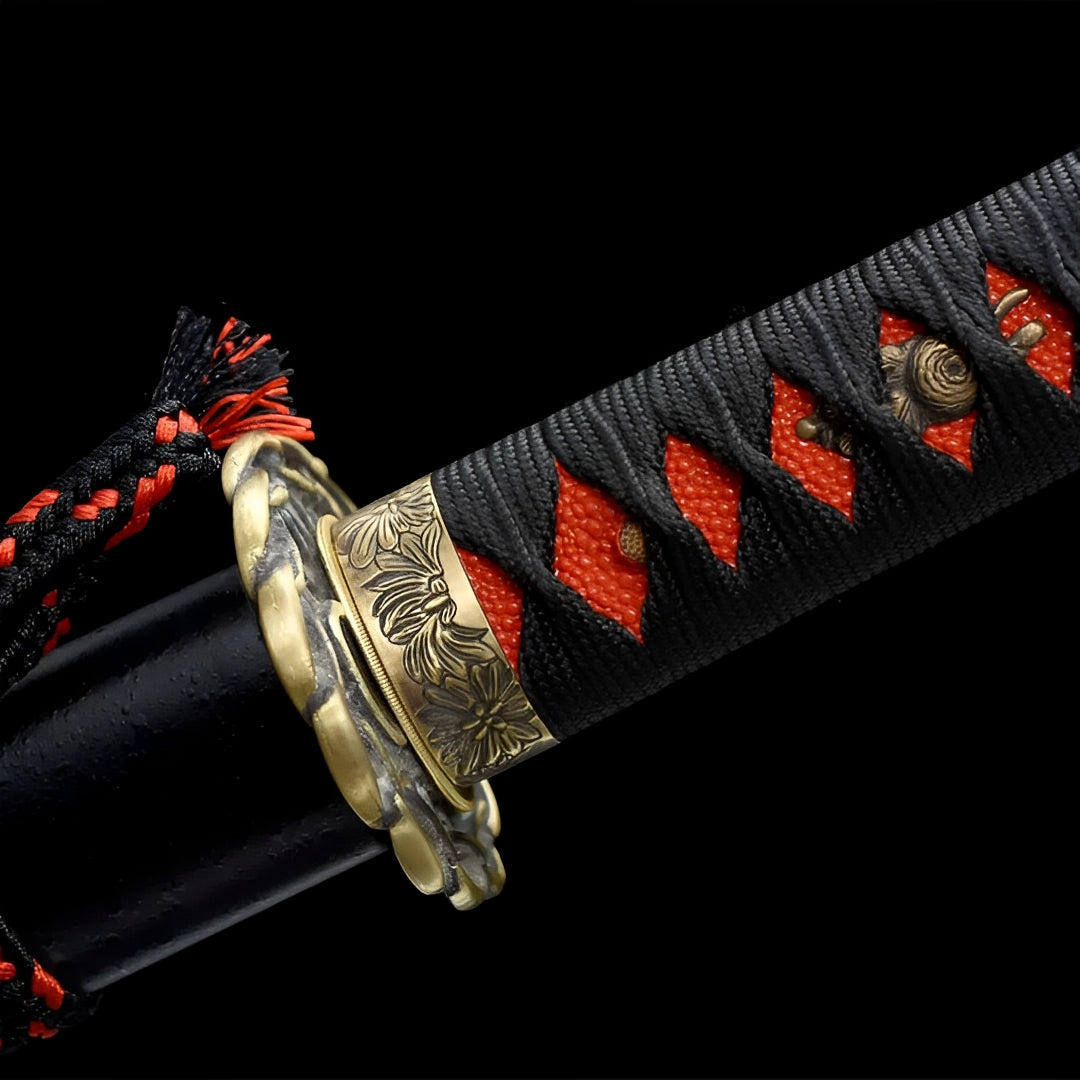
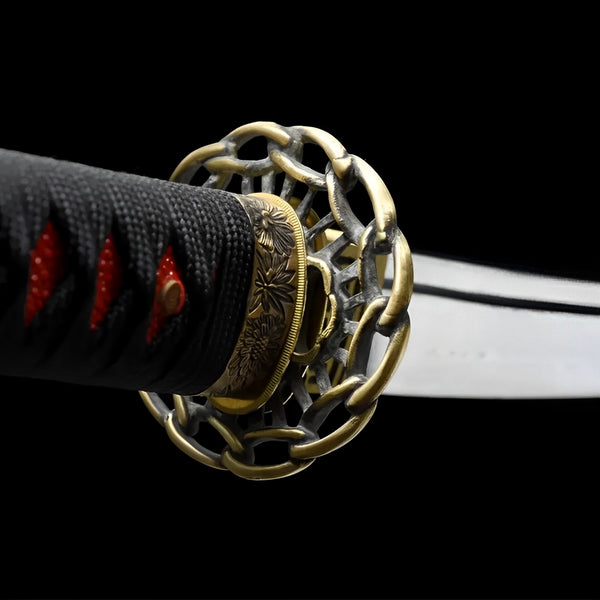
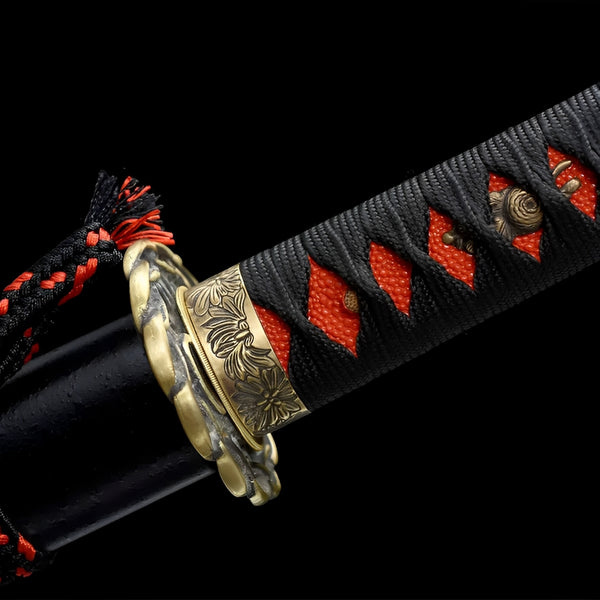
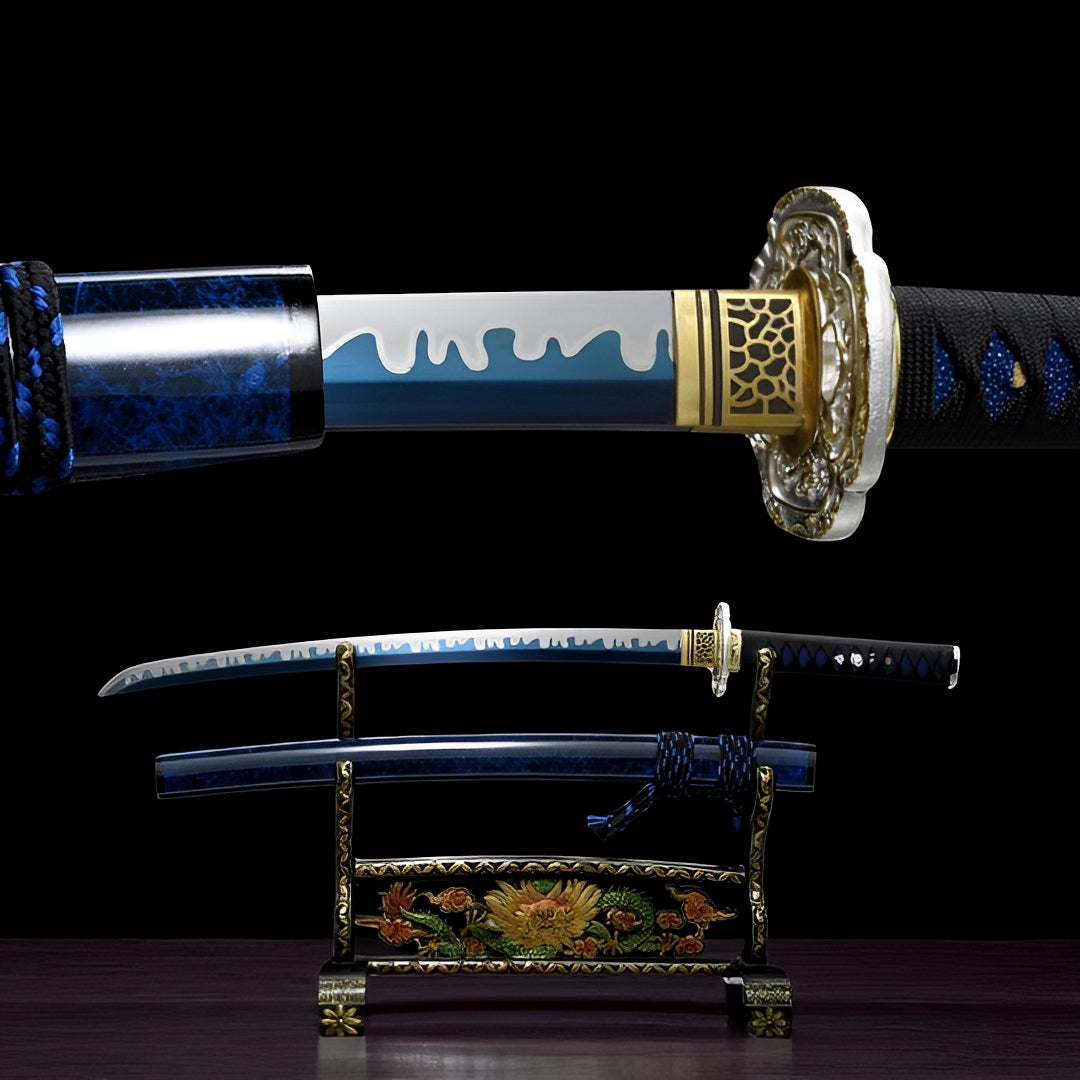
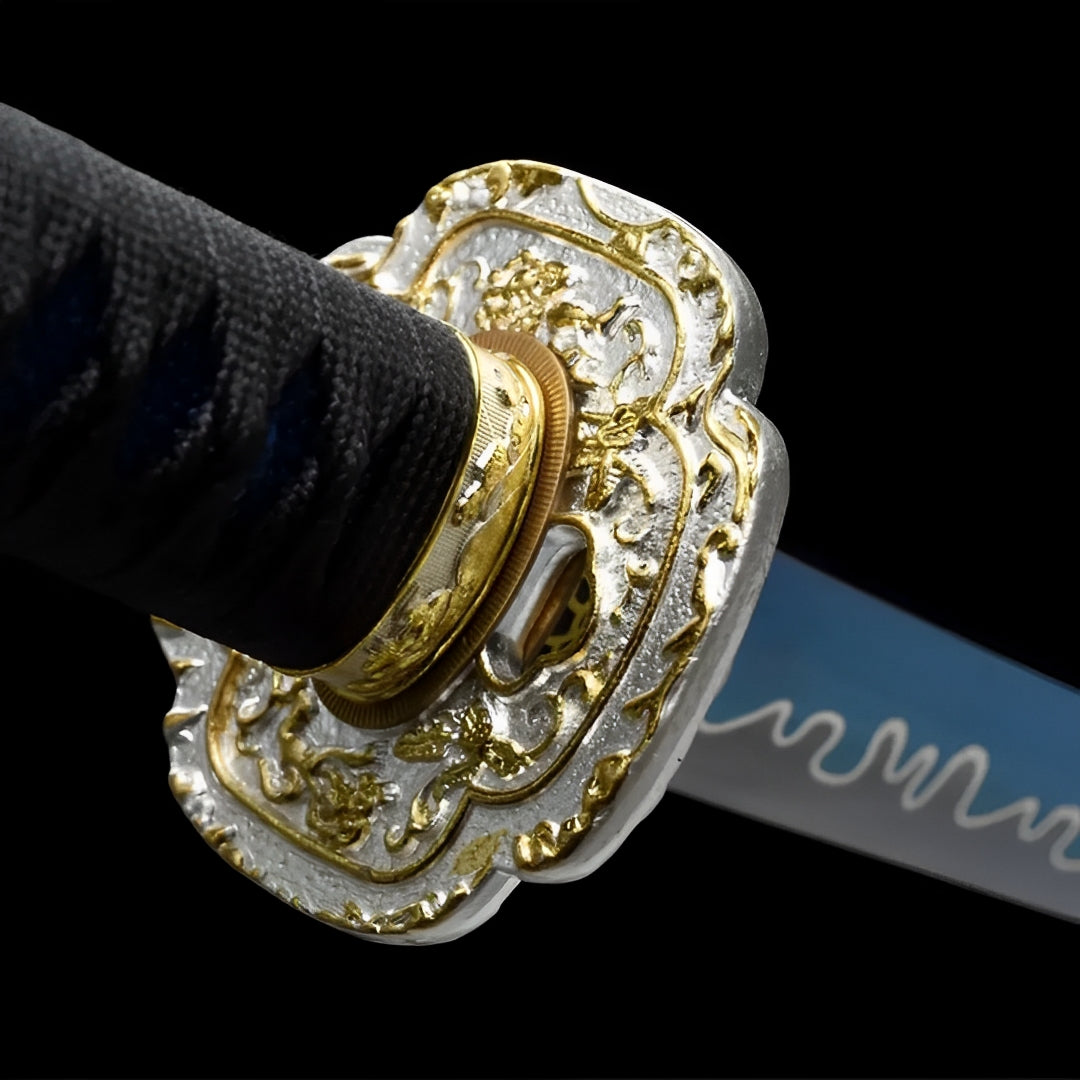
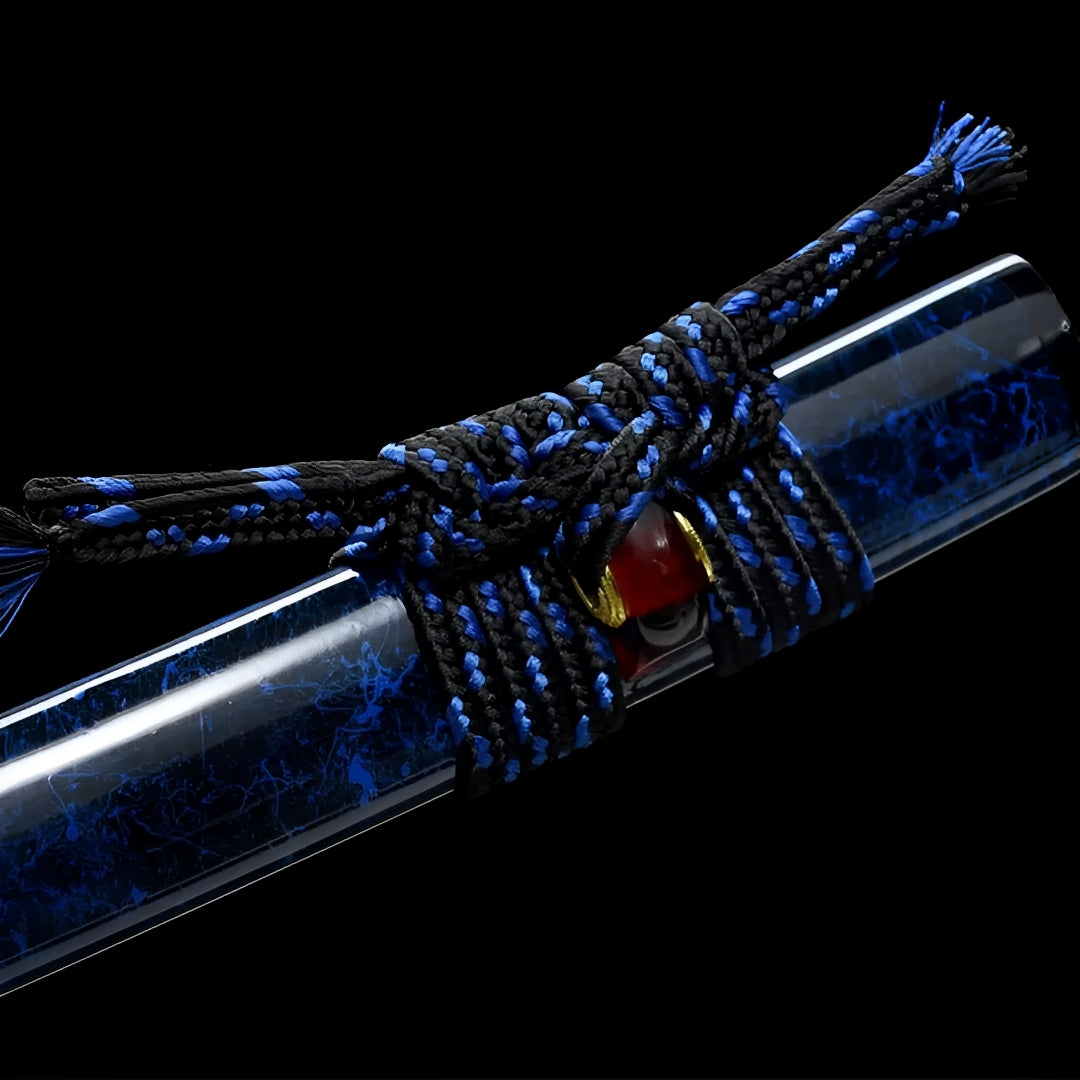
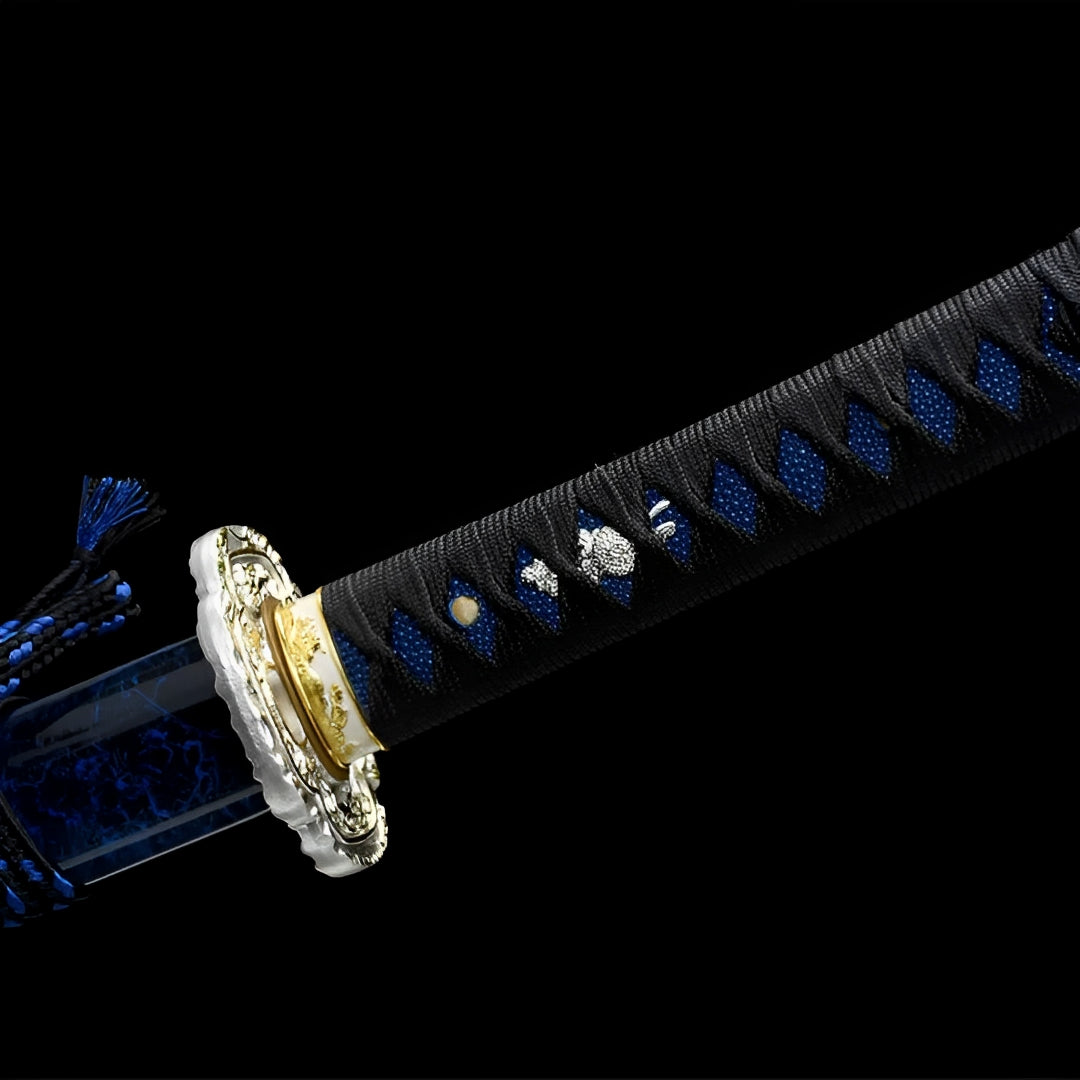
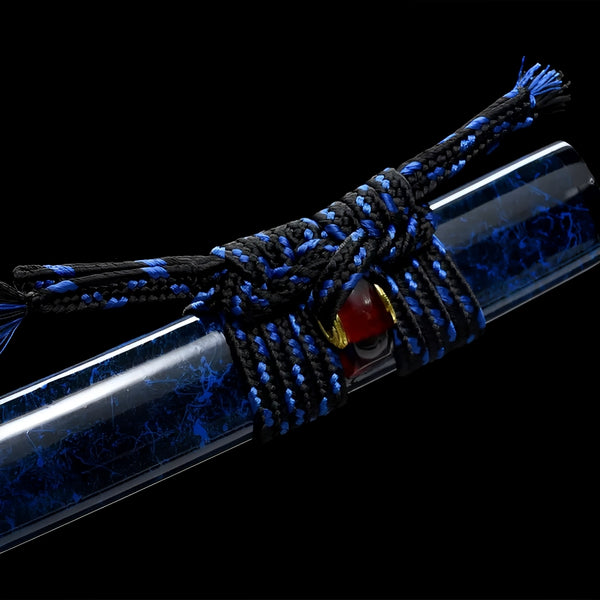
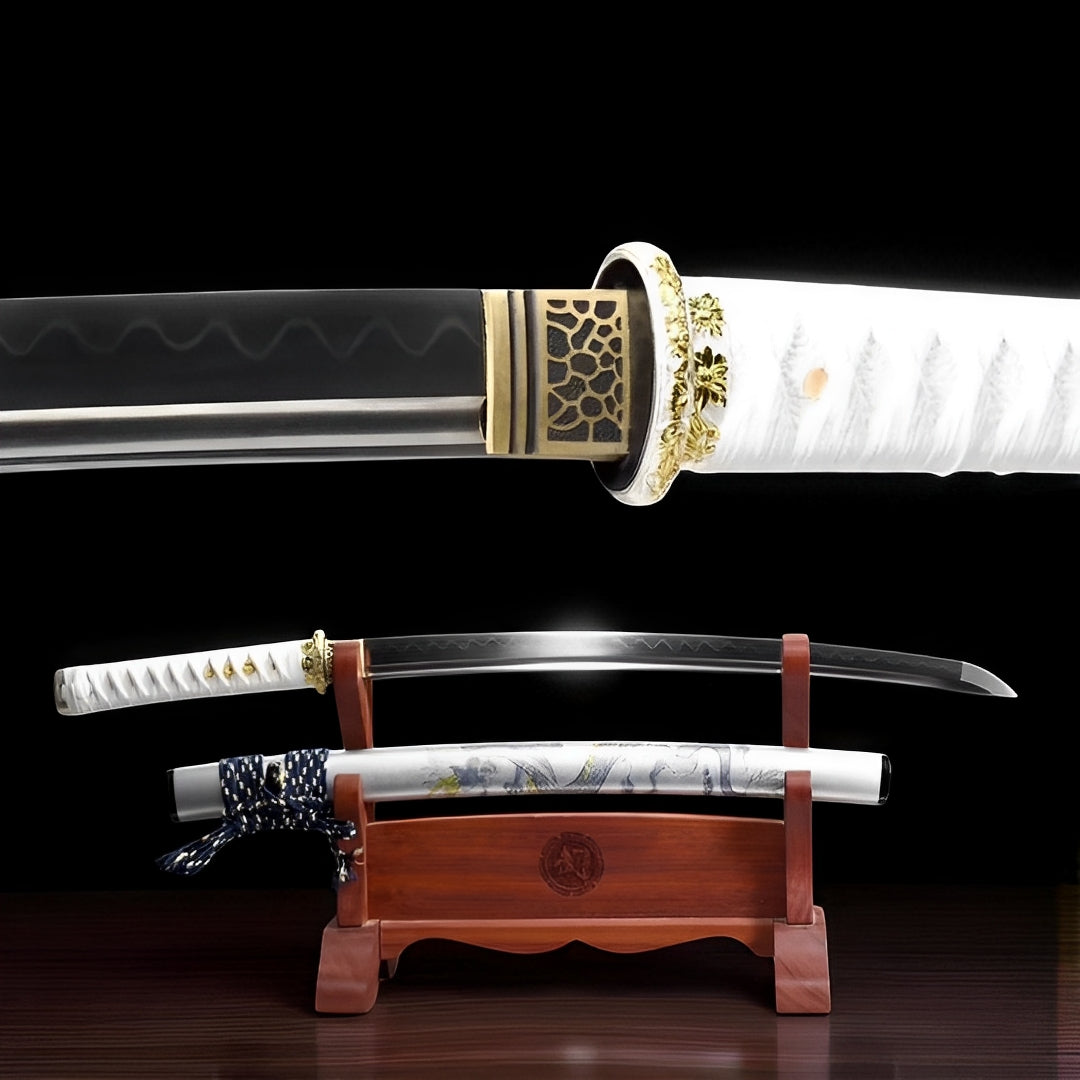
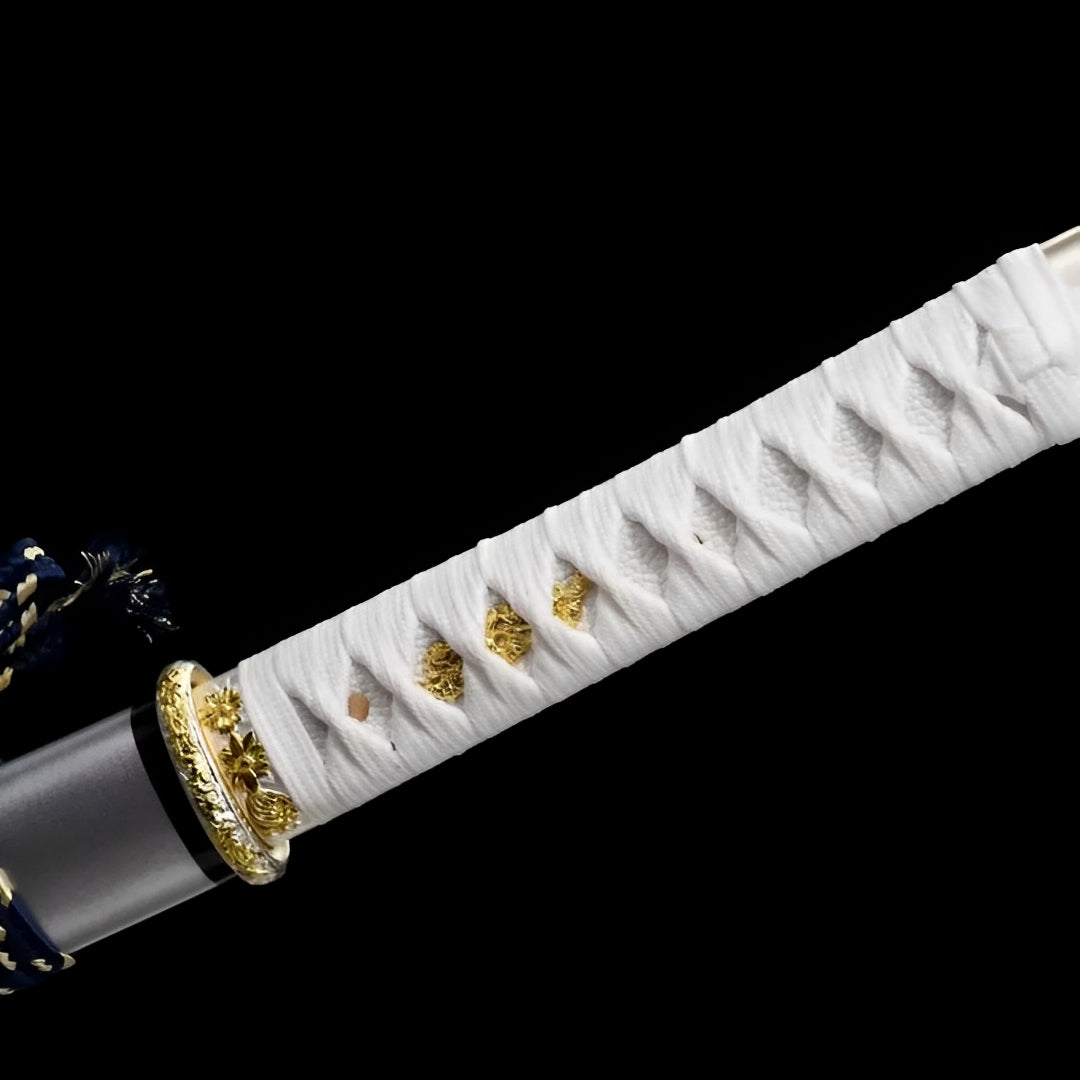
A wakizashi offers a shorter Japanese sword silhouette than a full-size katana. All four models here measure 80 cm overall, about 31.5 inches, with 52 cm blades, about 20.5 inches. Their dimensions are the same, so your choice comes down to the steel, finish and fittings.
If you already own a katana, compare its measurements with the space you have left on your shelf or wall. Allow room for the saya as well as the sword if you plan to display the blade drawn. The stand's width and support points matter too.
For a more compact piece, our tanto collection has 50 cm models with 33 cm blades. You can also read our wakizashi and katana comparison for more on the two sword types.
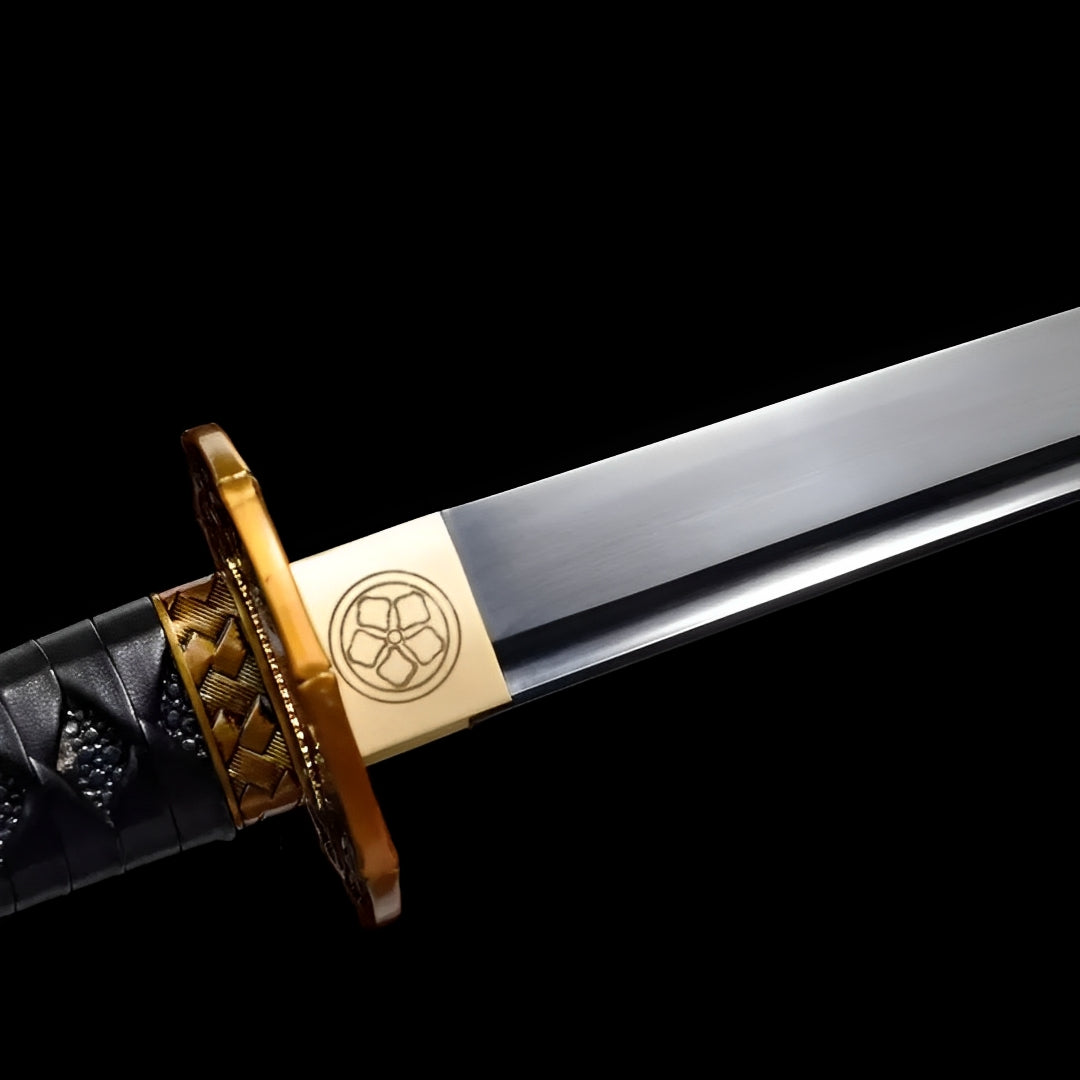
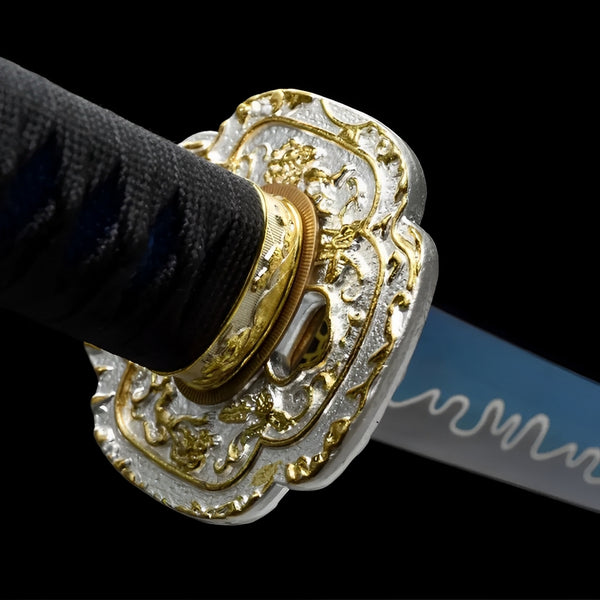
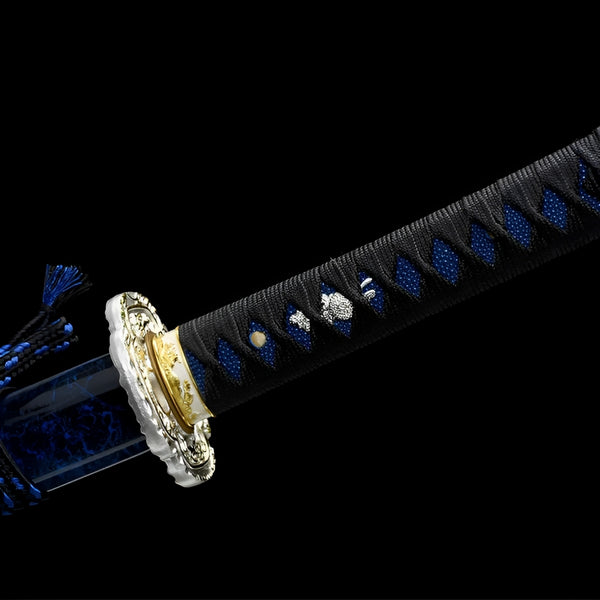
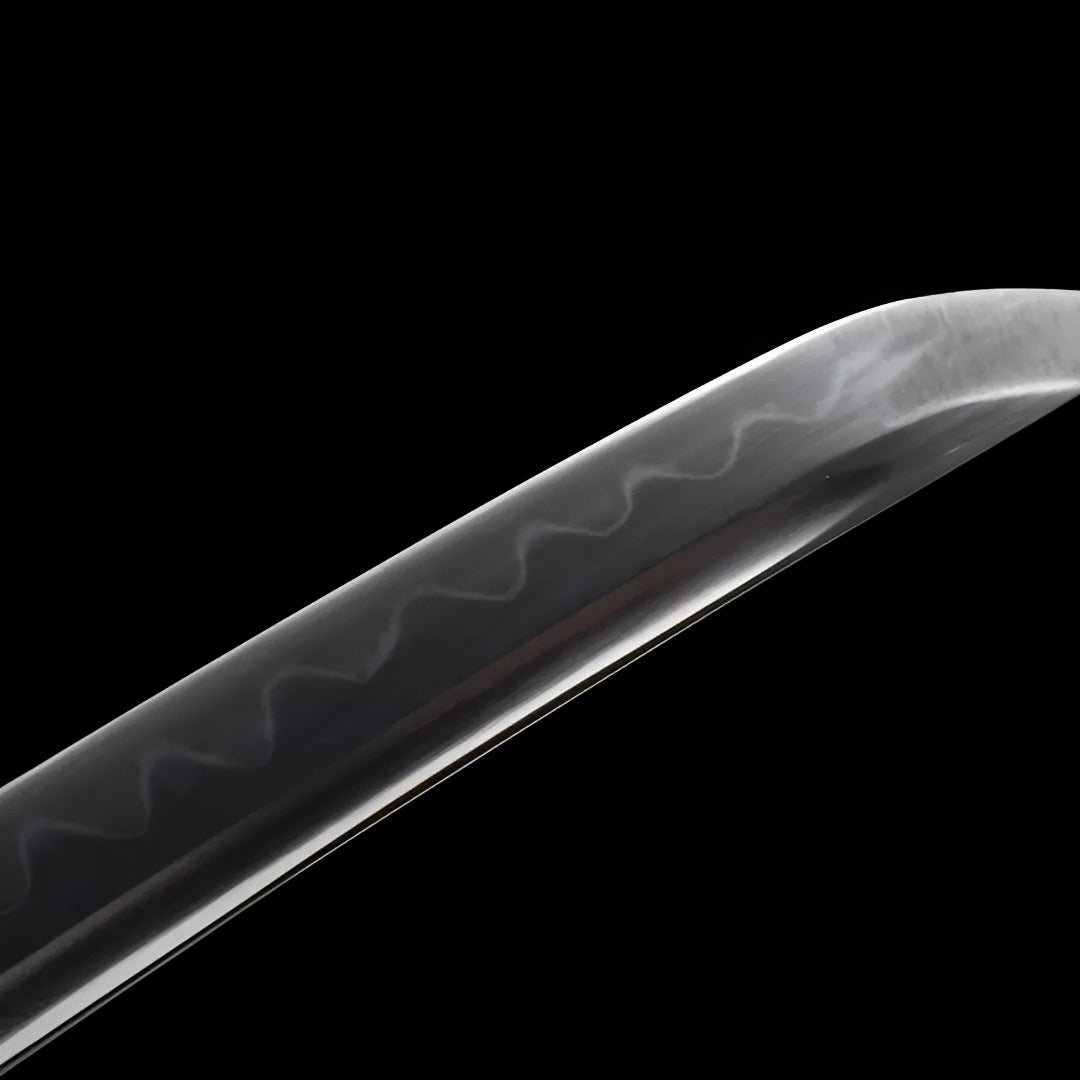
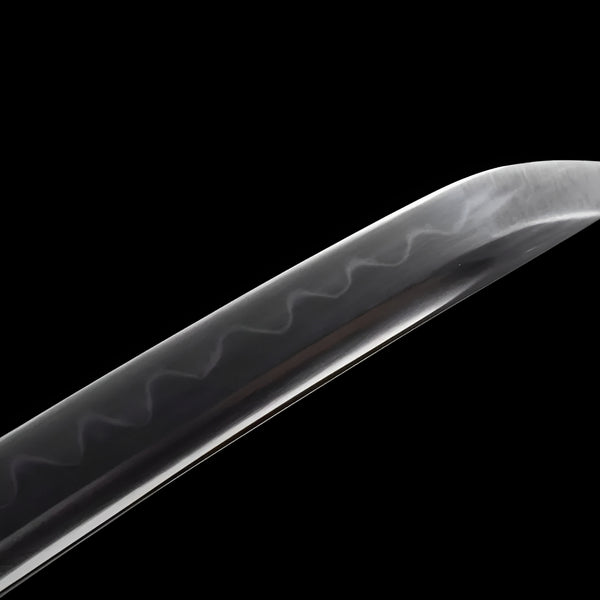
Kurohana has a 1060 carbon steel blade with a bo-hi, the groove running along the steel. Shinku is the Damascus option, with grain visible across its polished blade. Aonami and Tsukihana both use T10 tool steel, but their finishes are quite different.
Tsukihana's specification lists a clay-tempered hamon. Aonami has a machine-made hamon and a painted wave design on a blue-treated blade. Choose between them for those actual details, rather than assuming every T10 blade has the same finish. Our katana steel guide explains the steel names.
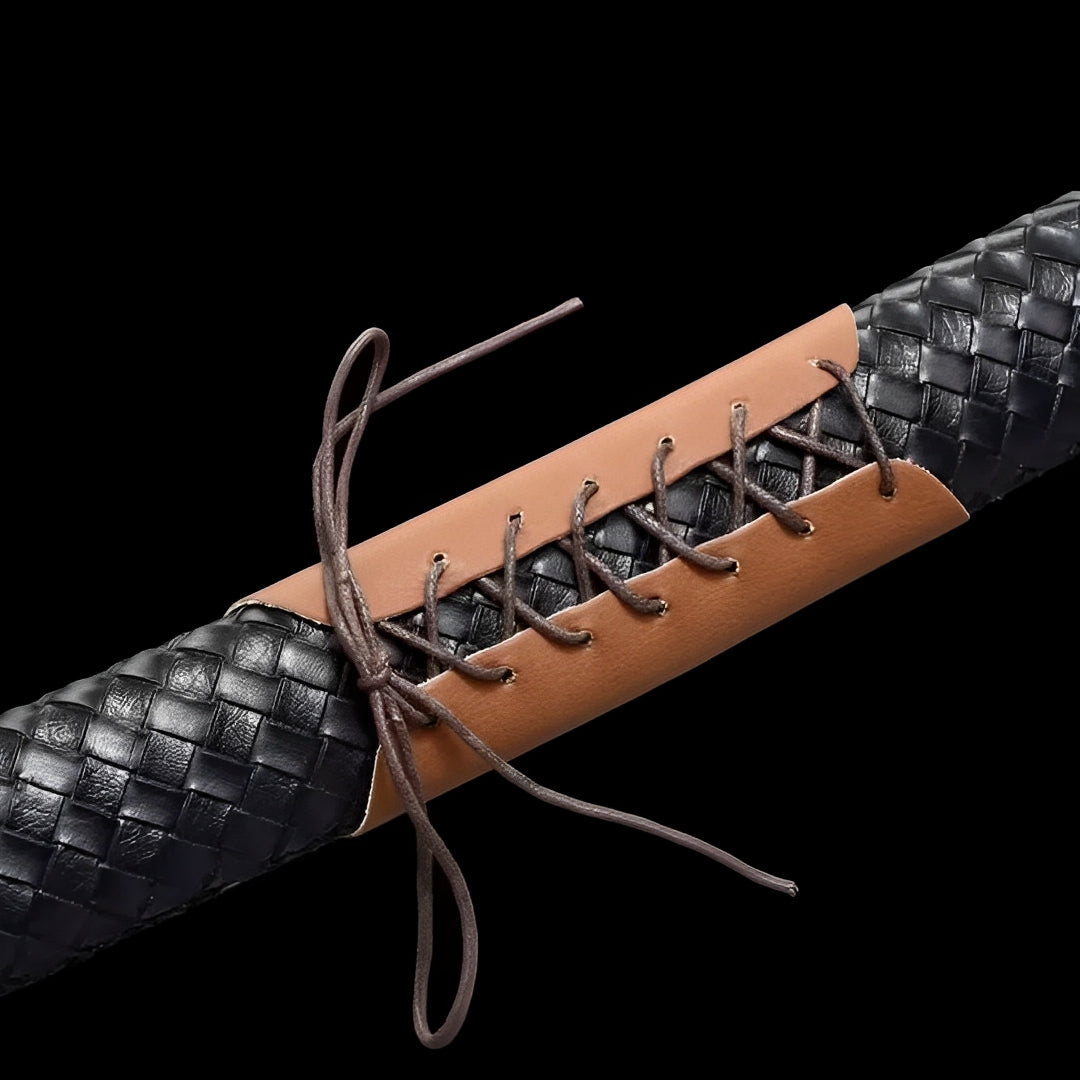
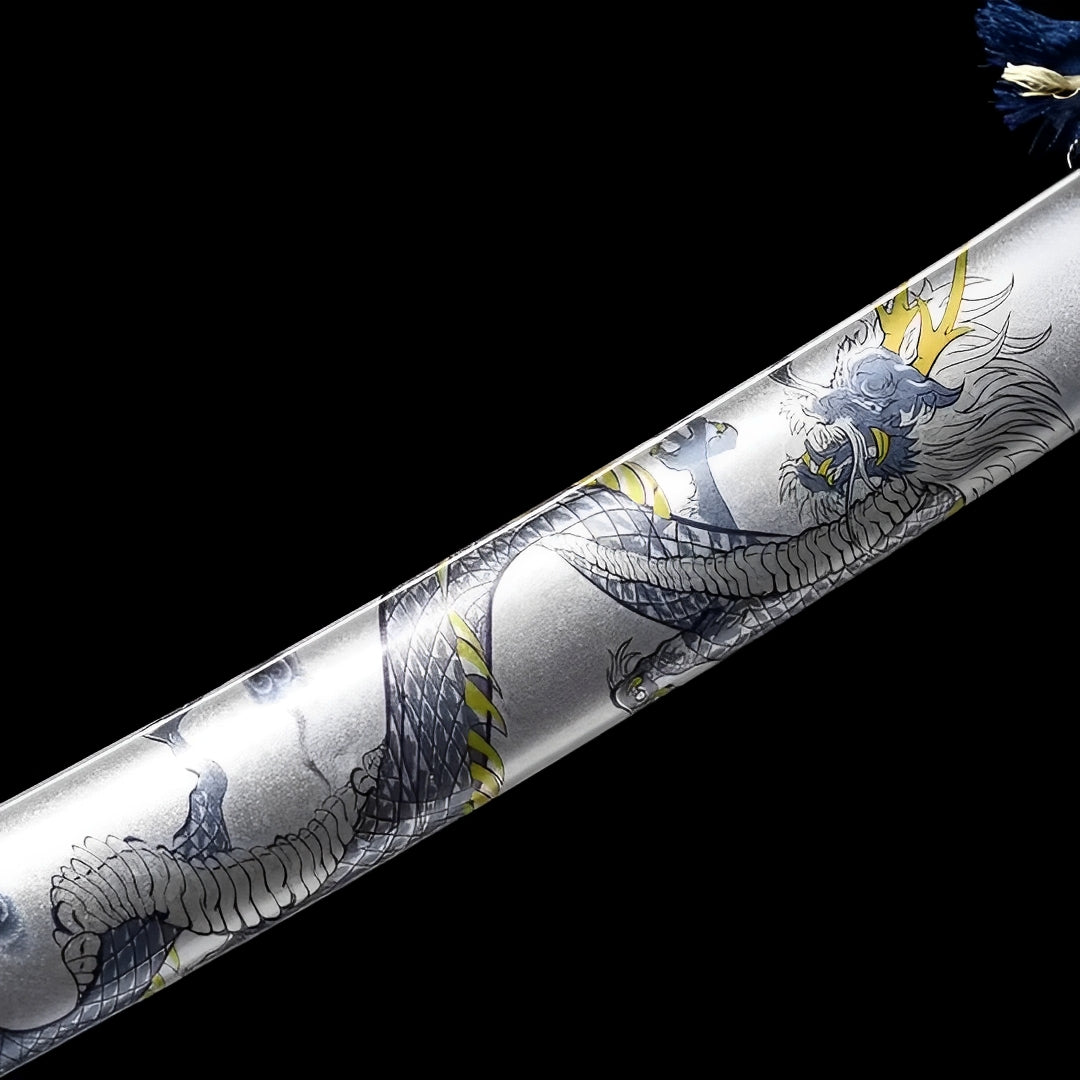
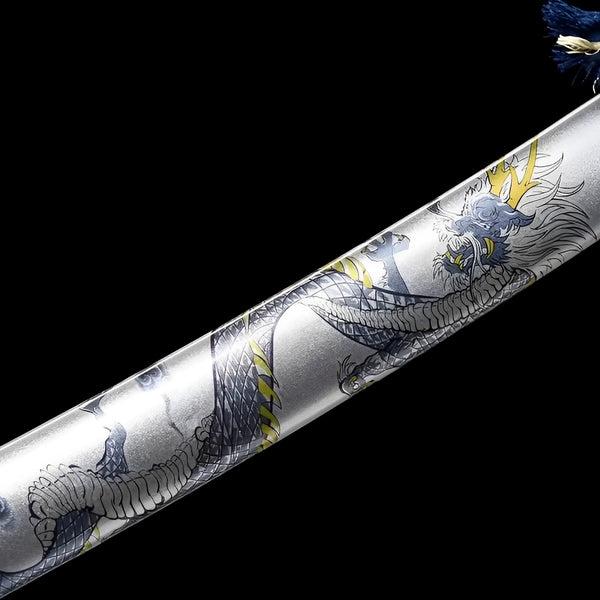
For display, keep the blade dry and follow the care instructions on its product page. Avoid touching the steel with bare fingers or using abrasive polish on colored finishes and painted scabbards. A dry, soft cloth helps remove dust from the saya without rubbing away its decoration.