


Ships within 48/72h

Forged Blade

Collector Quality

Trusted Globally

Inspired by Japan
Ships within 48/72h
Forged Blade
Collector Quality
Trusted Globally
Inspired by Japan
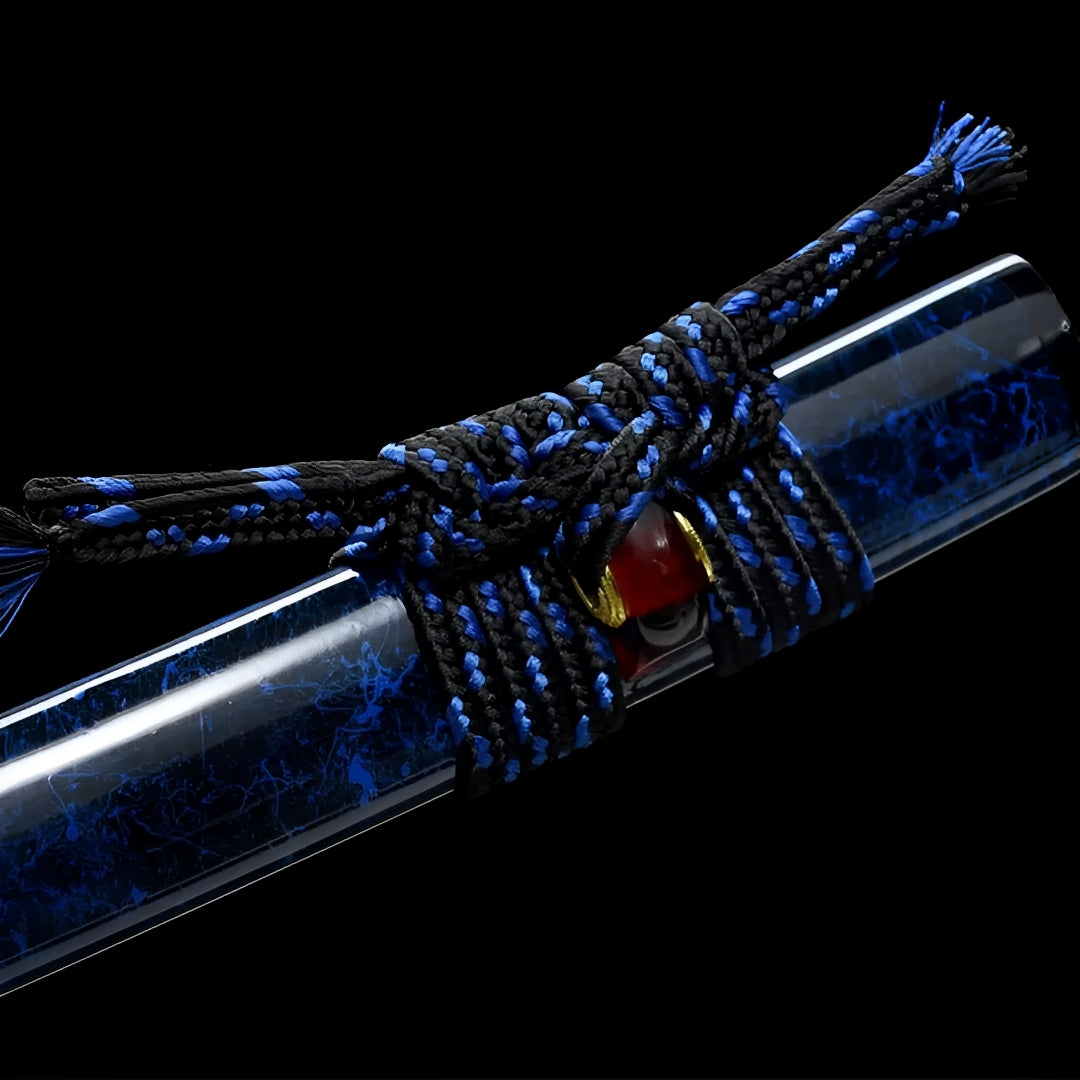
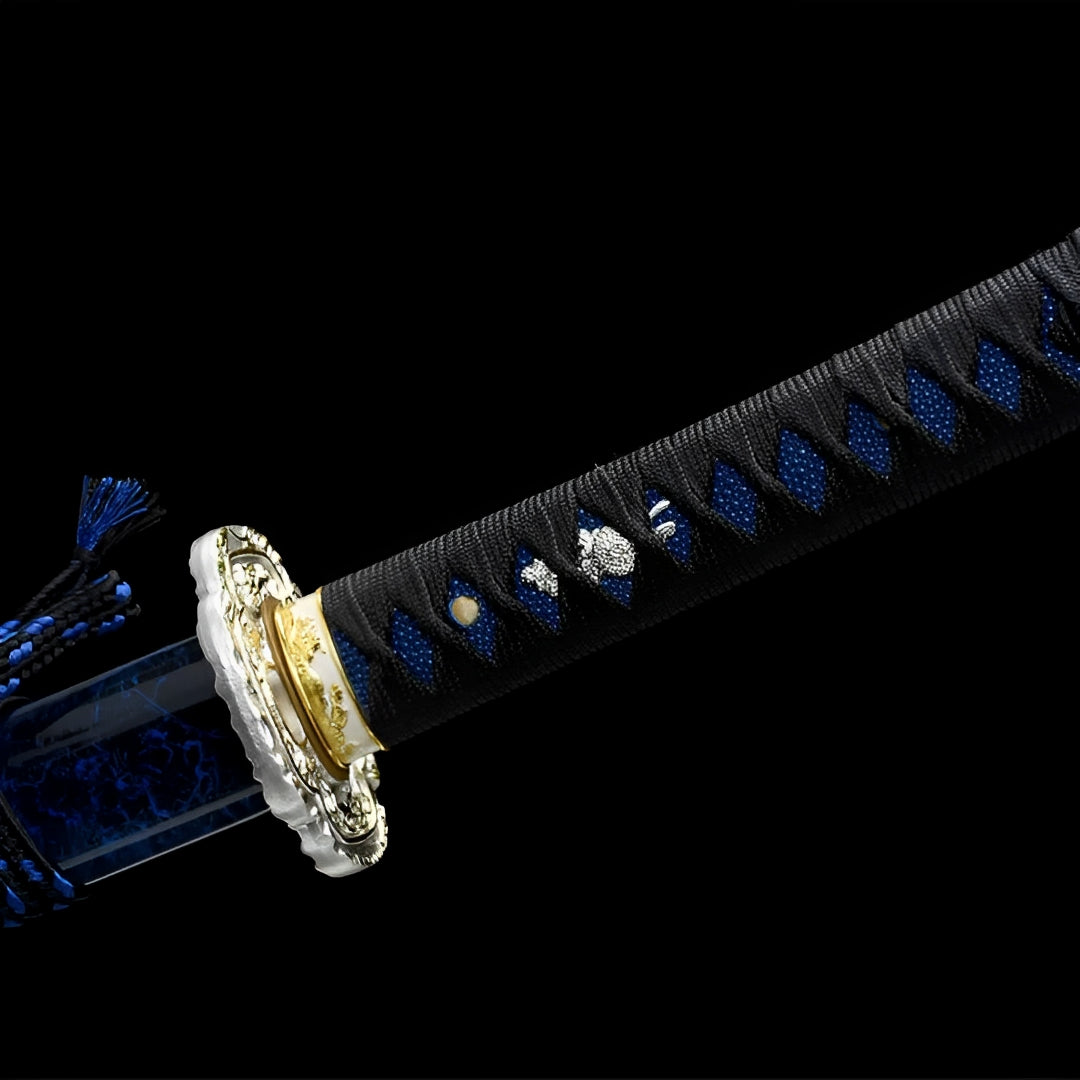
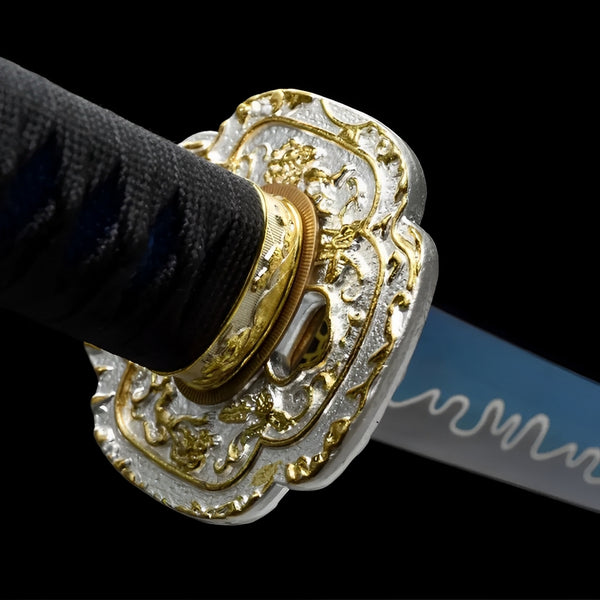
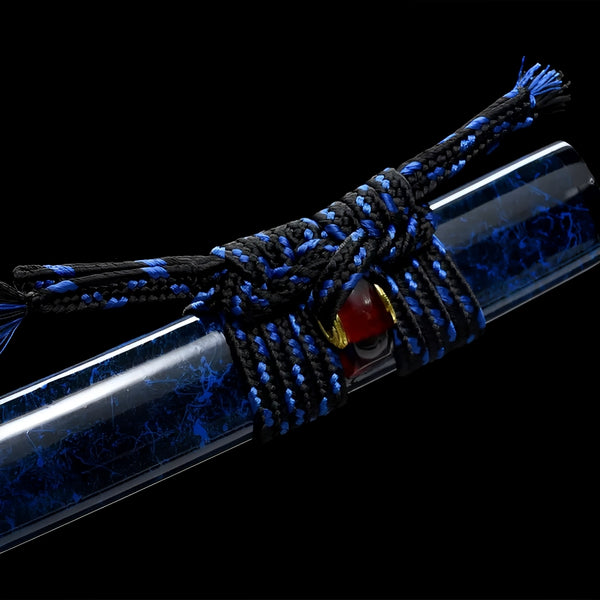
Ships within 48/72h
Forged Blade
Collector Quality
Trusted Globally
Inspired by Japan
Ships within 48/72h
Forged Blade
Collector Quality
Trusted Globally
Inspired by Japan
Collection Description – About this Collection
The wakizashi — the samurai's most trusted blade
The katana may be the most famous Japanese sword, but the wakizashi was the one that never left a samurai's side. This mid-length blade — measuring 12 to 24 inches — was worn at all times, even indoors where etiquette required warriors to leave their traditional japanese sword at the entrance. While the katana served in open battle, the wakizashi stayed with its owner through every hour of the day, ready for close-quarters defense, sudden confrontation, or the most solemn moments of a warrior's life.
Together, the katana and wakizashi formed the daishō (大小) — the long-and-short blade pairing that defined samurai status during the Edo period. Only the samurai class was legally permitted to carry both. Losing either sword was considered a grave dishonor. For many warriors, the wakizashi was more than a companion blade — it was the weapon closest to the body and, by extension, closest to the soul.
What makes a wakizashi different from a katana or tanto?
The wakizashi sits between the katana and the tanto in both size and purpose. Where the katana excels in sweeping cuts at full reach and the tanto is built for thrusting at close range, the wakizashi combines elements of both — a curved blade long enough to slash effectively, yet short enough for rapid draws and confined spaces.
This versatility made it the preferred weapon in situations where a katana was impractical:
- Indoor defense — castle corridors, tea houses, and rooms where long blades could not be swung freely
- Dual-wielding techniques (nitō-ryū) — used in the off-hand alongside a katana, most famously practiced by Miyamoto Musashi
- Quick-draw scenarios — the shorter blade clears the scabbard faster than a katana, giving the wielder a critical time advantage
- Seppuku — the wakizashi served as the ritual blade in the act of honorable self-disembowelment, a role that demanded absolute sharpness and flawless construction
The blade profile is slightly thicker in proportion than a katana, giving it greater rigidity for its length. Most wakizashi feature the same curvature style as a katana but with a tighter arc, producing a blade that tracks well during both cuts and thrusts.
Forging and steel
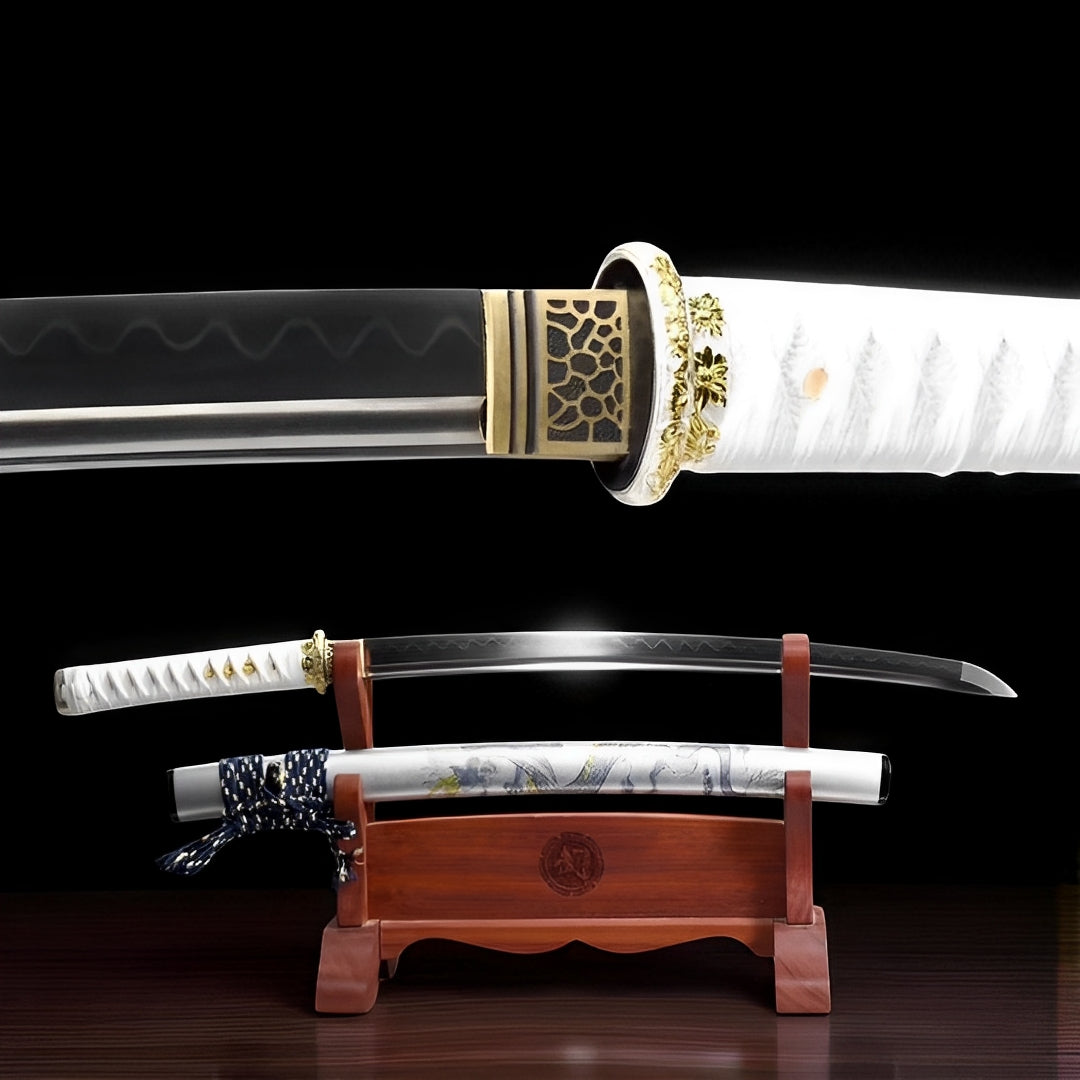
Every wakizashi in our collection is hand-forged using the same techniques and materials applied to our full-size katanas. The blade is not a scaled-down afterthought — it receives the same forging time, heat treatment, and hand-finishing as a longer sword.
Our wakizashi are forged from:
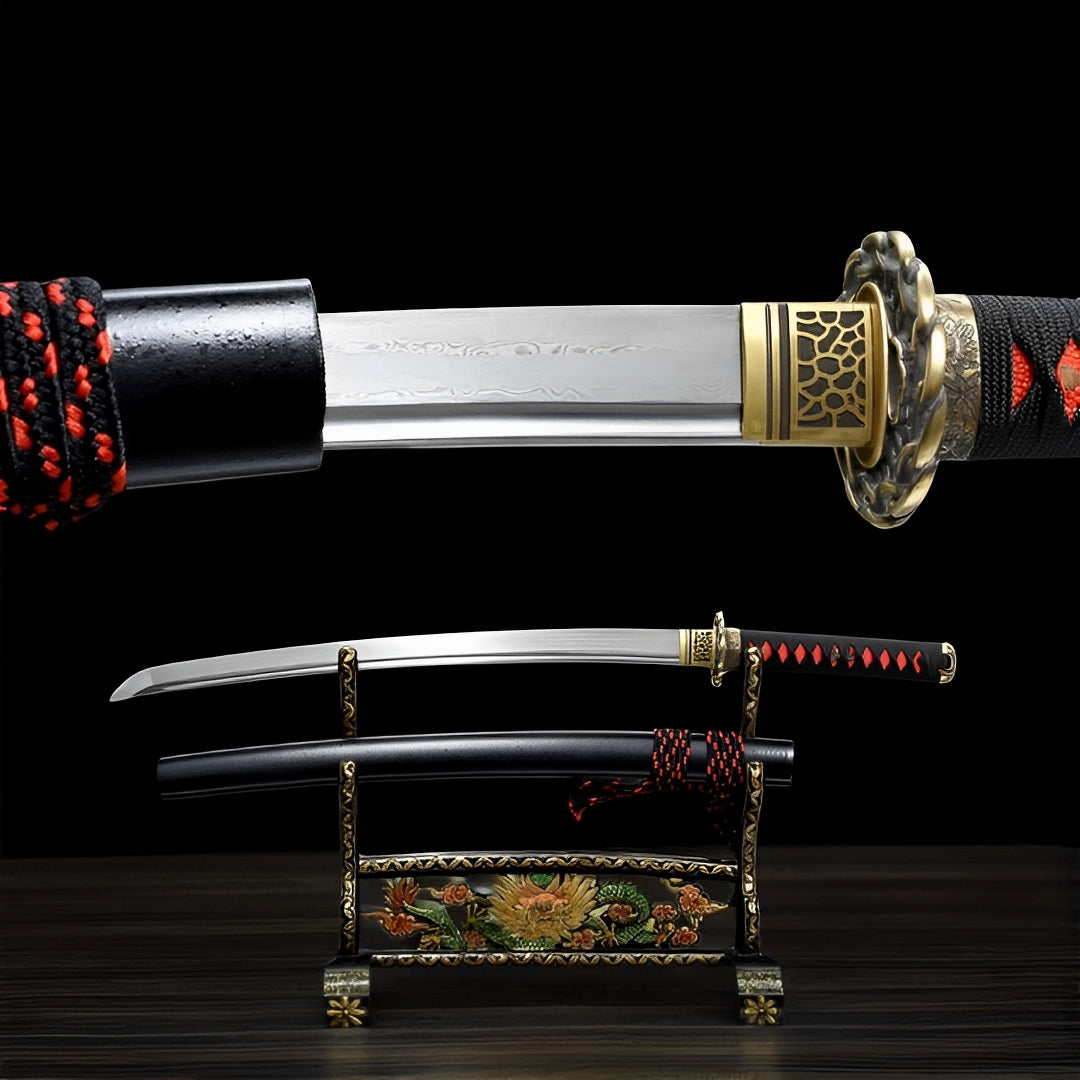
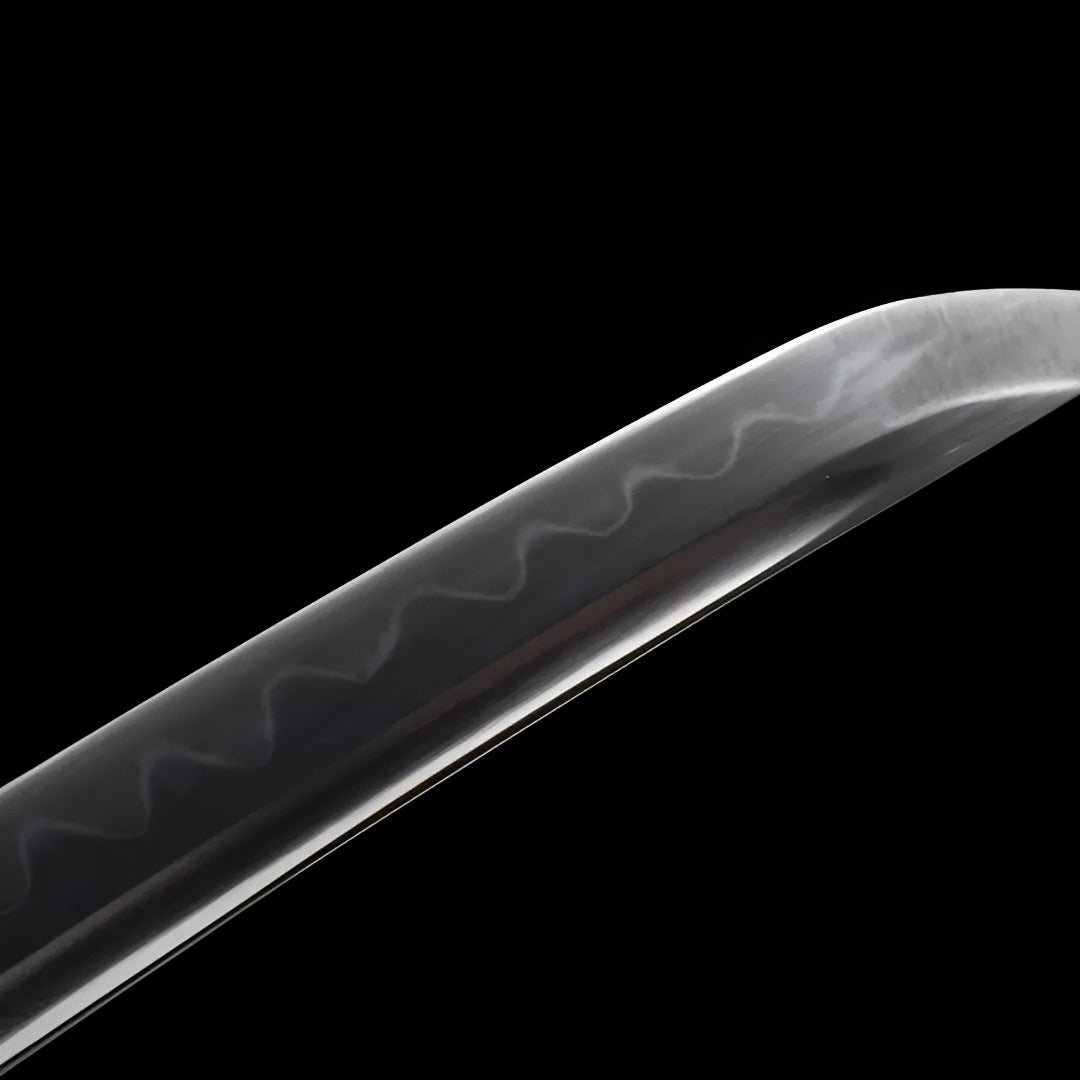
- Damascus steel — layered, folded steel producing a unique grain pattern across the blade surface. The alternating hard and soft layers create a blade with excellent edge retention and shock resistance. No two Damascus blades share the same pattern.
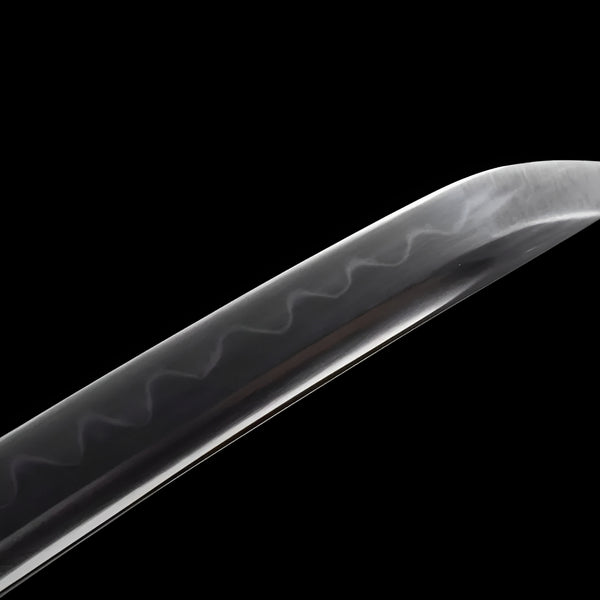
- T10 tool steel — a tungsten-alloyed high-carbon steel reaching 60–62 HRC after heat treatment. T10 delivers superior hardness and edge retention compared to standard 1060 carbon steel, and responds exceptionally well to differential hardening, producing bold hamon lines along the cutting edge.
All blades are full tang — the steel extends through the entire handle and is secured with bamboo mekugi pegs. Every wakizashi can be fully disassembled to inspect the nakago (tang) and confirm the construction quality that separates a hand-forged blade from a mass-produced replica.
Fittings and scabbard
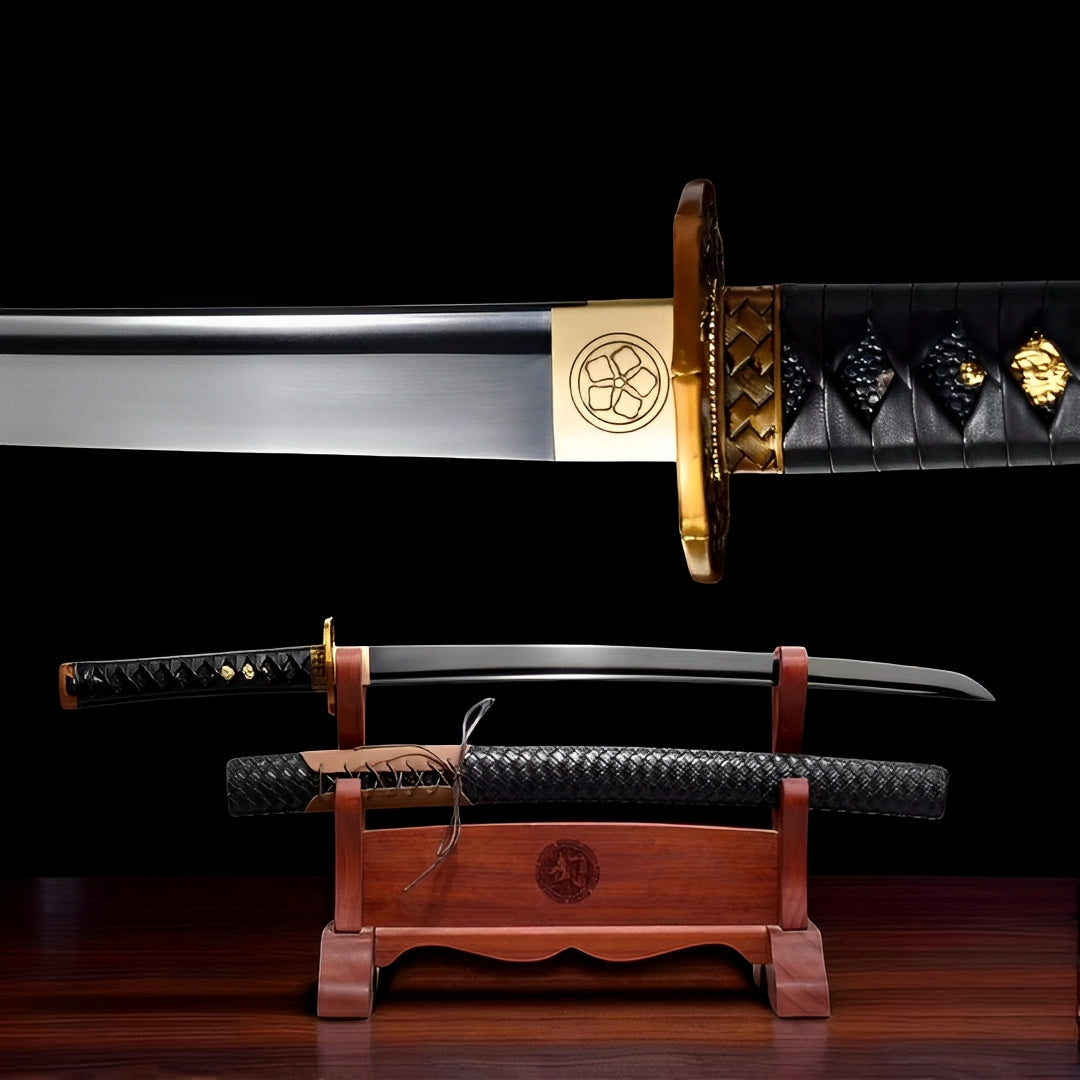
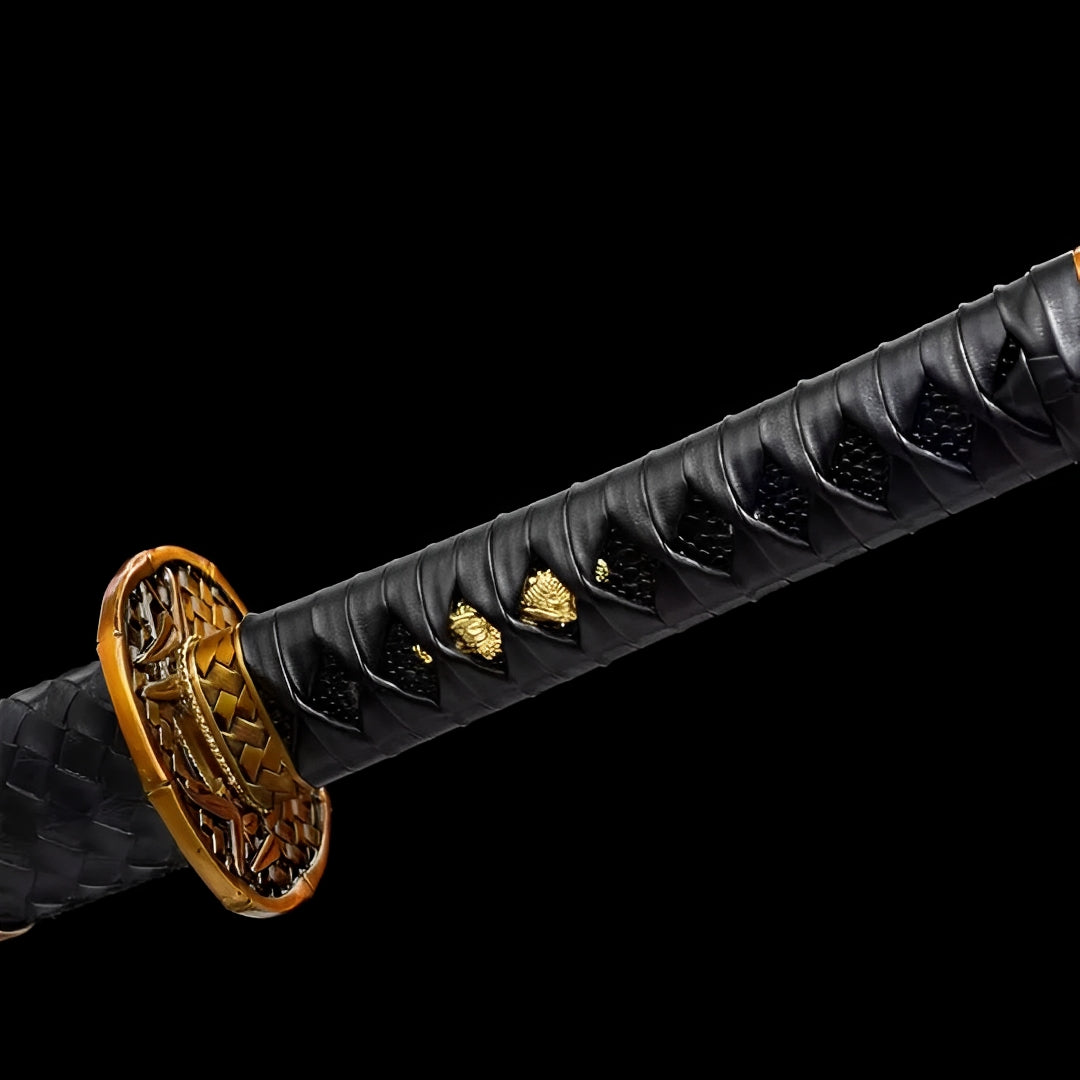
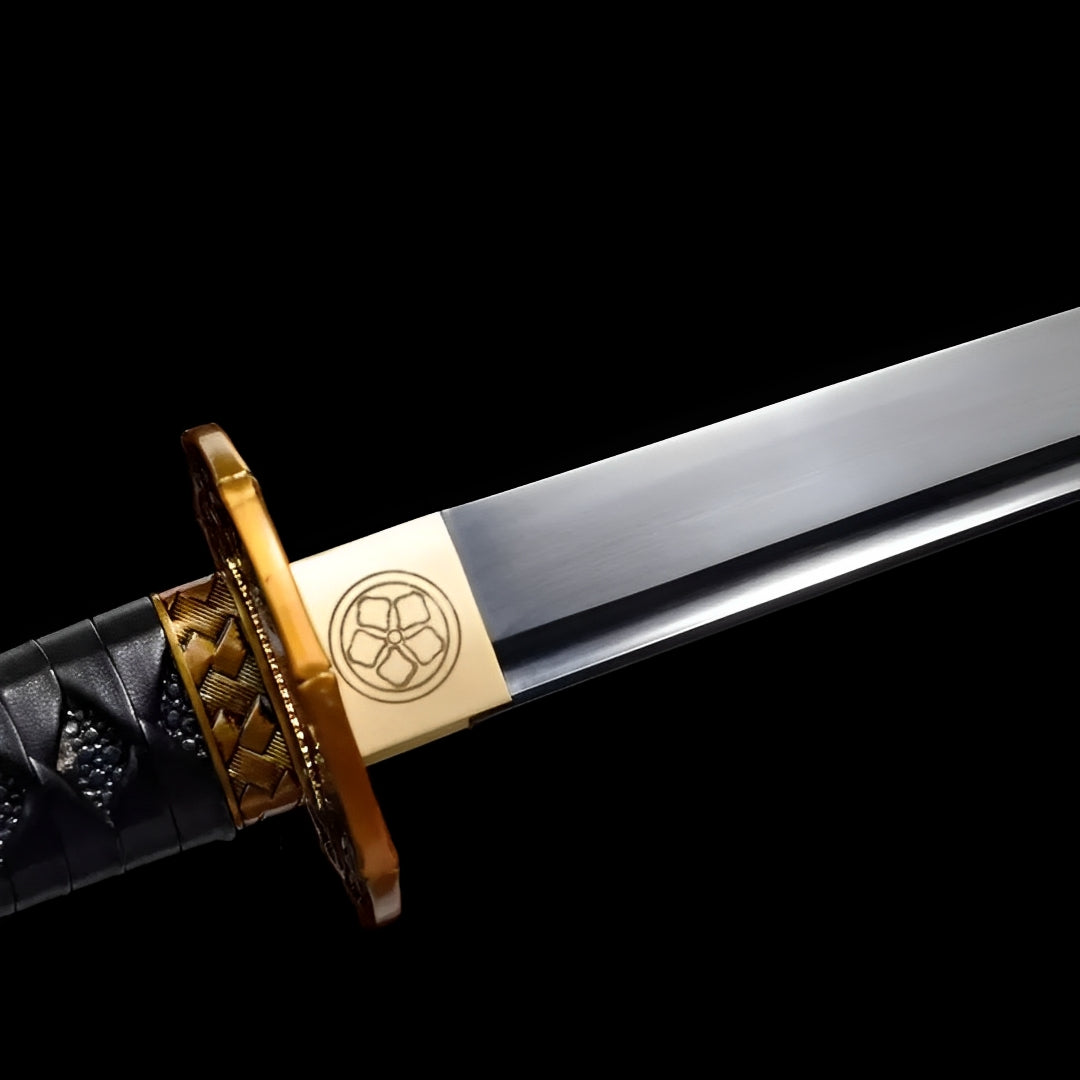
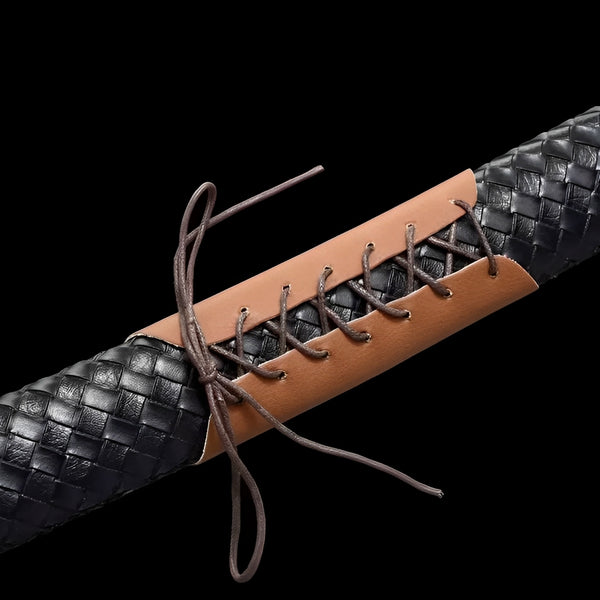
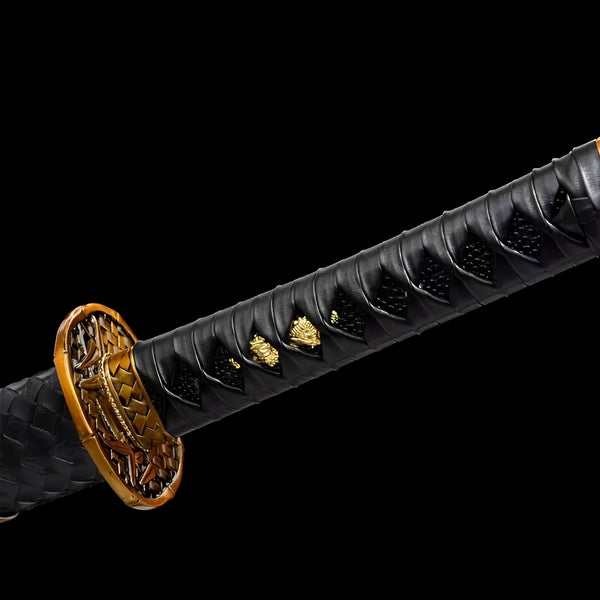
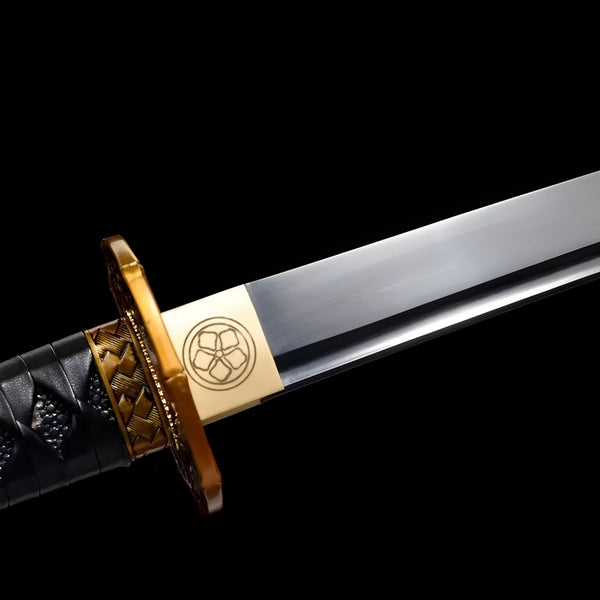
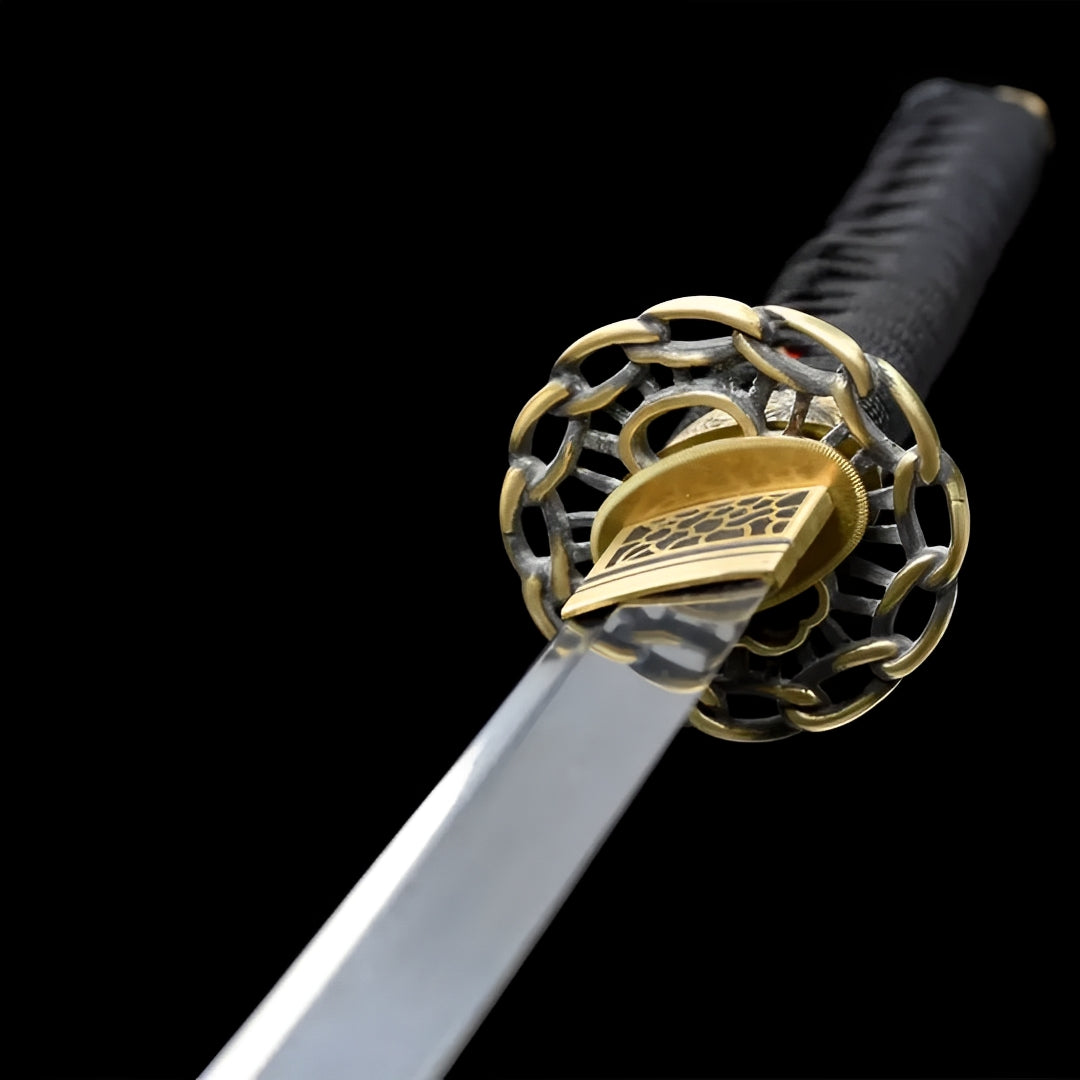
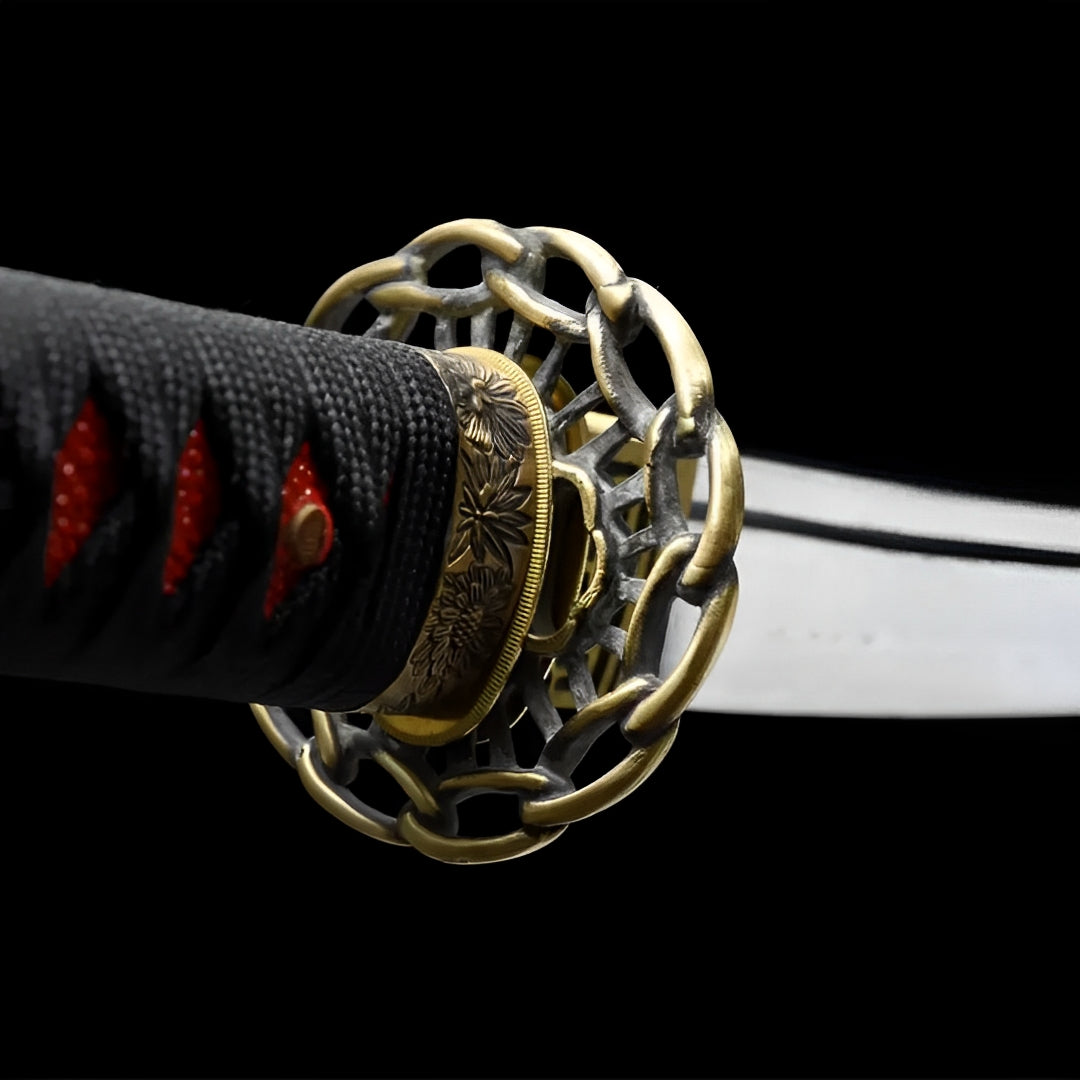
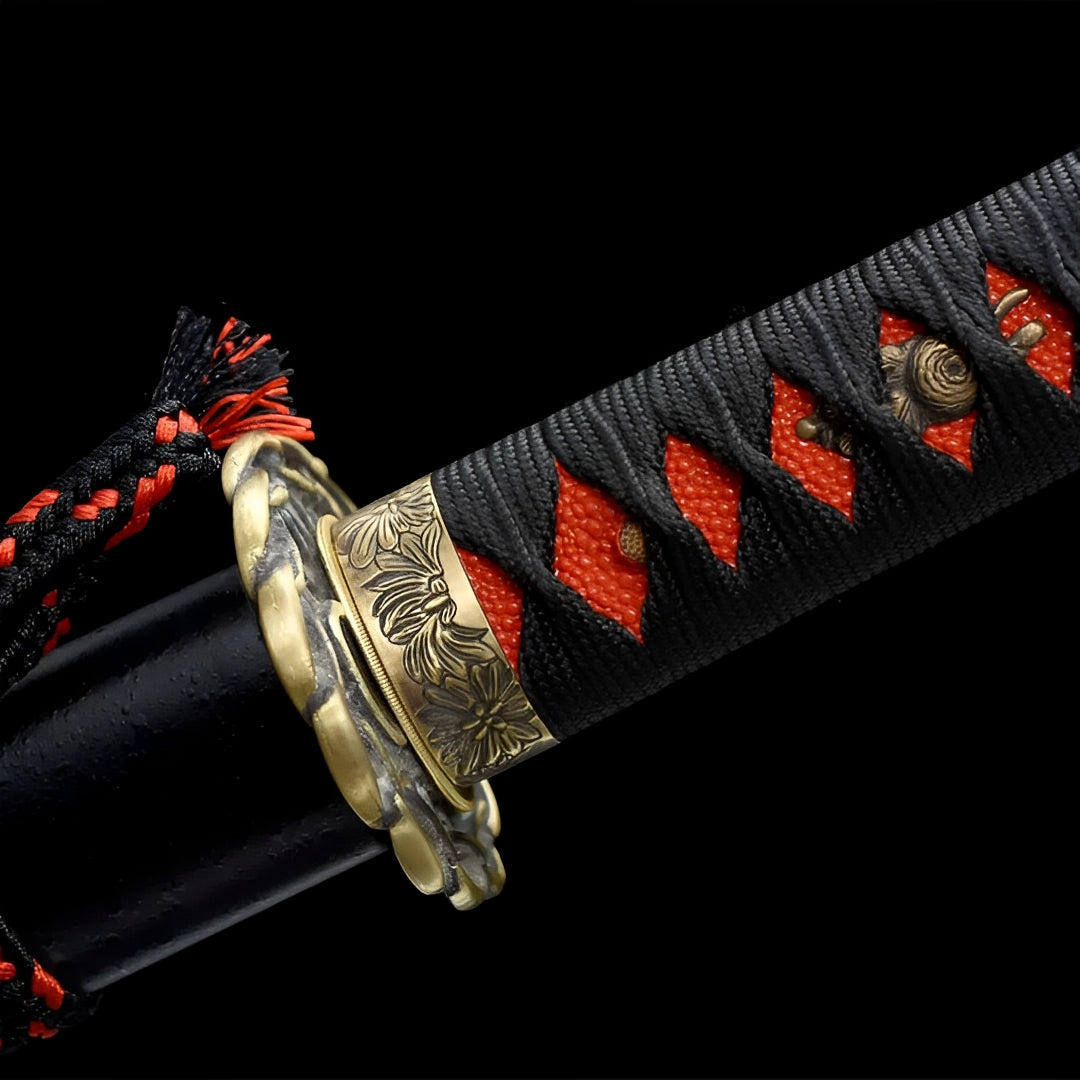
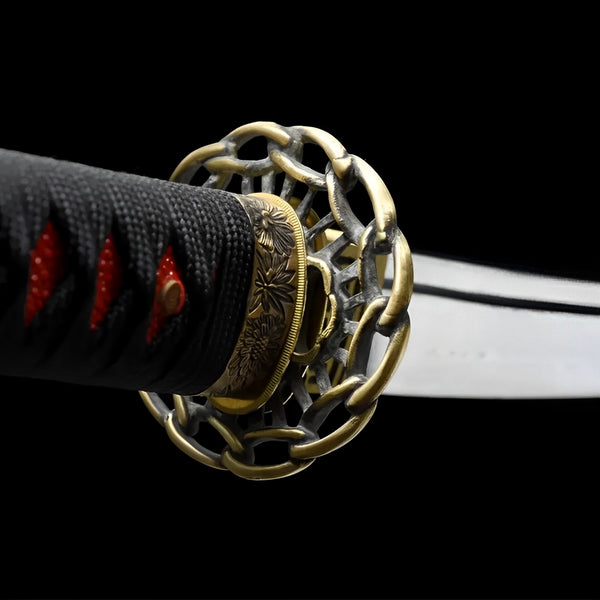
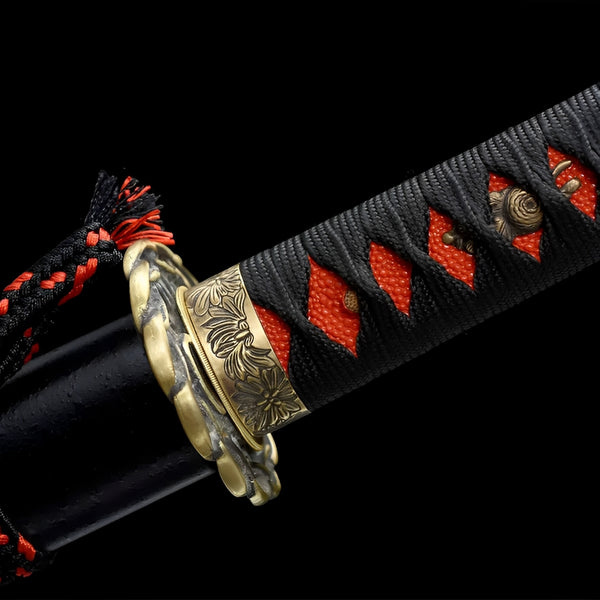
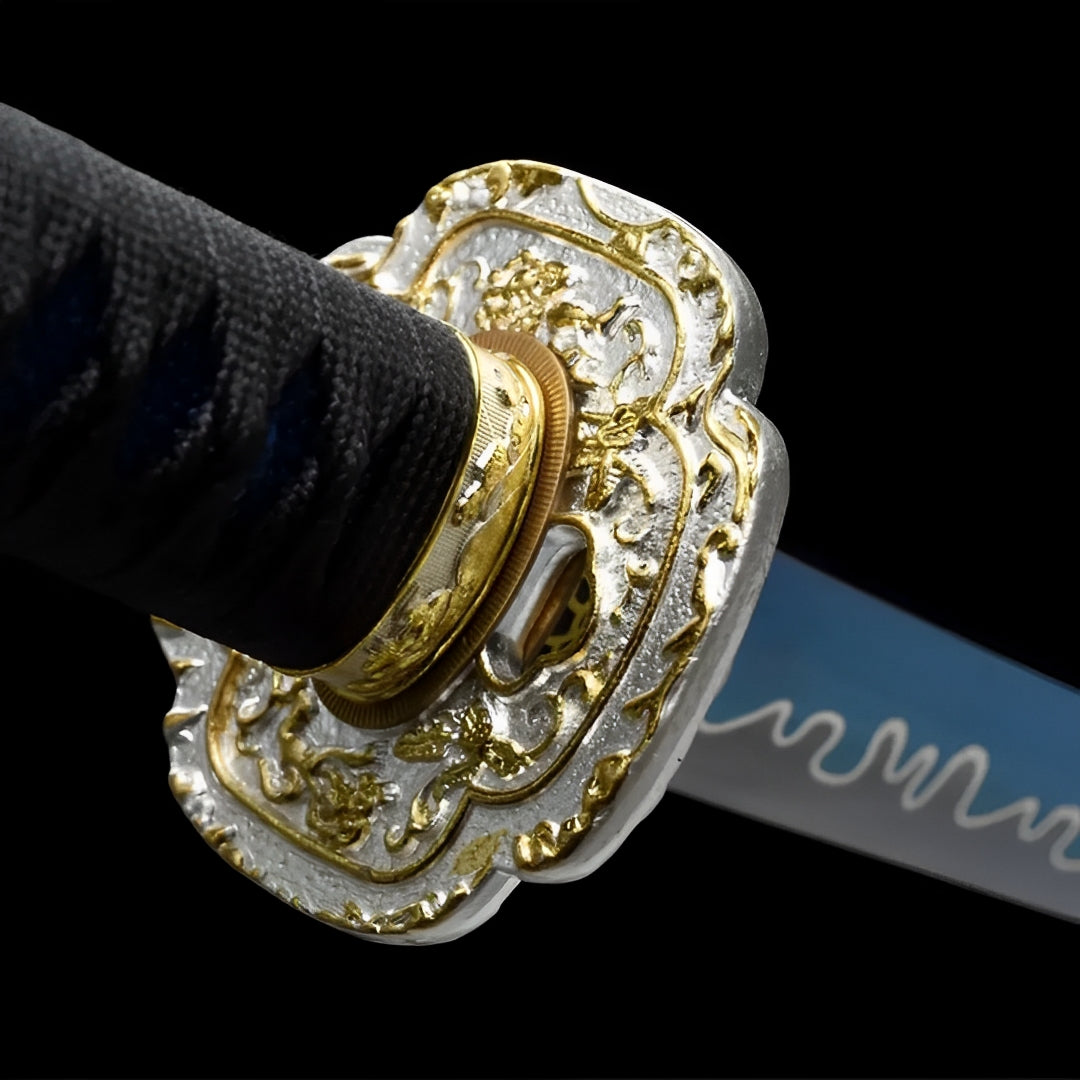
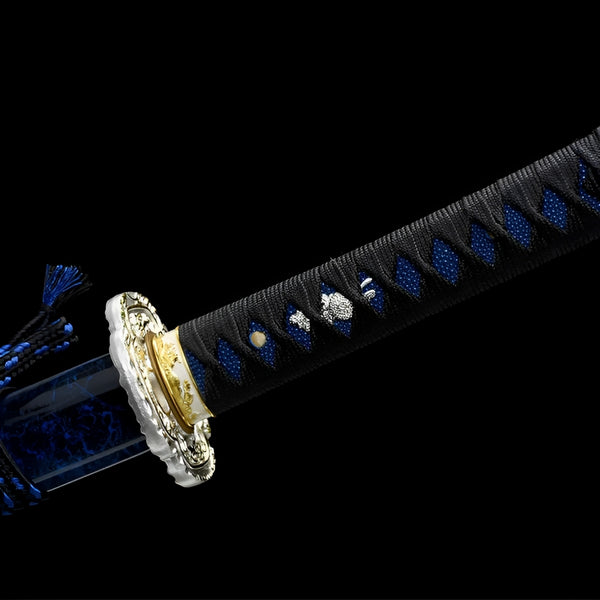
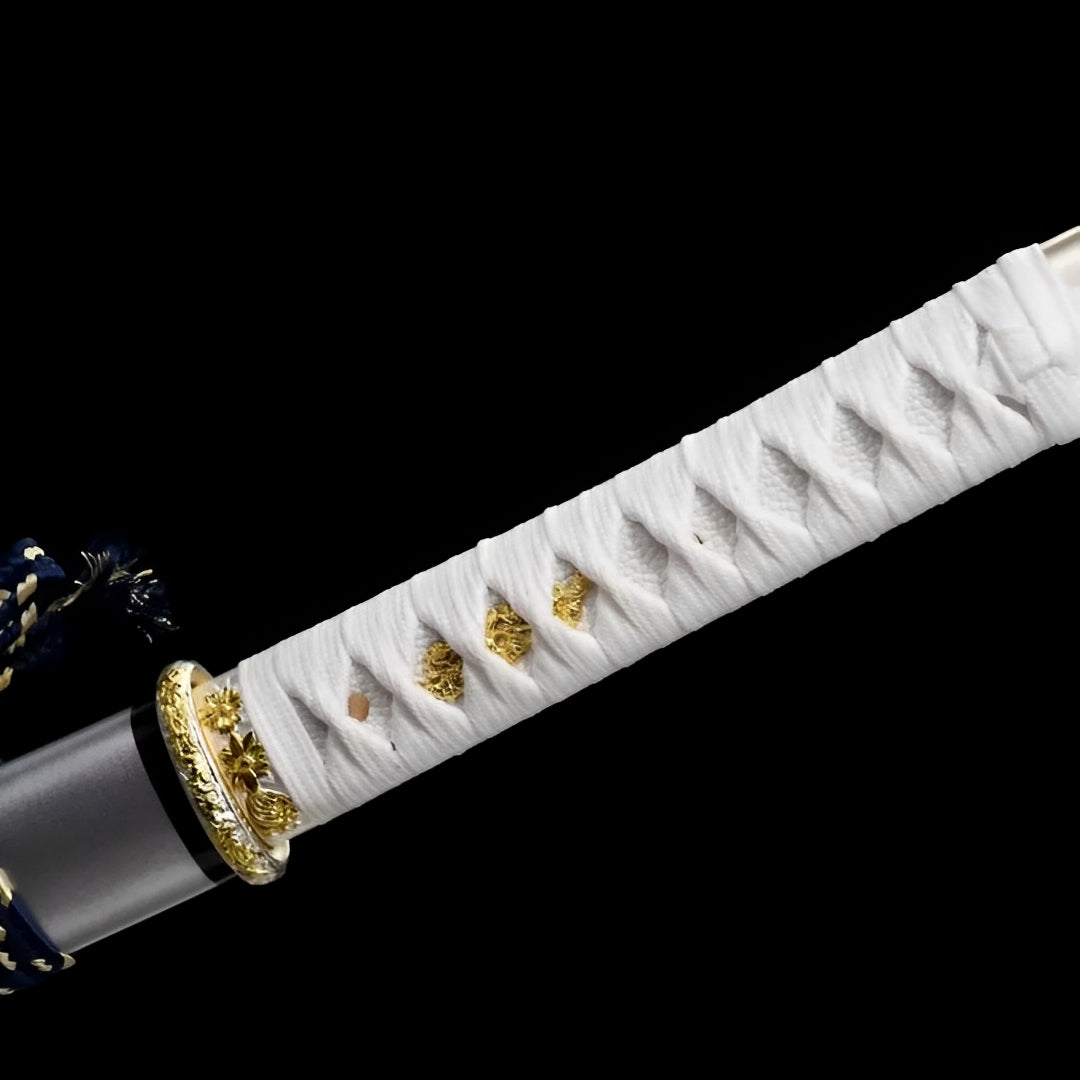
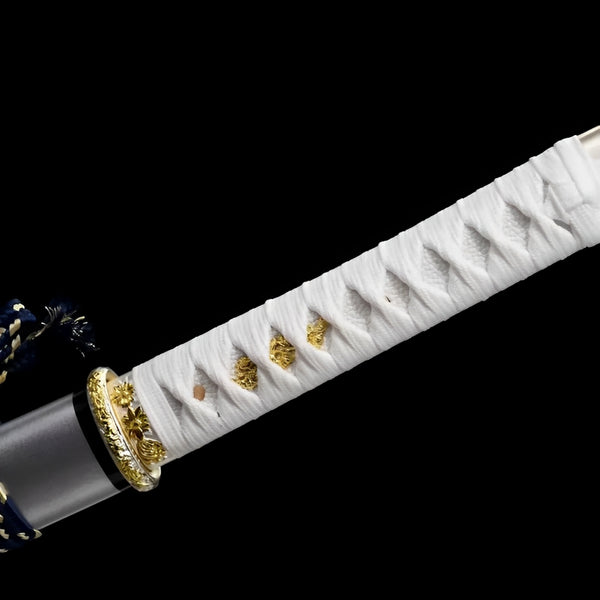
The fittings on our wakizashi reflect the same level of detail found on our katana collections. Each sword features a hand-finished tsuba (guard) in iron, copper, or brass with sculpted or engraved relief — floral motifs, mythological creatures, or geometric patterns depending on the model. The habaki (blade collar) is precision-fitted in brass or copper, and handles are wrapped with silk or cotton ito over rayskin for a secure, traditional grip.
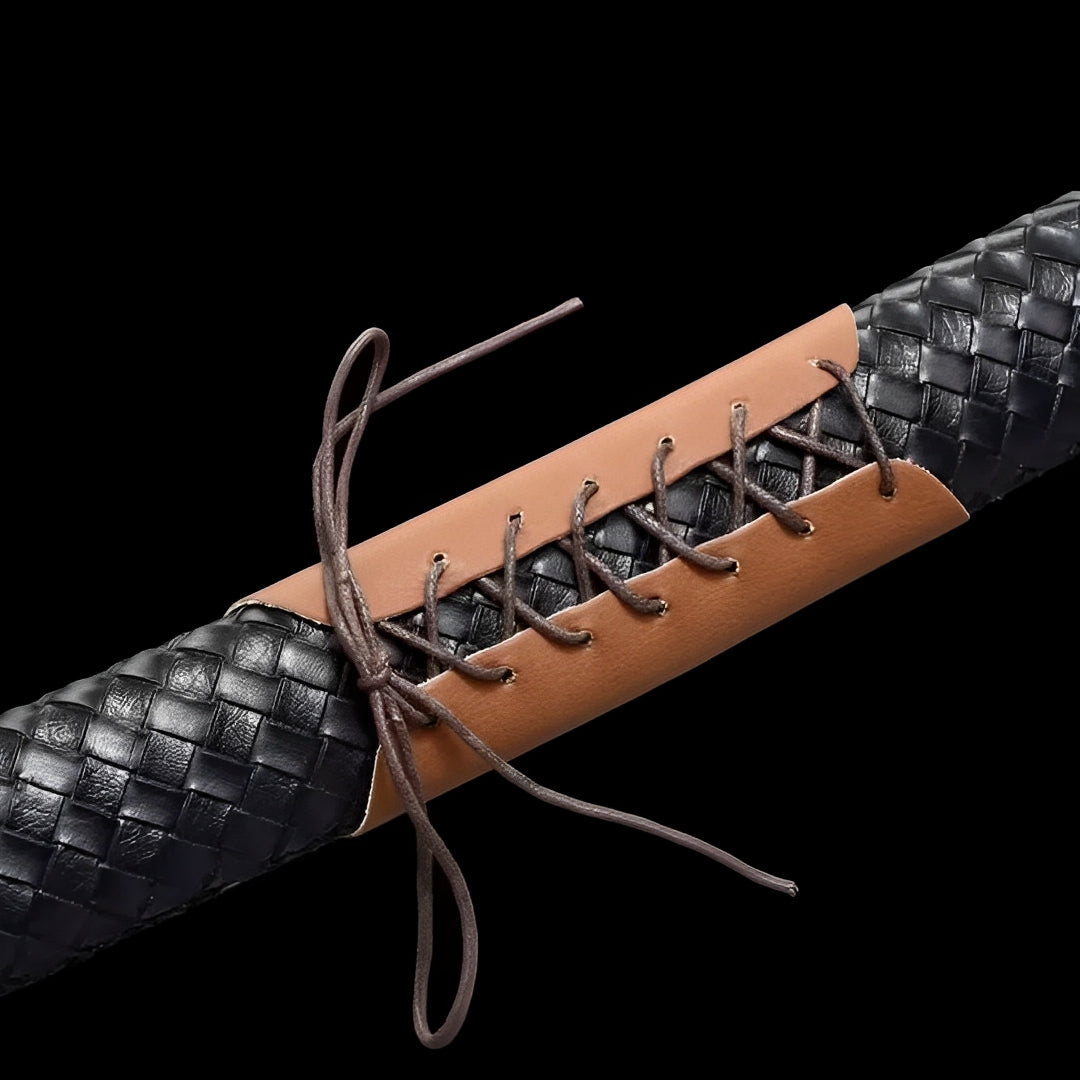
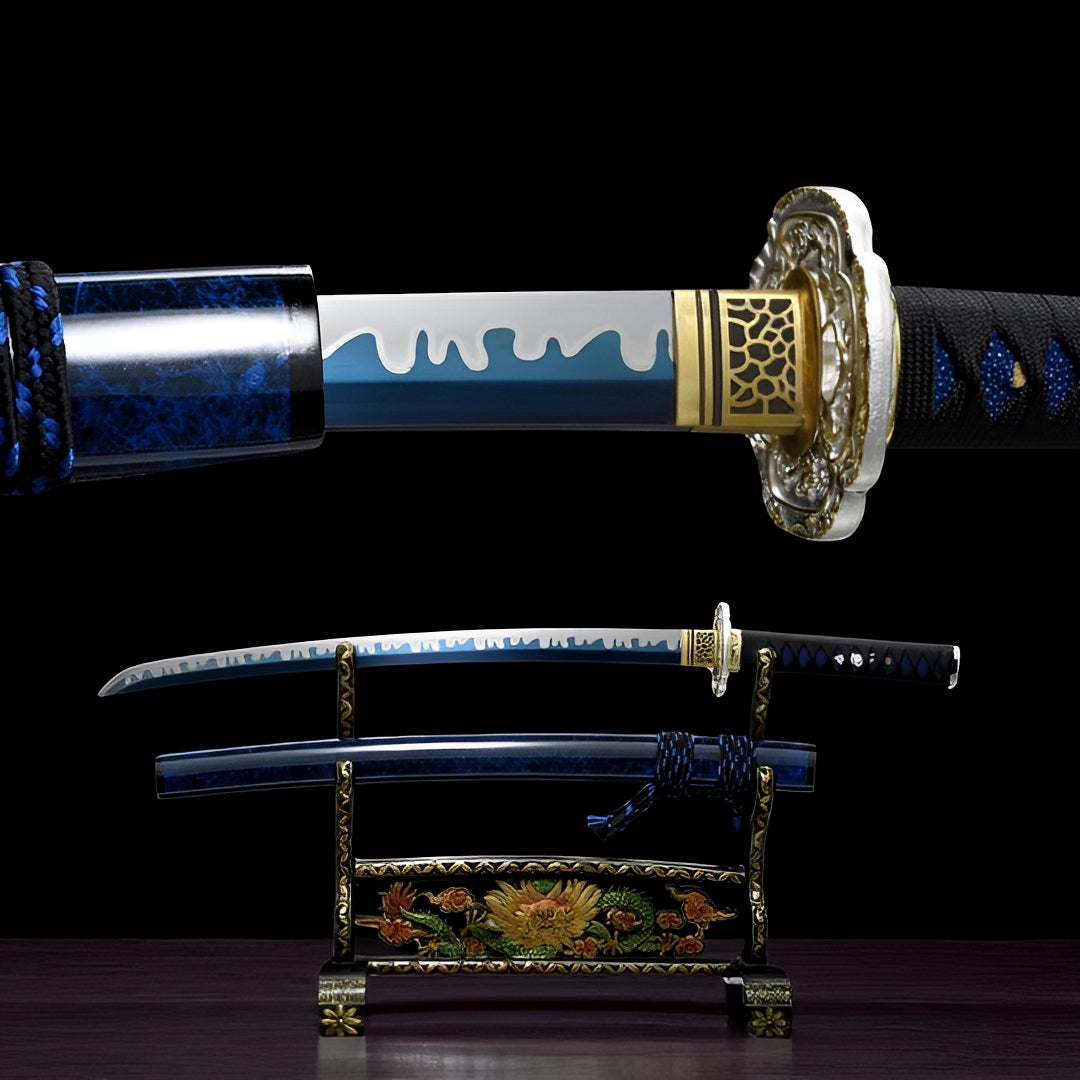
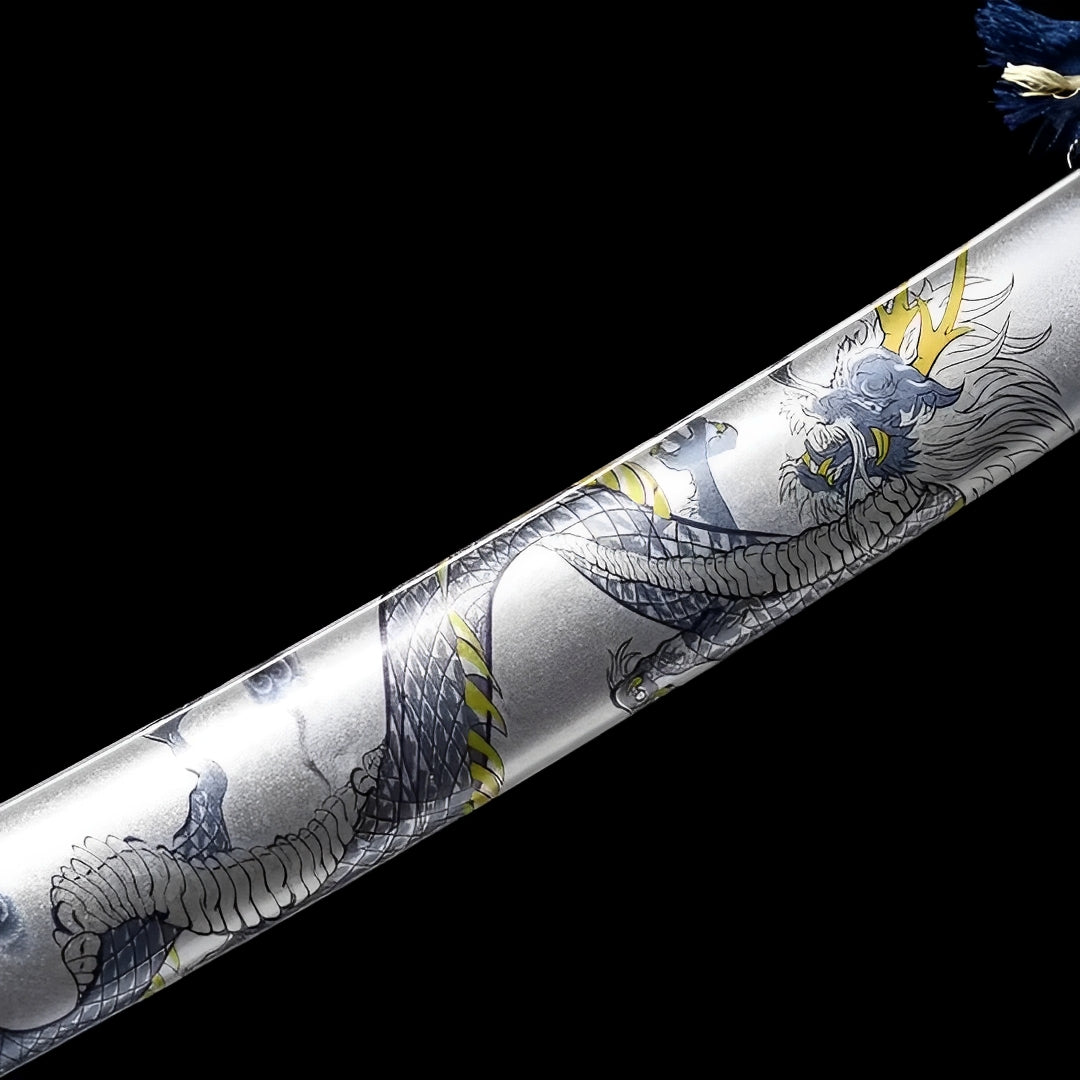
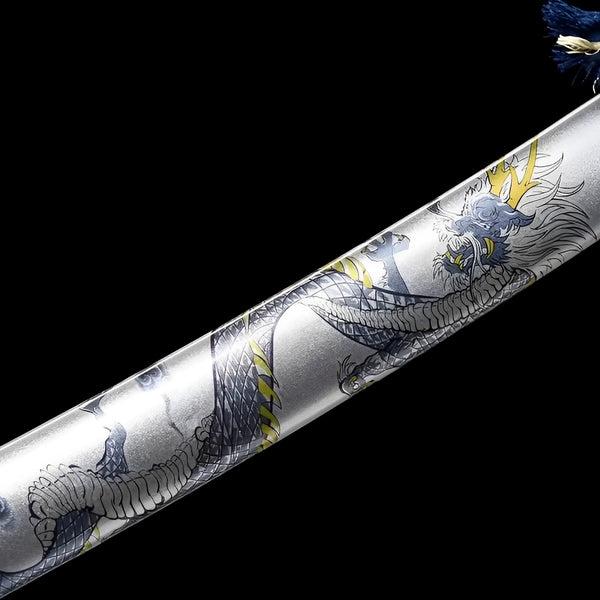
Scabbards are crafted from hardwood with lacquered, painted, or natural wood finishes. Some models feature hand-painted sumi-e scenes or carved surface textures that make the saya a visual piece in its own right. Every wakizashi ships with a display stand, a silk storage bag, and a $20 gift card toward your next purchase.
Who collects wakizashi?
Daishō builders — collectors who already own a katana and want to complete the traditional long-and-short pairing. Displayed together on a two-tier stand, the daishō is one of the most striking arrangements in Japanese sword collecting.
Martial arts practitioners — students of iaidō, kenjutsu, and aikido who train with shorter blades. The wakizashi's reduced weight and faster draw make it an effective training tool for developing speed and precision before transitioning to a full-length katana.
Space-conscious collectors — the wakizashi delivers the same forging quality and material authenticity as a katana in a more compact form. For desks, shelves, and smaller display areas where a 40-inch katana would overwhelm the space, a wakizashi fits naturally.
Gift buyers — a hand-forged wakizashi is a meaningful, distinctive gift that stands apart from generic collectibles. The combination of real steel, traditional craftsmanship, and display-ready presentation makes it a piece that recipients keep for life.
Every wakizashi ships with free U.S. delivery on orders over $200, and is covered by our 30-day money-back guarantee. Need help choosing? Contact us at support@katana-corp.com or text +1 512-399-4440.