

Why choose us

1060 Steel

Forged Blade

Collector Quality

Trusted Globally

Inspired by Japan
Sasuke Katana (Naruto) - サスケ

Note: Engraving placement and orientation may vary by blade model (hamon, geometry, and flat area).
Why choose us
1060 Steel
Forged Blade
Collector Quality
Trusted Globally
Inspired by Japan
Sasuke Katana (Naruto) - サスケ
Specifications
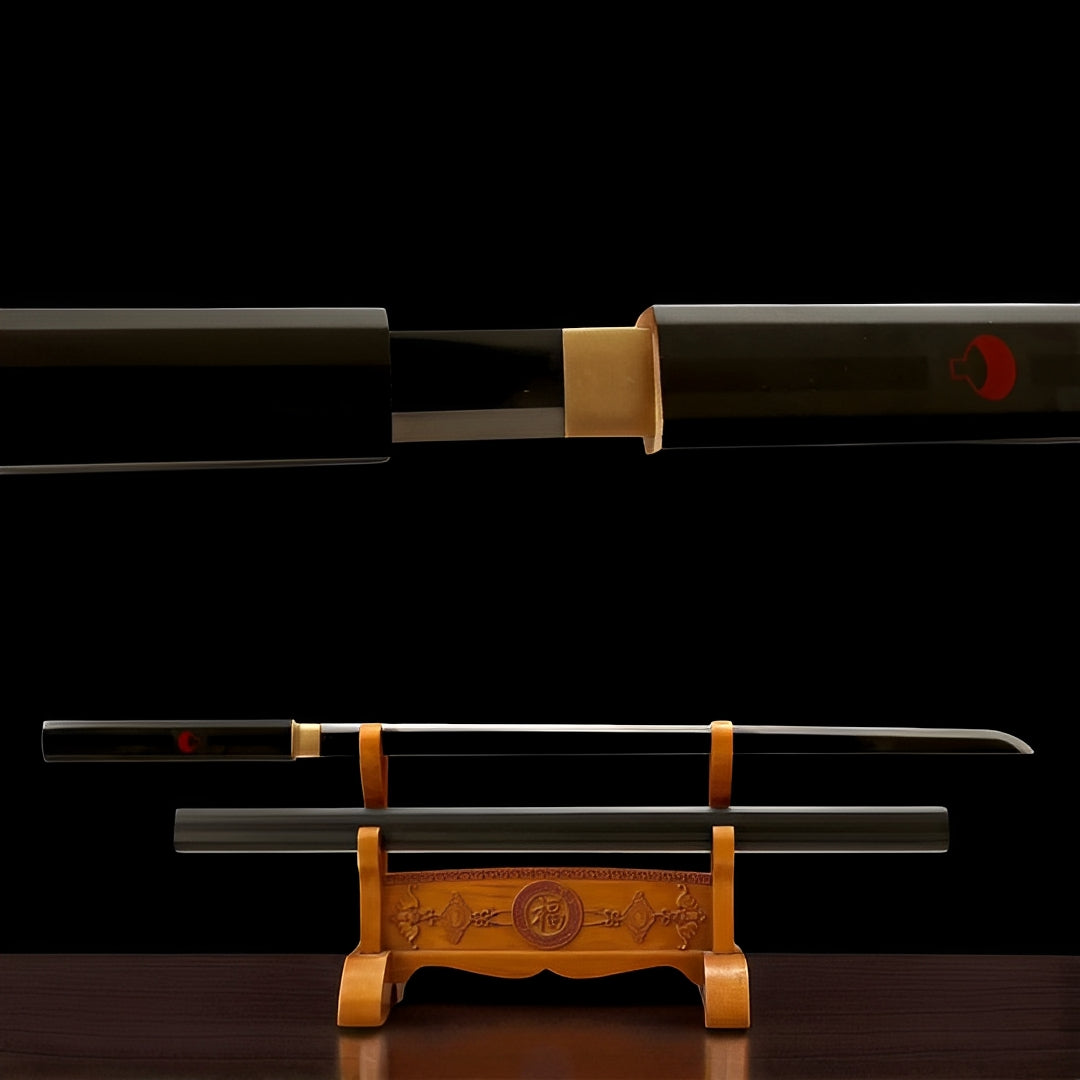
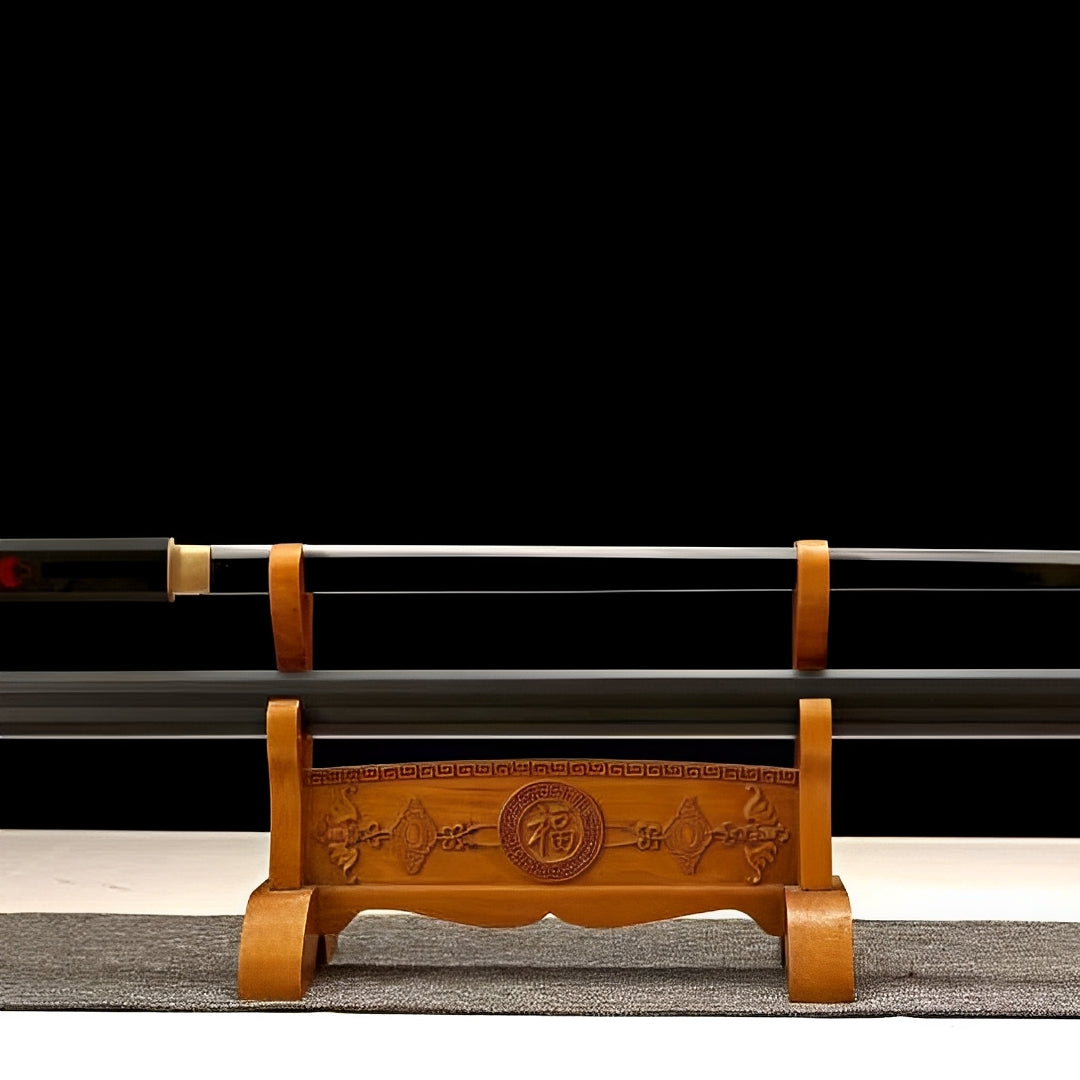
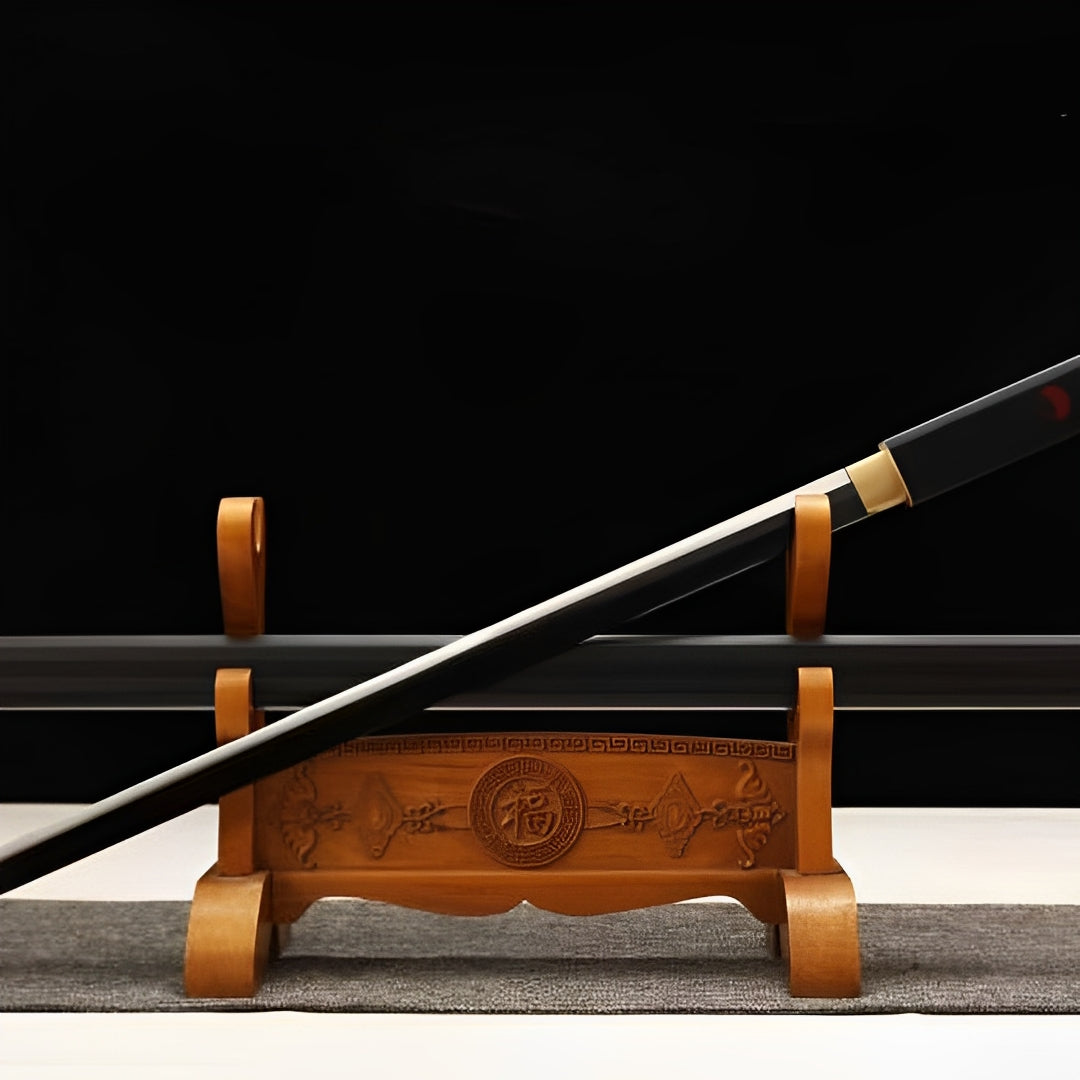
p>Hand-forged Sasuke Katana — a replica of Sasuke Uchiha's Sword of Kusanagi from Naruto. Forged from 1060 carbon steel with a sharpened, full-tang straight blade (chokutō). No tsuba — true to the anime's guardless design. Brass habaki and kashira fittings, black lacquered handle, black lacquered saya with red Uchiha clan emblem. Includes carved wooden display stand. The blade of the last Uchiha — minimalist, lethal, uncompromising.
Sasuke Sword Specifications
| Blade Steel | 1060 Carbon Steel |
| Blade Type | Chokutō (straight blade) |
| Blade Finish | Polished silver |
| Construction | Full Tang, Handmade, Sharpened |
| Overall Length | 105 cm / 41 in |
| Blade Length | 72 cm / 28 in |
| Blade Width | 3.2 cm / 1.2 in |
| Blade Thickness | 0.7 cm / 0.27 in |
| Handle Length | 30 cm / 11.8 in |
| Tsuba (Guard) | None — guardless design |
| Handle | Black lacquered wood |
| Habaki & Kashira | Brass |
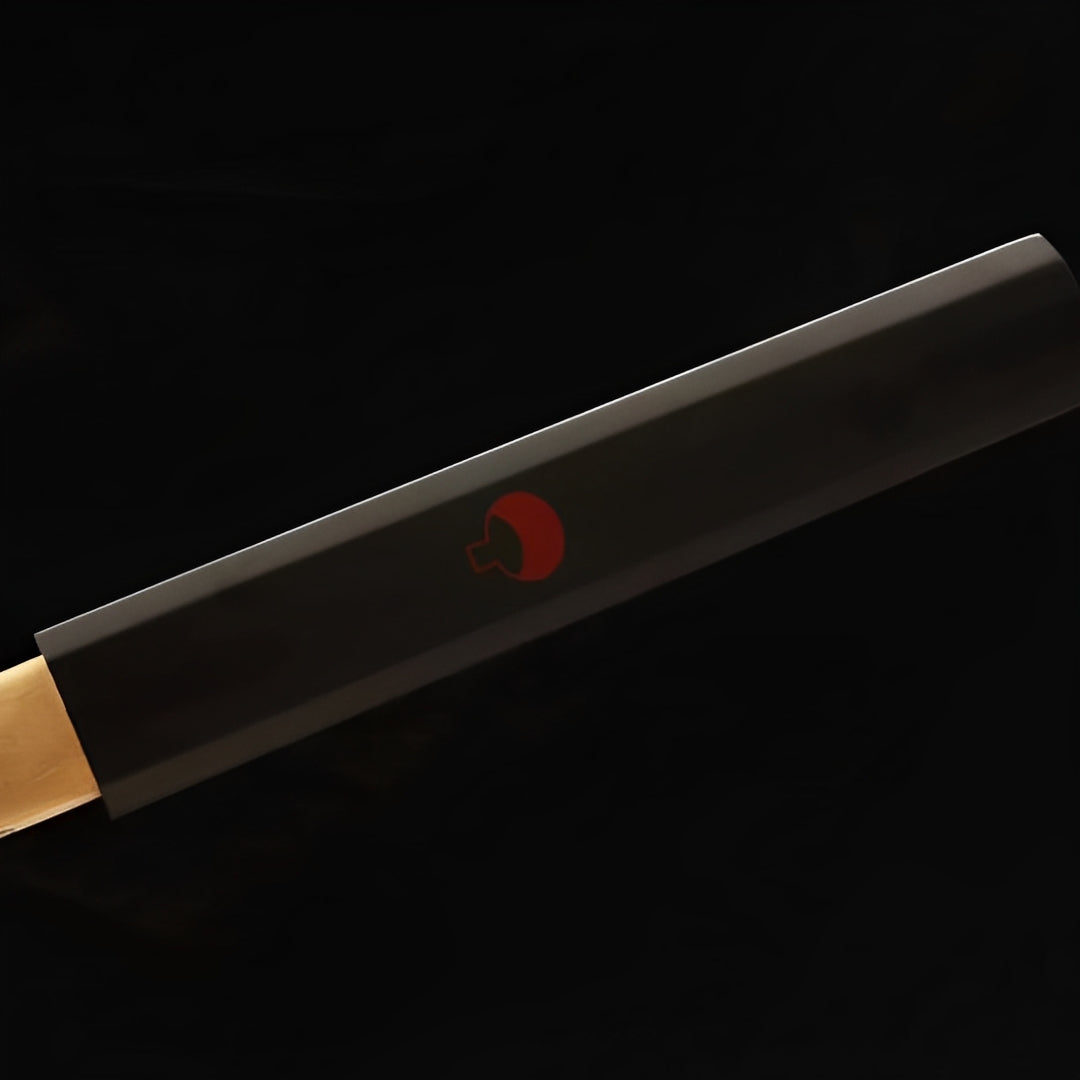
| Saya (Scabbard) | Hardwood — black lacquer with red Uchiha emblem |
| Includes | Chokutō + scabbard + carved wooden display stand |
Chokutō Straight Blade — Kusanagi Design
This Sasuke katana is technically a chokutō — a straight-bladed Japanese sword, distinct from the curved katana. In Naruto, Sasuke acquired the Sword of Kusanagi (Kusanagi no Tsurugi — "Grass-Cutting Sword") during his training under Orochimaru. The straight blade allows for direct thrusting attacks suited to Sasuke's Lightning Release fighting style. The guardless design is the sword's most distinctive feature — where traditional katana use elaborate tsuba, Sasuke's Kusanagi transitions directly from blade to handle through a brass habaki, creating a seamless silhouette. Learn how different steel types affect blade performance.
Uchiha Clan Emblem — Red Saya Detail
The black lacquered saya carries a single red Uchiha clan emblem — the iconic fan (uchiwa) symbol. This crimson mark is the only color accent on the entire Sasuke sword, mirroring his character: outwardly cold and dark, with the burning legacy of his massacred clan always visible. The brass kashira at the handle's end and the carved wooden stand complete the presentation.
Sasuke Katana — 1060 Carbon Steel Full Tang
Forged from 1060 carbon steel with full-tang construction. The straight blade is hand-sharpened and functional. 1060 carbon steel delivers the hardness and edge retention needed for both display and cutting. The straight chokutō geometry requires precise forging — any warping is immediately visible, making this a true test of craftsmanship.
Sasuke Uchiha — Naruto's Rival
Sasuke Uchiha is the deuteragonist of Naruto and Naruto Shippūden. Last surviving member of the Uchiha clan after Itachi's massacre, Sasuke's quest for revenge drove the series' central conflict. He wields the Sharingan and later Rinnegan, channels Lightning Release through his Kusanagi blade, and ultimately chose to protect Konoha rather than destroy it. The sword first appeared in Naruto chapter 306 and Shippūden episode 51.
Sasuke Katana Display & Naruto Collection
Ships with a carved wooden display stand. The minimalist Sasuke katana pairs naturally with other Naruto weapons — display alongside kunai or shinobi blades from our Naruto katana collection. The black-and-brass aesthetic also works in any sword display as a striking contrast to curved katana.
Frequently Asked Questions About the Sasuke Katana
What is the Sword of Kusanagi in Naruto?
The Sword of Kusanagi (Kusanagi no Tsurugi) is Sasuke Uchiha's personal chokutō in Naruto Shippūden. Named after one of the Imperial Regalia of Japan, it is a straight-bladed sword he acquired during training with Orochimaru. Sasuke channels his Lightning Release (Chidori) through the blade to enhance its cutting power.
Why doesn't Sasuke's sword have a guard?
Sasuke's Kusanagi is a chokutō — a straight Japanese sword that historically predates the curved katana. The guardless (shirasaya-style) design matches the anime accurately and reflects Sasuke's preference for speed and simplicity over defensive features.
Is this Sasuke katana sharp?
Yes. The 1060 carbon steel blade is hand-sharpened and functional. Handle with care, store inside the saya, and check your local regulations regarding bladed weapons before ordering.
Is this a katana or a chokutō?
Technically it is a chokutō — a straight-bladed Japanese sword. While fans commonly call it the "Sasuke katana," the straight blade distinguishes it from curved katana. The name "katana" is used colloquially in the anime community for all Japanese-style swords.
What other swords does Sasuke use in Naruto?
The Sword of Kusanagi is Sasuke's primary weapon throughout Shippūden and Boruto. He briefly used a standard chokutō before acquiring the Kusanagi from Orochimaru. He also channels Susanoo through ethereal blades during advanced combat.
Sasuke Katana Care Instructions
Wipe the blade with a soft cloth after handling and apply choji oil to prevent oxidation. Clean the black lacquered saya and handle with a dry cloth — lacquer finishes show fingerprints easily. Avoid touching the red Uchiha emblem aggressively. Polish the brass habaki and kashira gently. Store in the saya away from moisture and direct sunlight.
Legal Disclaimer
By purchasing from Katana Corp, you acknowledge and agree that:
- You are at least 18 years of age (or the age of majority in your jurisdiction).
- You are solely responsible for verifying and complying with all local laws and import regulations before placing an order.
- Some countries prohibit the importation of swords entirely. Katana Corp is not responsible for orders delayed, seized, or refused by customs authorities.
- All katanas and related products are sold strictly as decorative and display items. They are not intended or certified for combat use.
- Depending on the jurisdiction, swords may legally be considered bladed weapons, subject to specific restrictions or prohibitions.
- Katana Corp disclaims all liability for any injury, damage, or legal consequences resulting from misuse, abuse, or unlawful use of its products.
For full details, please refer to our Terms of Service.
Care & Maintenance
To maintain your katana's appearance and performance over time, we recommend:
- Regularly wiping the blade with a soft cloth to remove fingerprints and moisture.
- Applying a light coat of choji oil to prevent rust (for carbon steel blades).
- Storing the sword in a dry place, preferably inside its saya.
- Avoiding direct contact with hard surfaces to preserve sharpness and finish.
For more care tips, check our full maintenance guide in the FAQ section.
Behind the Blade
Every katana we offer carries the essence of centuries-old craftsmanship.
More than just a weapon, the katana symbolizes discipline, honor, and mastery.
Our artisans draw inspiration from traditional forging methods to ensure each blade reflects the spirit of the samurai — strength, precision, and soul.
Owning one is not just about aesthetics — it’s about carrying a piece of that legacy.
User Experience
This katana is designed to offer a perfect balance between blade and handle.
Its ergonomic tsuka (handle) allows a secure two-handed grip, while the weight distribution ensures smooth, fluid movement.
Whether for training, display or cutting practice, handling feels natural and precise.
10M+
Total views
Our Katanas In Action
Real customers · TikTok & Instagram

TikTok
2.3M
views

TikTok
980K
views

5.1M
views

TikTok
1.8M
views

1.2M
views

850K
views

TikTok
1.5M
views
Excellent
Good sword, small issue on arrival
Saya mouth was slightly loose when I got it, fitting tape sorted it. Balance is great though. People at my dojo always ask about it.
Way better than I expected
Hamon is clean, handle wrap tight, saya closes solid. Came in a wooden box. No complaints at all for the price.
Got it as a gift, he was speechless
Bought for my boyfriend who does iaido. He said the fit and finish were legit. I knew nothing about swords, site made it easy to pick.
Nice blade but took 2 weeks to arrive
Damascus looks great. Shipping to Portland took forever and tracking was dead for a week. Quality is there, logistics need work.
Third order, still no complaints
Ordered three times over two years. Always well packed, matches the photos. Support replied same day. Will keep coming back.
7×
Reasons to choose us
Why Choose Katana Corp
The difference, line by line.
24/7 HUMAN SUPPORT
No bots · No AI · Real katana experts

The Art of Traditional Forging
Each katana we craft is born from centuries of samurai tradition.
Our master smiths shape every blade by hand, folding the steel to achieve unmatched strength, flexibility, and beauty.
This time-honored process is not just about creating a weapon? it’s about preserving a legacy of discipline, honor, and artistry.

Materials Chosen Without Compromise
We select only the highest-grade steels and authentic fittings to ensure every katana is both a masterpiece and a reliable companion.
From the flawless hamon line to the perfectly balanced tang, each detail is carefully inspected to meet the highest standards of performance and aesthetics.

More Than a Sword, A Lifelong Legacy
Owning a handmade katana is an experience that goes beyond the blade itself. It’s holding history, tradition, and craftsmanship in your hands.
Whether displayed as a work of art or wielded with precision, your katana will stand as a symbol of timeless skill and dedication for generations to come.
-
Key Destinations
United States: 5–7 days
Canada: 5–7 days
Australia: 6–9 days
Denmark: 4–6 days
Netherlands: 3–5 days
Sweden: 4–6 days
Switzerland: 3–5 days
Finland: 5–7 days
Singapore: 6–8 days -
Central European Partners
France: 2–3 days
Germany: 3–5 days
Spain: 4–6 days
Italy: 4–6 days
Belgium: 3–5 days
Austria: 4–6 days
Ireland: 4–6 days
Poland: 4–6 days
Portugal: 4–6 days -
Extended EU Network
Czechia: 4–6 days
Hungary: 4–6 days
Slovakia: 4–6 days
Slovenia: 5–7 days
Romania: 5–7 days
Bulgaria: 5–7 days
Croatia: 5–7 days
Serbia: 5–7 days
Estonia: 5–7 days
Latvia: 5–7 days
Lithuania: 5–7 days
Luxembourg: 3–5 days
Greece: 5–8 days -
FAQ’s
Visit our FAQs page to find answers to common questions.