Refund Guaranteed


Why choose us
1060 Steel
Forged Blade
Collector Quality
Trusted Globally
Inspired by Japan
Zenitsu Katana (Demon Slayer) - ゼンイツ
Included with your order
Note: Engraving placement and orientation may vary by blade model (hamon, geometry, and flat area).
Free Shipping over $250
No Bots, No AI
Refund Guaranteed
Free Shipping over $250
No Bots, No AI
Our team is here to help with any questions or concerns.
We’re always happy to assist you — don’t hesitate to reach out.
Why choose us
1060 Steel
Forged Blade
Collector Quality
Trusted Globally
Inspired by Japan

Zenitsu Katana (Demon Slayer) - ゼンイツ
Specifications
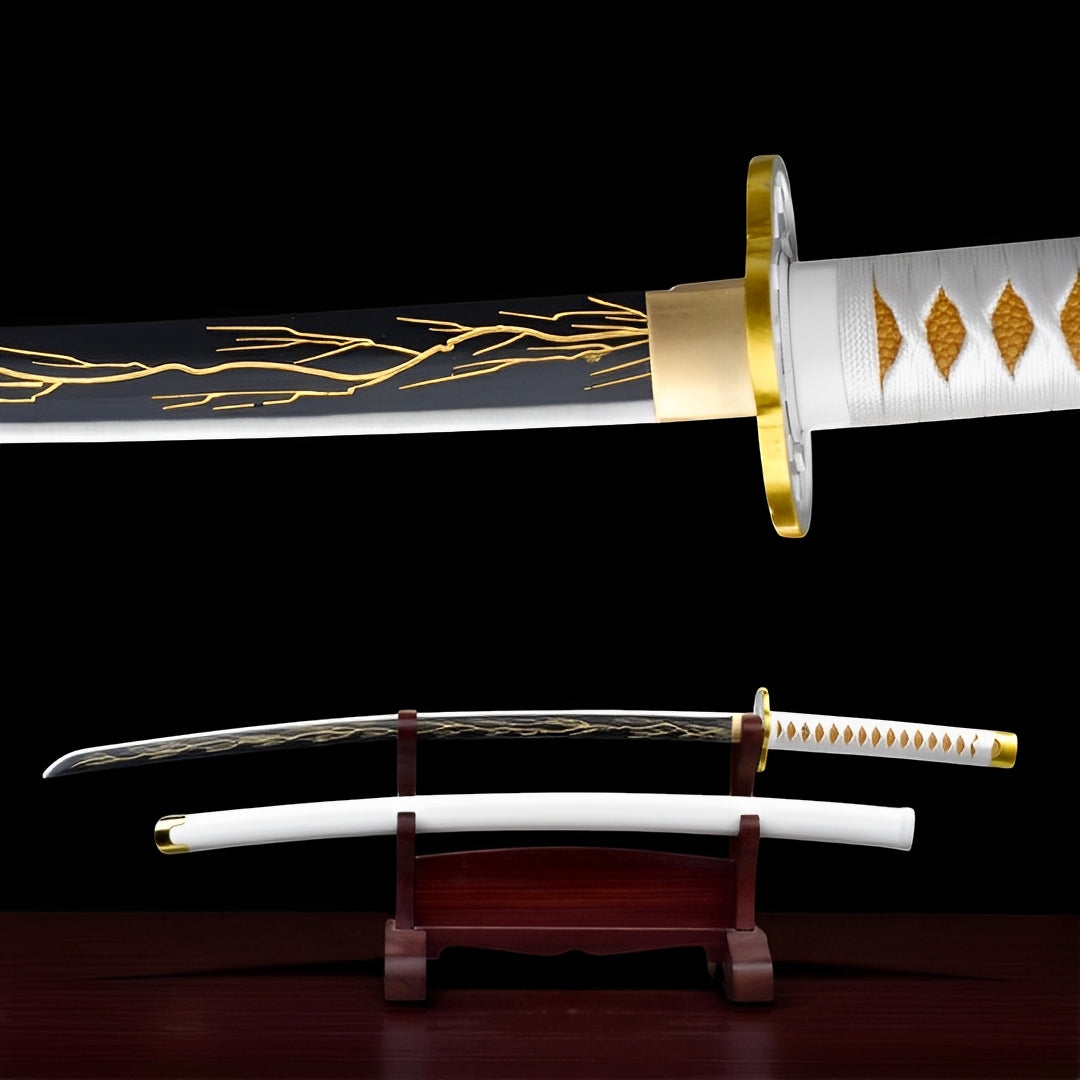
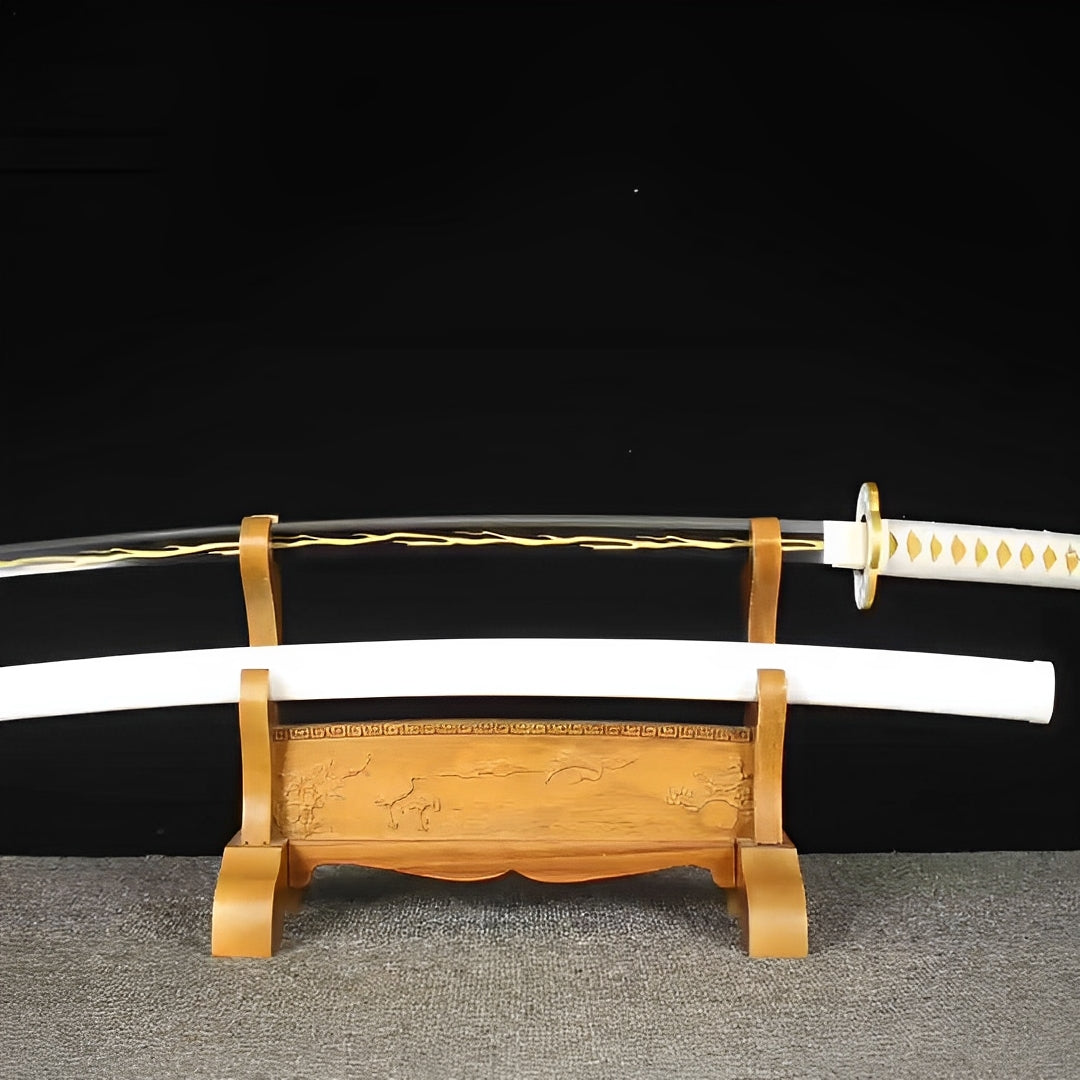
Hand-forged Zenitsu Katana — a Nichirin sword replica from Demon Slayer. Forged from 1060 carbon steel with a darkened blade featuring golden lightning bolt engravings along its length. Full tang, sharpened, curved. Silver-and-gold circular tsuba, brass habaki, white cotton ito over gold synthetic rayskin, white lacquered saya with gold kojiri. Includes reddish-brown wooden display stand. Thunderclap and Flash — one breath, one strike.
Zenitsu Sword Specifications
| Blade Steel | 1060 Carbon Steel |
| Blade Finish | Darkened with gold lightning engravings |
| Construction | Full Tang, Handmade, Sharpened |
| Overall Length | 105 cm / 41 in |
| Blade Length | 72 cm / 28 in |
| Blade Width | 3.2 cm / 1.2 in |
| Blade Thickness | 0.7 cm / 0.27 in |
| Handle Length | 30 cm / 11.8 in |
| Tsuba (Guard) | Silver circular with gold rim |
| Habaki | Brass |
| Ito & Sageo | White cotton |
| Rayskin (Same) | Gold synthetic |
| Saya (Scabbard) | White lacquered hardwood — gold kojiri |
| Includes | Katana + saya + wooden display stand |
Golden Lightning Engravings — Thunder on Steel
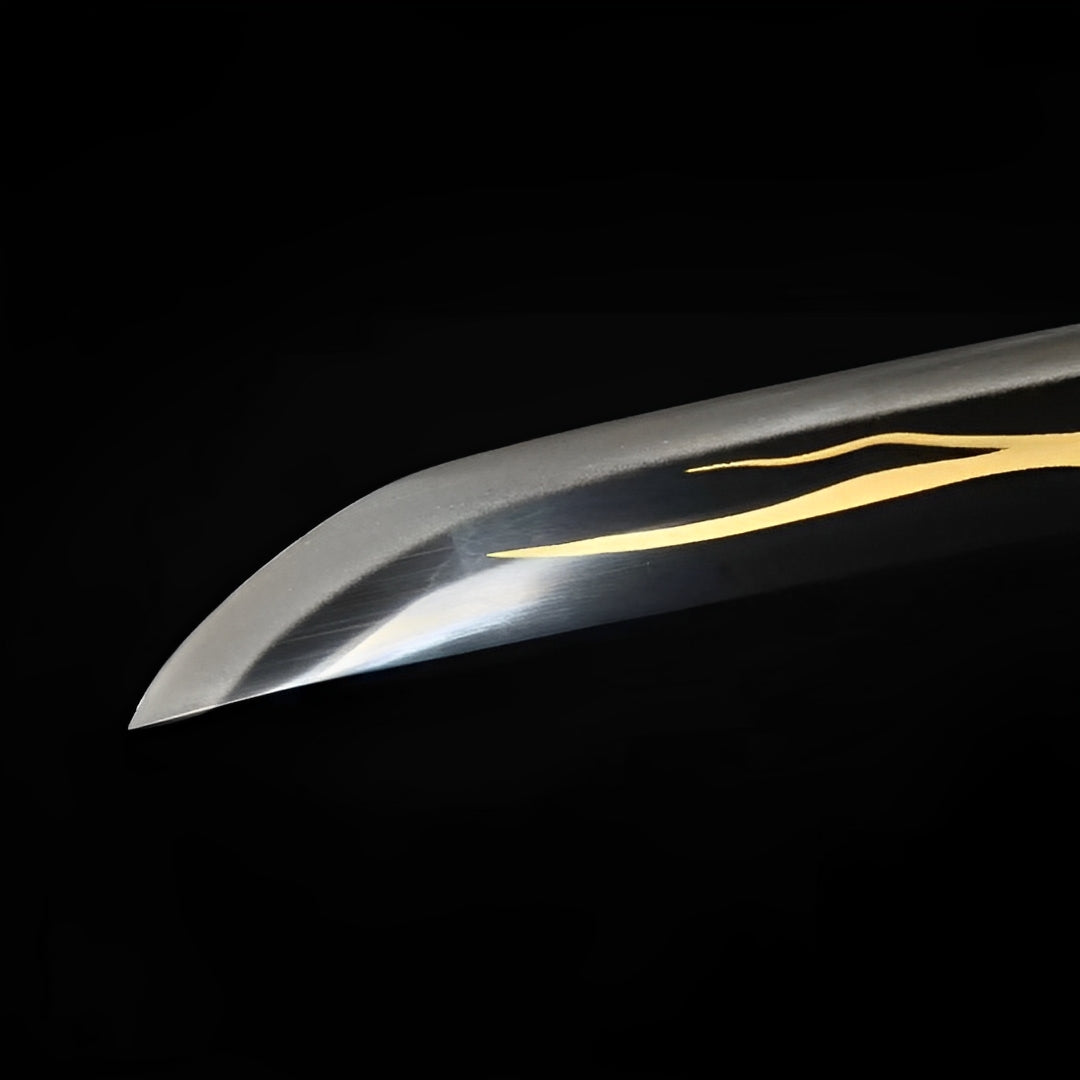
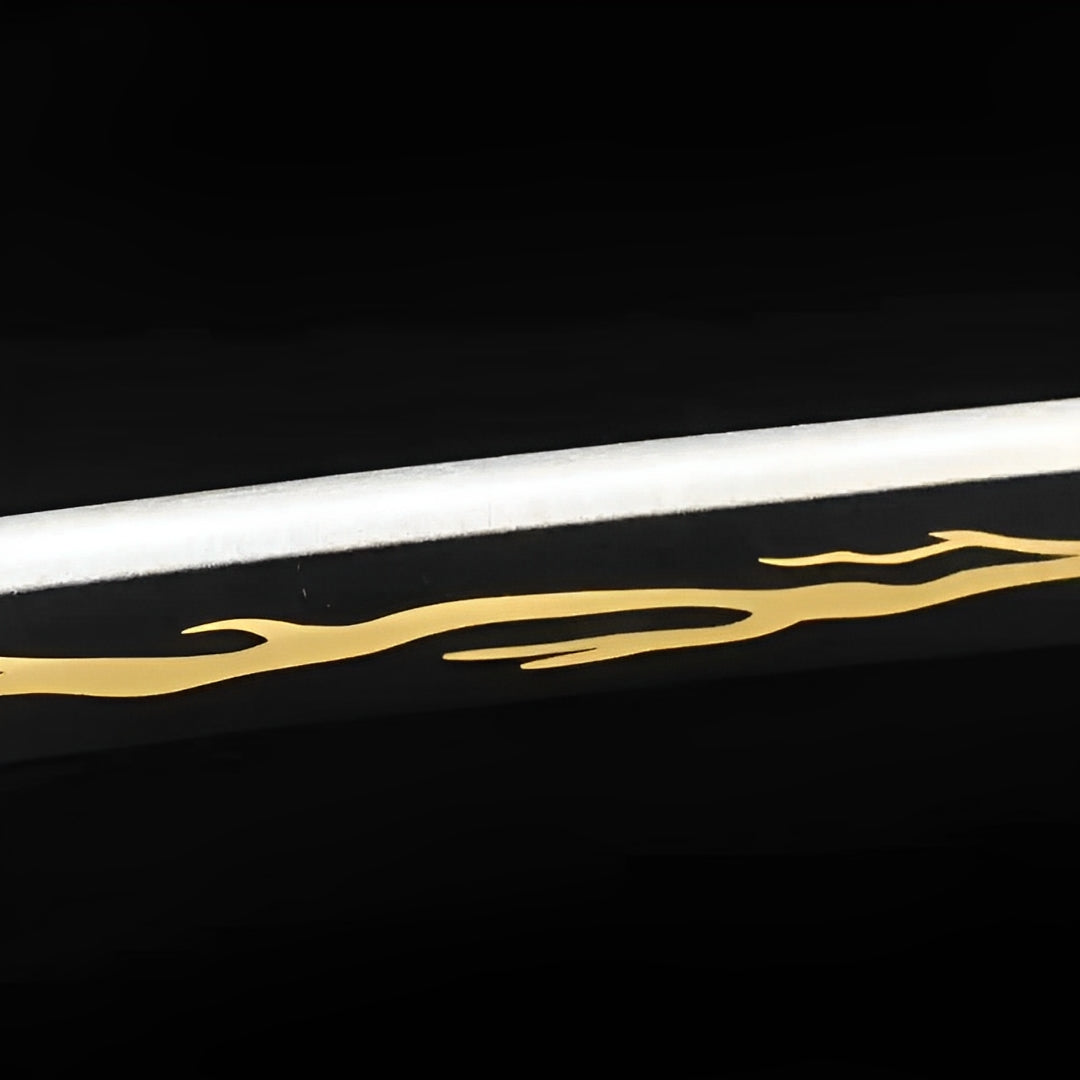
The darkened blade features golden lightning bolt patterns etched across the steel — branching, crackling lines that evoke Thunder Breathing's electrical energy. These engravings are the defining visual feature of any Zenitsu katana, distinguishing it from every other Nichirin sword in the series. The gold-on-dark contrast catches light from every angle, making the thunder pattern visible in any display condition.
Silver-Gold Tsuba — Thunder Guard
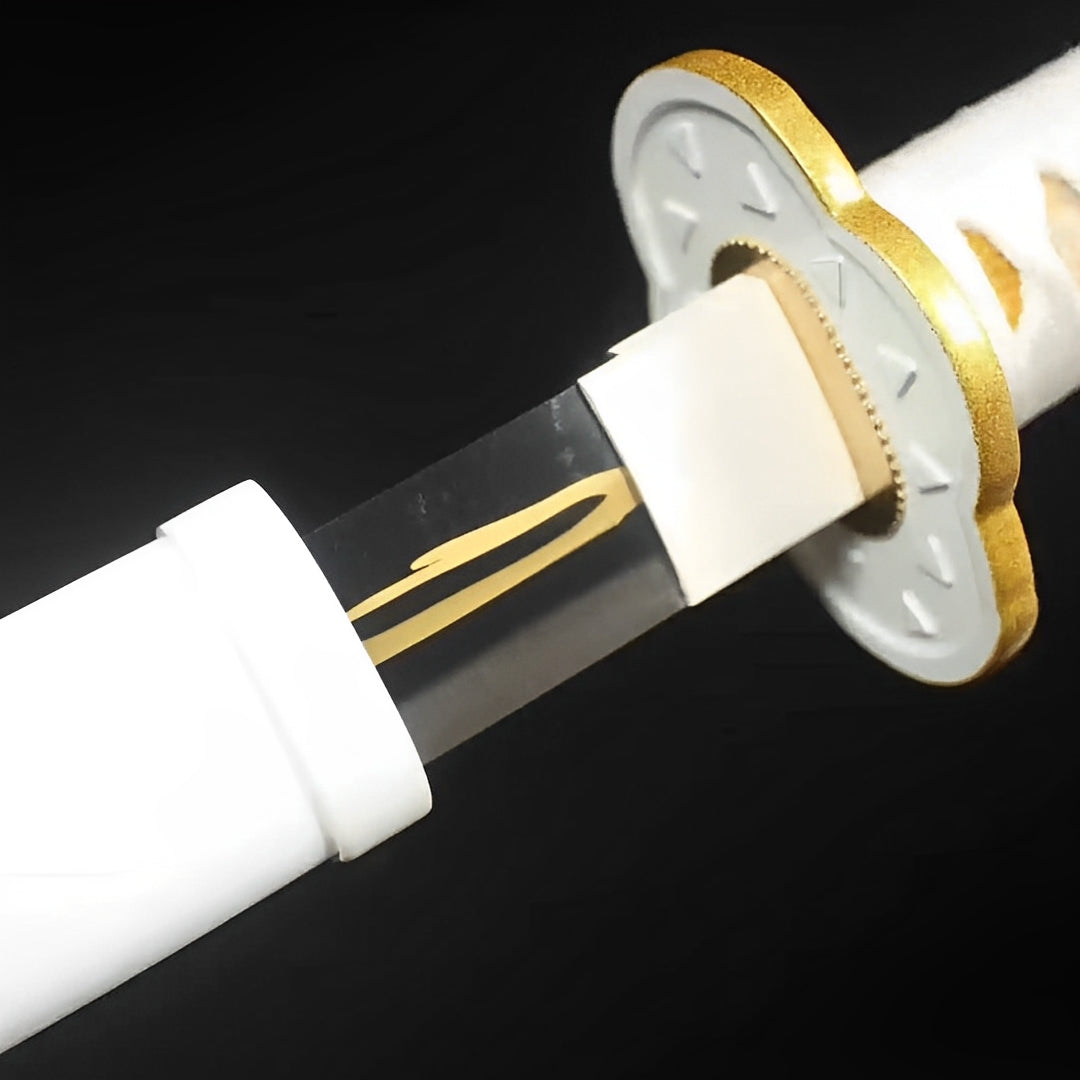
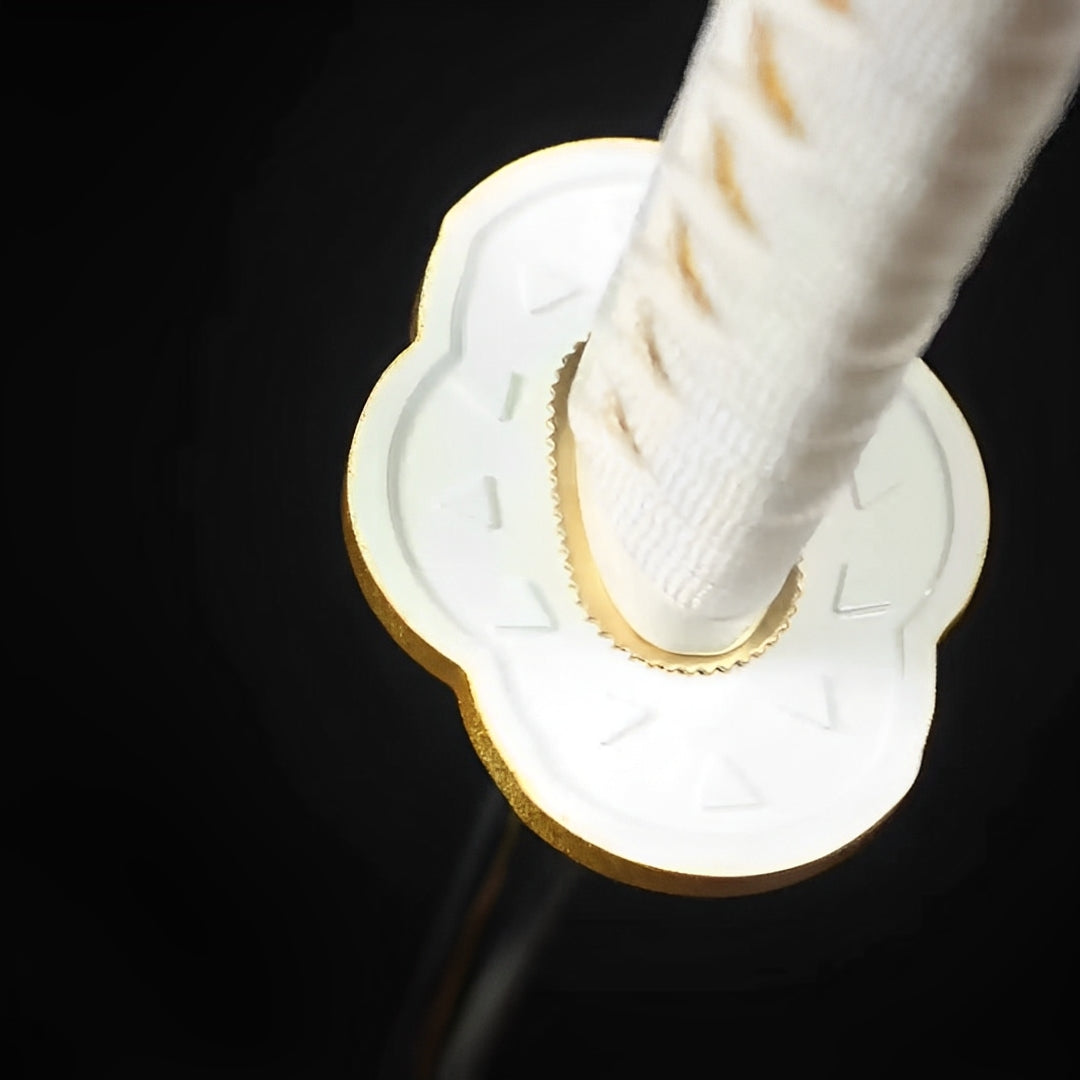
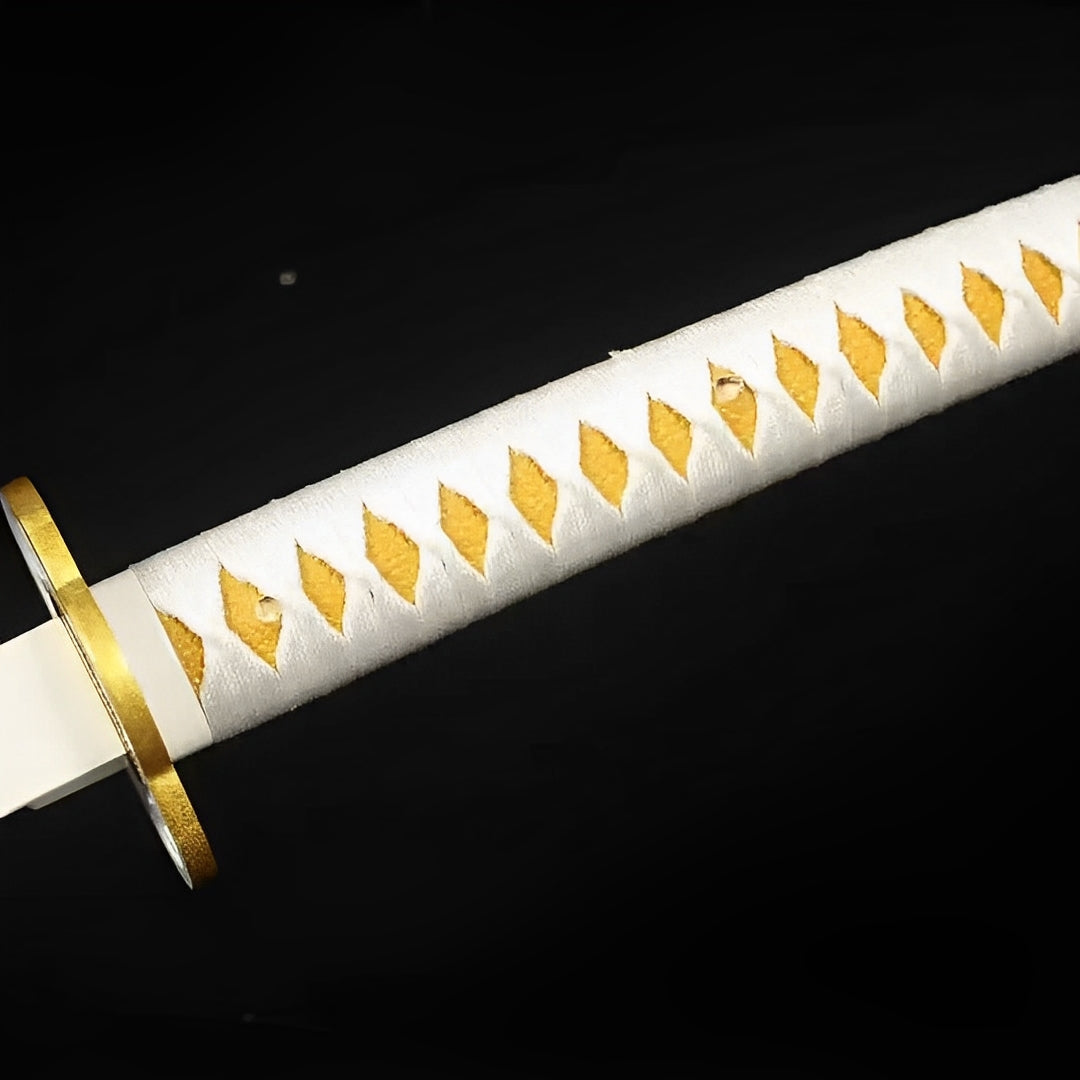
The circular tsuba combines a silver face with a gold rim — clean, minimal, and suited to a swordsman whose technique demands zero drag. The smooth disc shape avoids the ornate relief seen on other Demon Slayer Nichirin guards, reflecting Zenitsu's fighting philosophy: one form, perfected beyond limitation. The brass habaki beneath secures the blade firmly. Gold diamonds of rayskin visible through the white ito wrap continue the thunder-gold accent from guard through handle.
White Saya — Zenitsu's Purity
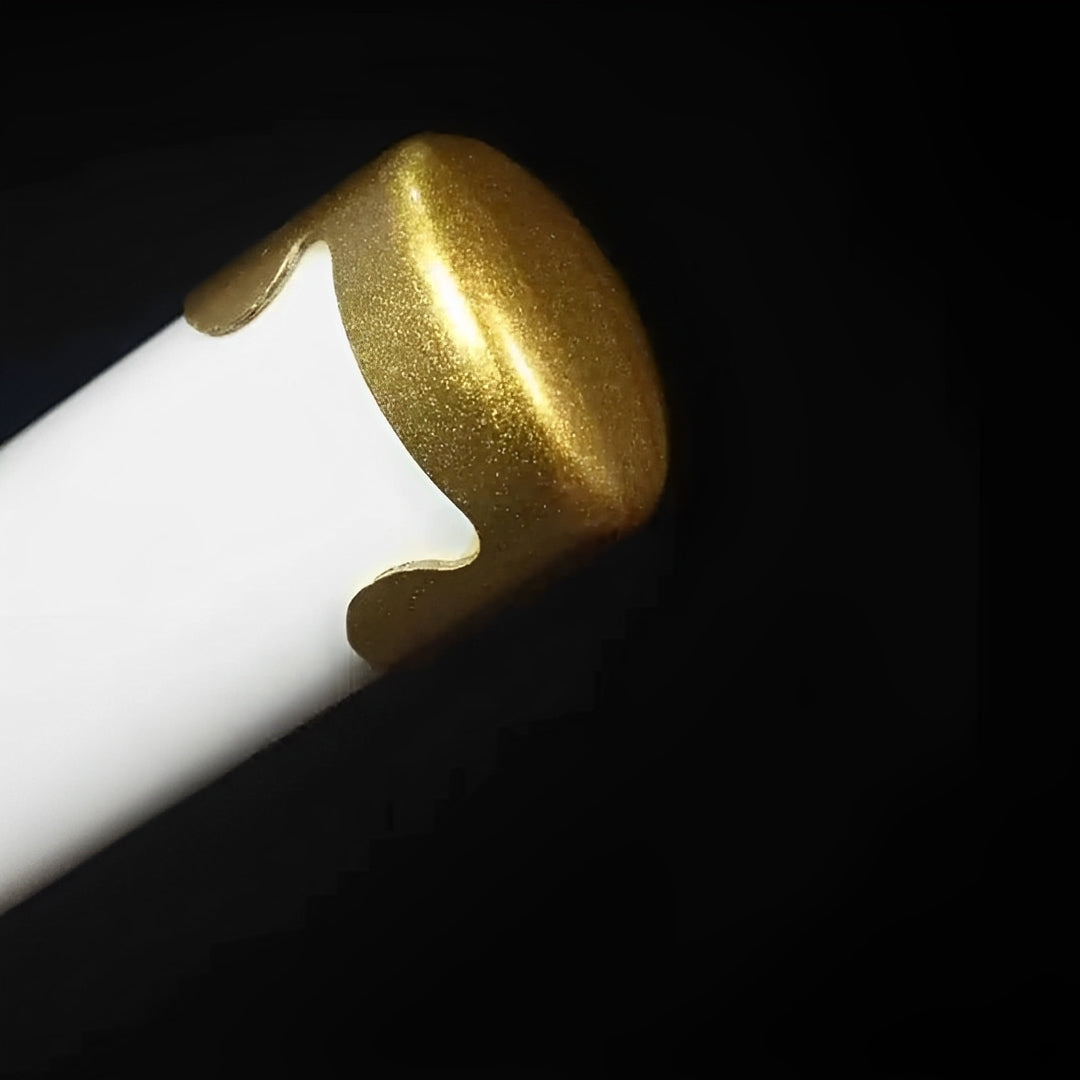
The white lacquered saya contrasts sharply with the dark lightning blade inside. White is rare among Demon Slayer Nichirin scabbards — most Corps members carry darker sheaths — making this Zenitsu sword immediately recognizable on any display. The gold kojiri (end cap) at the scabbard tip provides a finishing touch that ties back to the lightning theme. This saya pairs naturally alongside the black and red scabbards of Tanjiro, Rengoku, and other Demon Slayer blades in our Demon Slayer katana collection.
Zenitsu Agatsuma — Thunder Breathing
Zenitsu Agatsuma is a Demon Slayer Corps member who mastered only one technique: Thunder Breathing First Form — Thunderclap and Flash. Where other slayers learn full Breathing arsenals, Zenitsu perfected a single form to such extremes that it surpasses complete mastery. His body executes the technique unconsciously when fear overwhelms him, moving faster than demons can perceive. Trained by former Thunder Hashira Jigoro Kuwajima, Zenitsu proves that depth defeats breadth — one move perfected becomes six-fold, eight-fold, and eventually his own creation: Flaming Thunder God.
Zenitsu Katana — 1060 Carbon Steel
Forged from 1060 carbon steel with full-tang construction. The darkened finish provides the background for the lightning engravings — a deliberate contrast requiring additional forging steps beyond standard polished blades. Sharpened and functional, with the edge retention 1060 delivers. Most competing Zenitsu replicas use 1045 steel with printed (not etched) lightning patterns — this blade's engraved gold and higher-grade steel represent a clear upgrade.
Zenitsu Katana Display & Demon Slayer Collection
Ships with a clean reddish-brown wooden stand. The white-and-gold palette stands out among darker Demon Slayer swords, making this blade an ideal centerpiece or contrast piece in any Nichirin display. Pair with Tanjiro's black blade, Rengoku's flame sword, and our generic Nichirin for a comprehensive collection.
Frequently Asked Questions About the Zenitsu Katana
What color is Zenitsu's Nichirin sword?
Zenitsu's Nichirin sword turns yellow when he first draws it, reflecting his Thunder Breathing affinity. In Demon Slayer, Nichirin blades change color based on the wielder's Breathing style. This replica captures that yellow-gold lightning theme through the etched golden patterns on the darkened blade.
What is Thunder Breathing First Form?
Thunderclap and Flash (Ichi no Kata: Hekireki Issen) is a single lightning-speed draw-and-slash technique. Zenitsu mastered only this one form but refined it into multiple variations: six-fold, eight-fold, and Godspeed versions, plus his original creation Flaming Thunder God used against Upper Moon Six.
Is this Zenitsu katana sharp?
Yes. The 1060 carbon steel blade is hand-sharpened and functional. Handle with care, store inside the saya, and check your local regulations regarding bladed weapons before ordering.
Why does Zenitsu fight while sleeping?
Zenitsu's extreme fear prevents conscious execution of Thunder Breathing. When he loses consciousness — through sleep, fainting, or panic — his body activates the technique through pure muscle memory. As the series progresses, he learns to fight while awake.
How many Thunder Breathing forms exist in Demon Slayer?
There are six original Thunder Breathing forms. Zenitsu only learned the First Form but perfected it beyond what any previous user achieved. He later created a seventh form — Flaming Thunder God — entirely his own invention, used to defeat the Upper Moon Six demon Kaigaku.
Care Instructions
Wipe the blade with a soft cloth after handling — the darkened finish and gold engravings require gentle cleaning to preserve the contrast. Apply choji oil to the steel. Clean the white lacquered saya with a dry cloth to prevent yellowing. Polish brass fittings gently. Store in the saya away from moisture and direct sunlight.
Legal Disclaimer
By purchasing from Katana Corp, you acknowledge and agree that:
- You are at least 18 years of age (or the age of majority in your jurisdiction).
- You are solely responsible for verifying and complying with all local laws and import regulations before placing an order.
- Some countries prohibit the importation of swords entirely. Katana Corp is not responsible for orders delayed, seized, or refused by customs authorities.
- All katanas and related products are sold strictly as decorative and display items. They are not intended or certified for combat use.
- Depending on the jurisdiction, swords may legally be considered bladed weapons, subject to specific restrictions or prohibitions.
- Katana Corp disclaims all liability for any injury, damage, or legal consequences resulting from misuse, abuse, or unlawful use of its products.
For full details, please refer to our Terms of Service.
Care & Maintenance
To maintain your katana's appearance and performance over time, we recommend:
- Regularly wiping the blade with a soft cloth to remove fingerprints and moisture.
- Applying a light coat of choji oil to prevent rust (for carbon steel blades).
- Storing the sword in a dry place, preferably inside its saya.
- Avoiding direct contact with hard surfaces to preserve sharpness and finish.
For more care tips, check our full maintenance guide in the FAQ section.
Behind the Blade
Every katana we offer carries the essence of centuries-old craftsmanship.
More than just a weapon, the katana symbolizes discipline, honor, and mastery.
Our artisans draw inspiration from traditional forging methods to ensure each blade reflects the spirit of the samurai — strength, precision, and soul.
Owning one is not just about aesthetics — it’s about carrying a piece of that legacy.
User Experience
This katana is designed to offer a perfect balance between blade and handle.
Its ergonomic tsuka (handle) allows a secure two-handed grip, while the weight distribution ensures smooth, fluid movement.
Whether for training, display or cutting practice, handling feels natural and precise.

The Art of Traditional Forging
Each katana we craft is born from centuries of samurai tradition.
Our master smiths shape every blade by hand, folding the steel to achieve unmatched strength, flexibility, and beauty.
This time-honored process is not just about creating a weapon? it’s about preserving a legacy of discipline, honor, and artistry.

Materials Chosen Without Compromise
We select only the highest-grade steels and authentic fittings to ensure every katana is both a masterpiece and a reliable companion.
From the flawless hamon line to the perfectly balanced tang, each detail is carefully inspected to meet the highest standards of performance and aesthetics.

More Than a Sword, A Lifelong Legacy
Owning a handmade katana is an experience that goes beyond the blade itself. It’s holding history, tradition, and craftsmanship in your hands.
Whether displayed as a work of art or wielded with precision, your katana will stand as a symbol of timeless skill and dedication for generations to come.
-
Key Destinations
United States: 5–7 days
Canada: 5–7 days
Australia: 6–9 days
Denmark: 4–6 days
Netherlands: 3–5 days
Sweden: 4–6 days
Switzerland: 3–5 days
Finland: 5–7 days
Singapore: 6–8 days -
Central European Partners
France: 2–3 days
Germany: 3–5 days
Spain: 4–6 days
Italy: 4–6 days
Belgium: 3–5 days
Austria: 4–6 days
Ireland: 4–6 days
Poland: 4–6 days
Portugal: 4–6 days -
Extended EU Network
Czechia: 4–6 days
Hungary: 4–6 days
Slovakia: 4–6 days
Slovenia: 5–7 days
Romania: 5–7 days
Bulgaria: 5–7 days
Croatia: 5–7 days
Serbia: 5–7 days
Estonia: 5–7 days
Latvia: 5–7 days
Lithuania: 5–7 days
Luxembourg: 3–5 days
Greece: 5–8 days -
FAQ’s
Visit our FAQs page to find answers to common questions.