

Why choose us

Damascus Steel

Forged Blade

Collector Quality

Trusted Globally

Inspired by Japan
Atsu Katana (Damascus Steel & Genuine Hamon) - 竜巻

Note: Engraving placement and orientation may vary by blade model (hamon, geometry, and flat area).
Why choose us
Damascus Steel
Forged Blade
Collector Quality
Trusted Globally
Inspired by Japan
Atsu Katana (Damascus Steel & Genuine Hamon) - 竜巻
Specifications
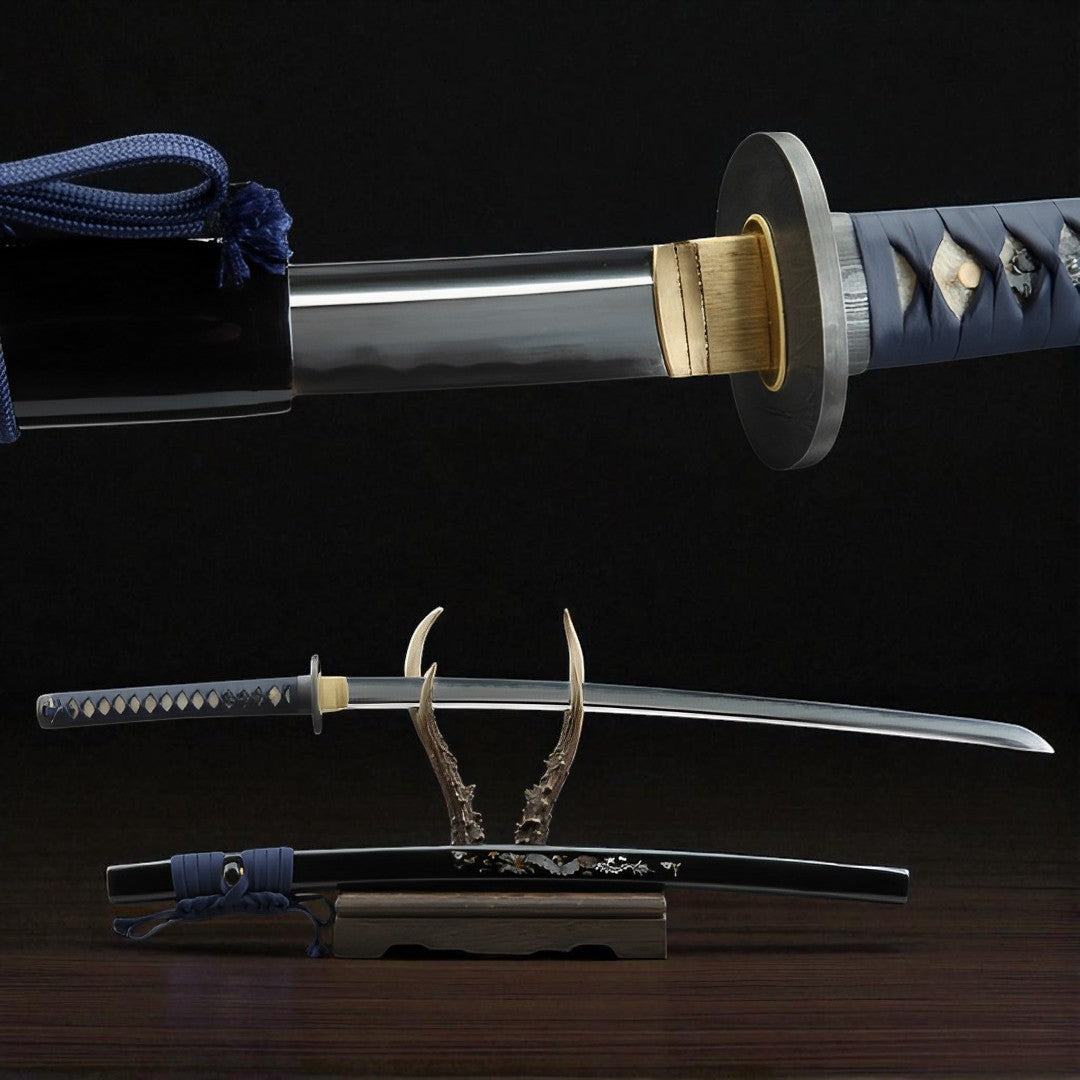
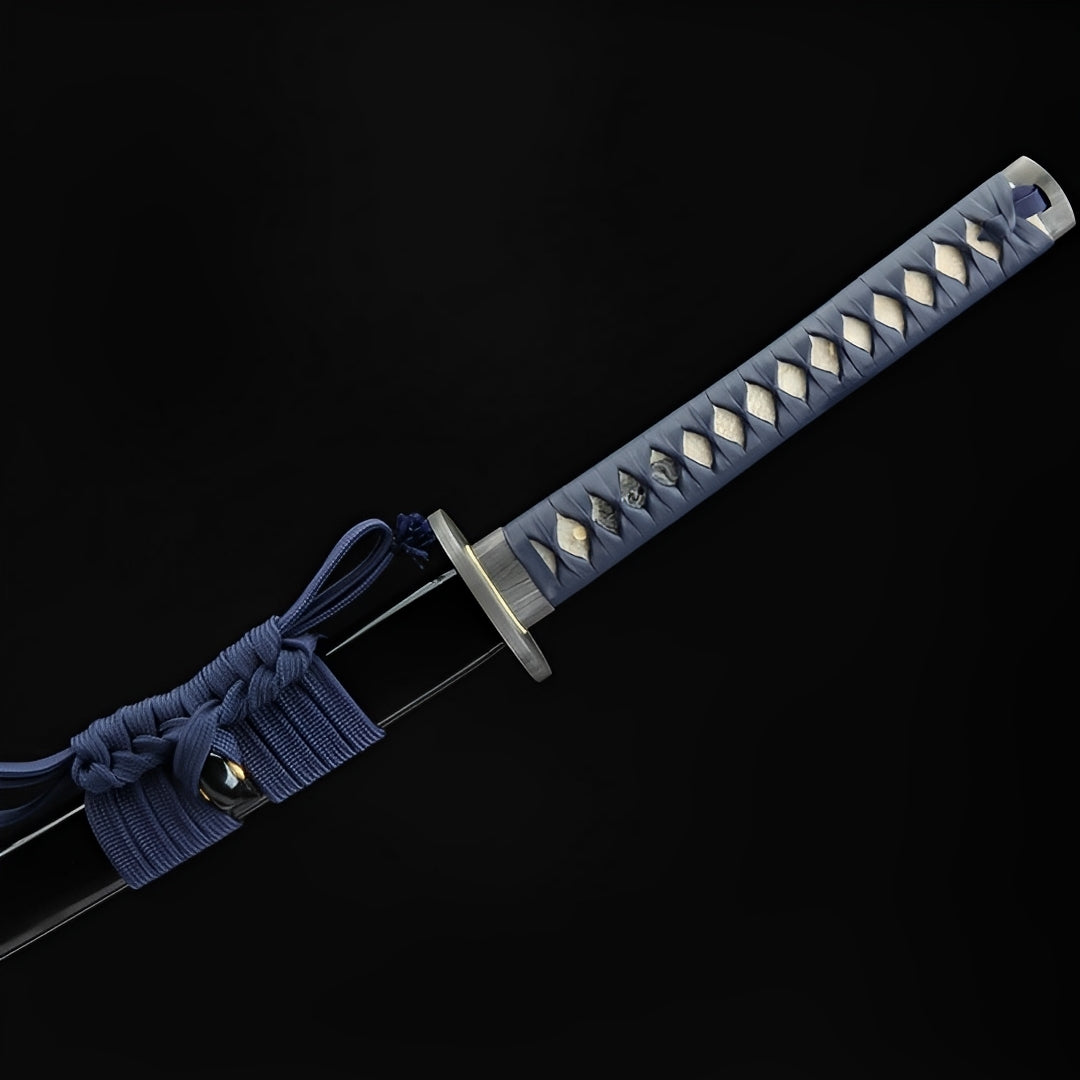
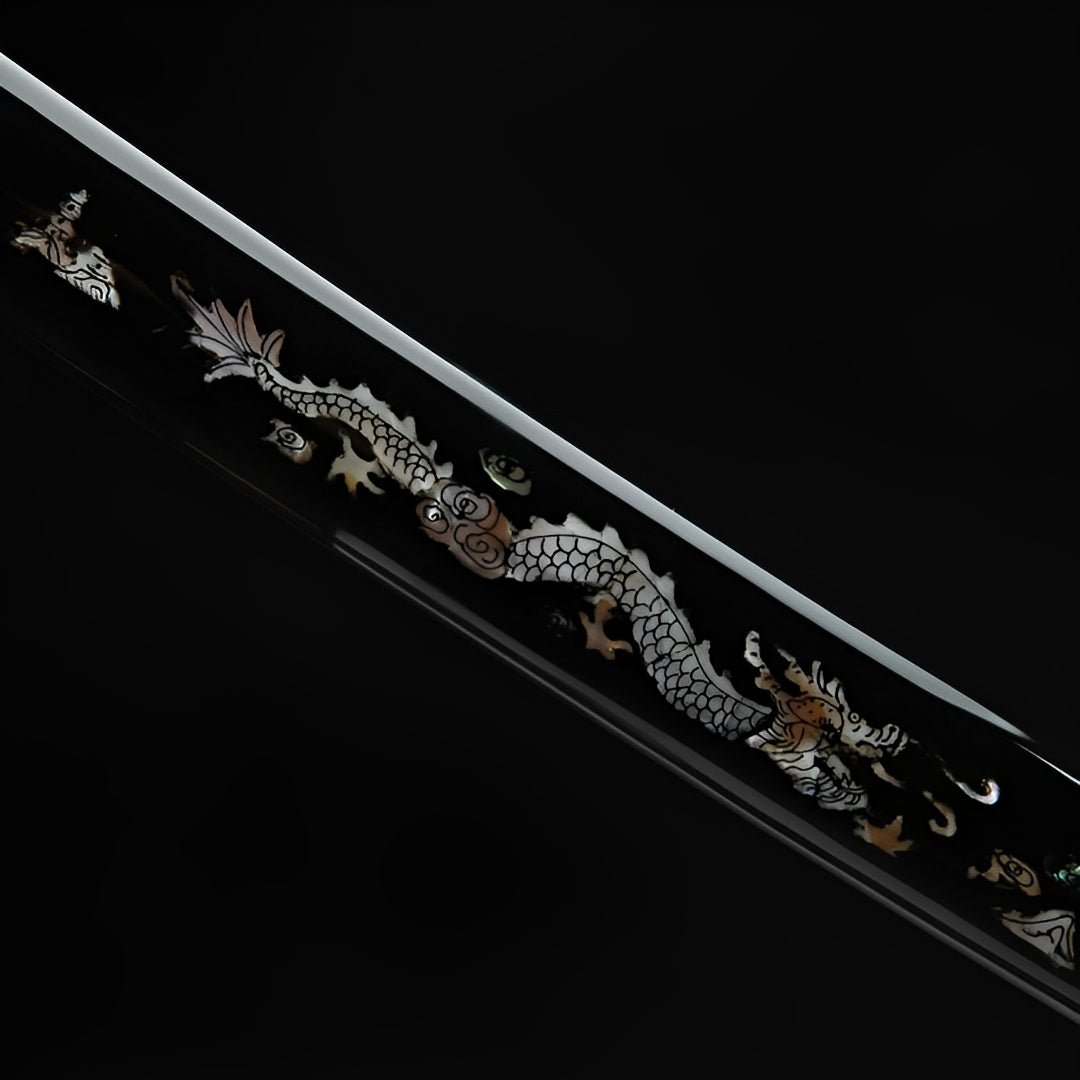
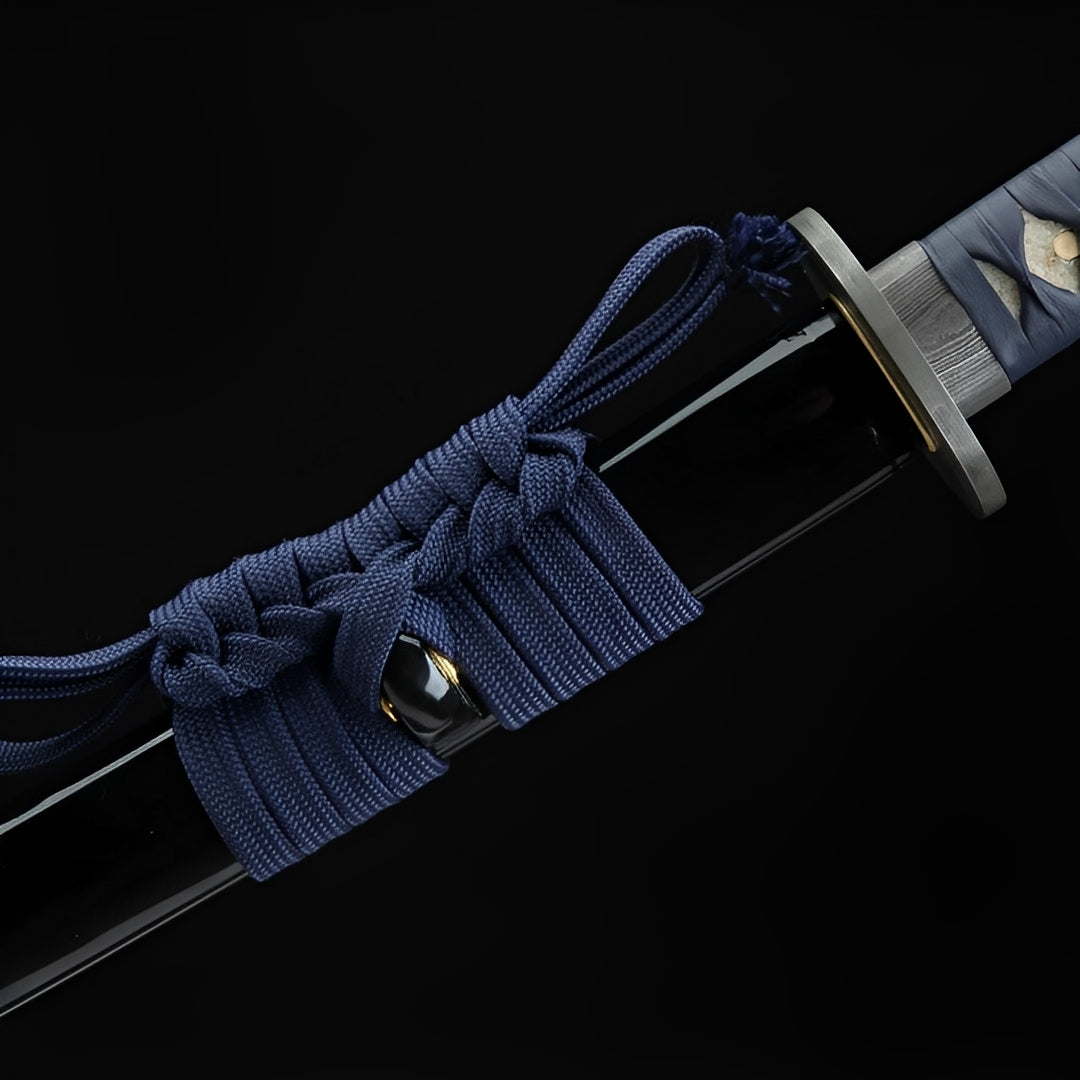
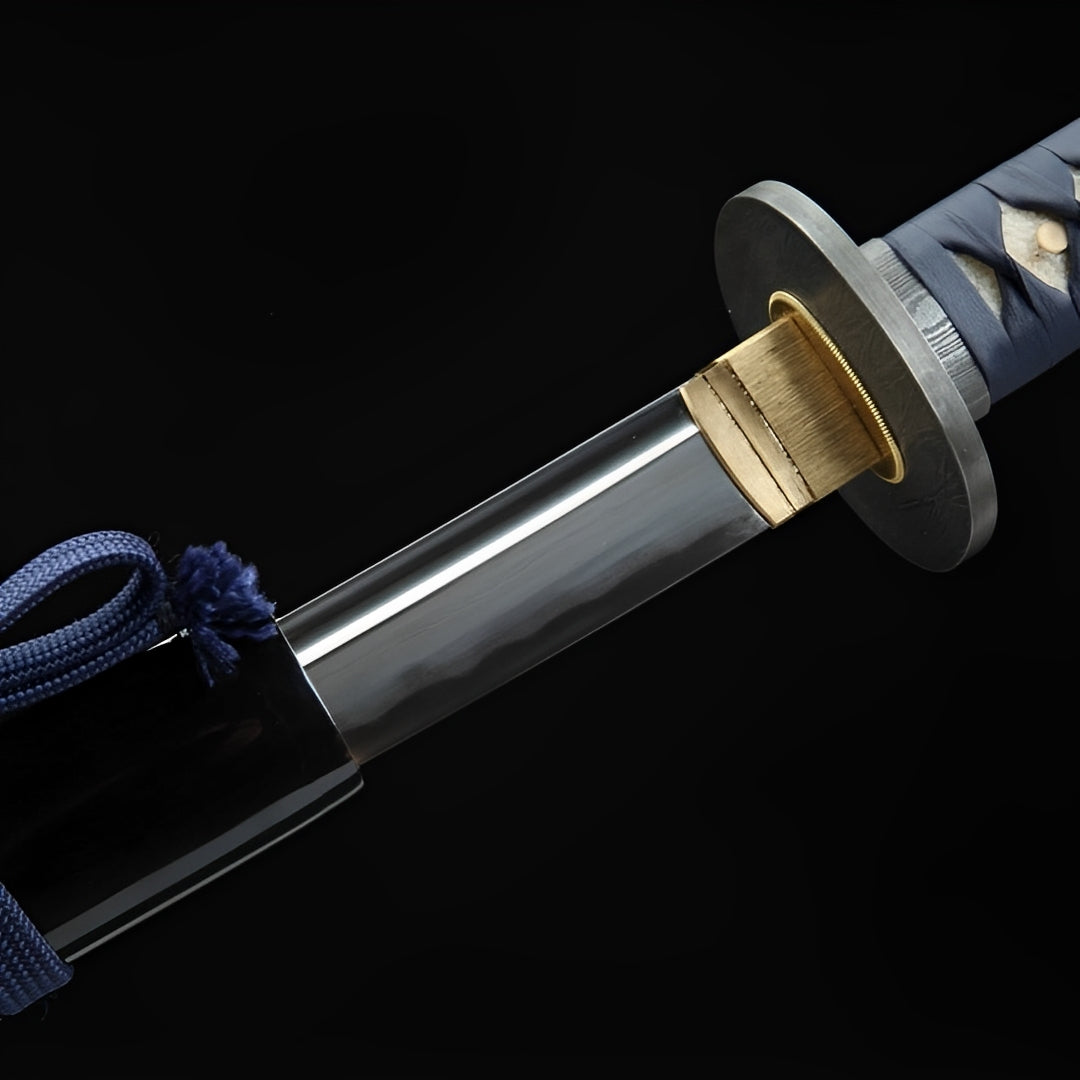
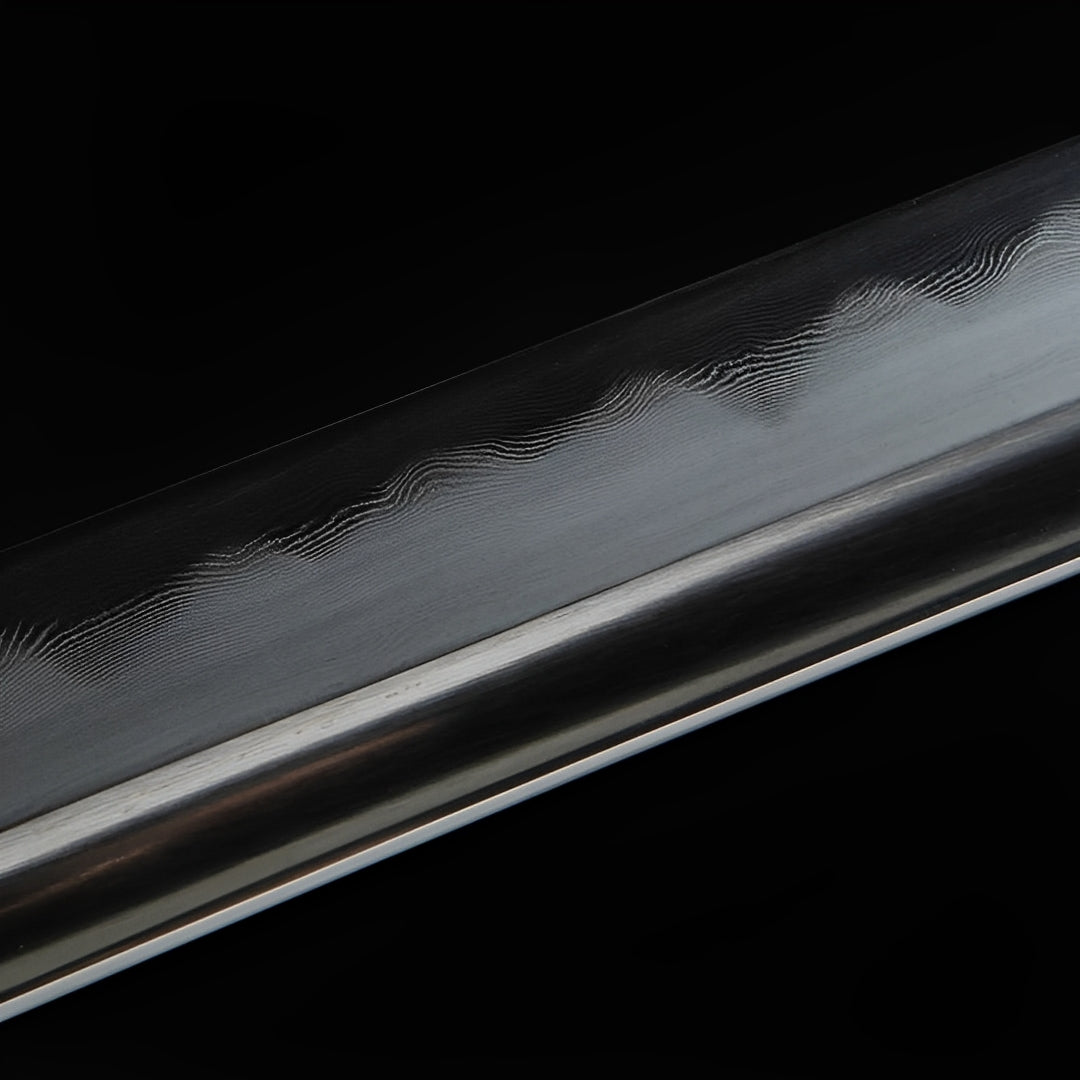
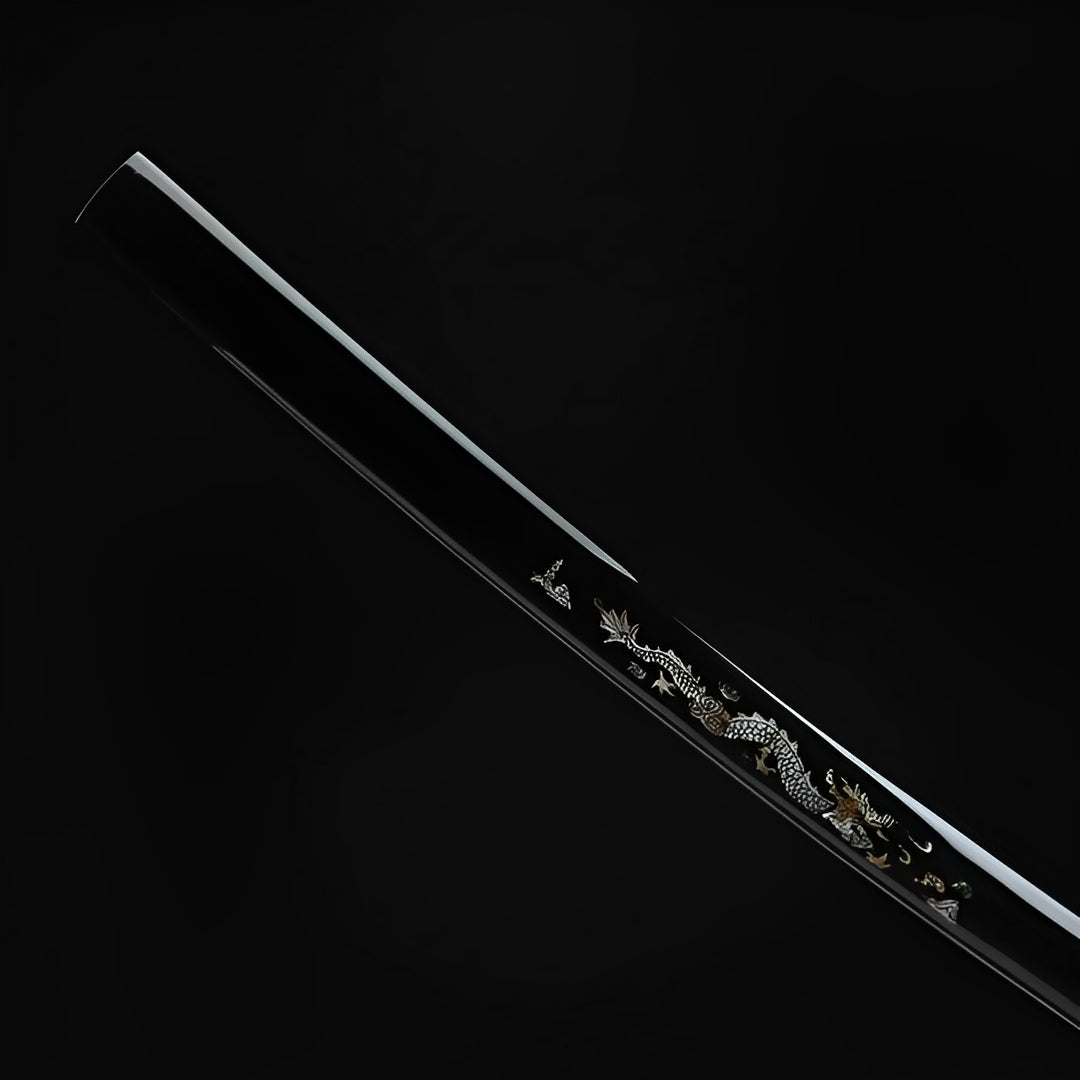
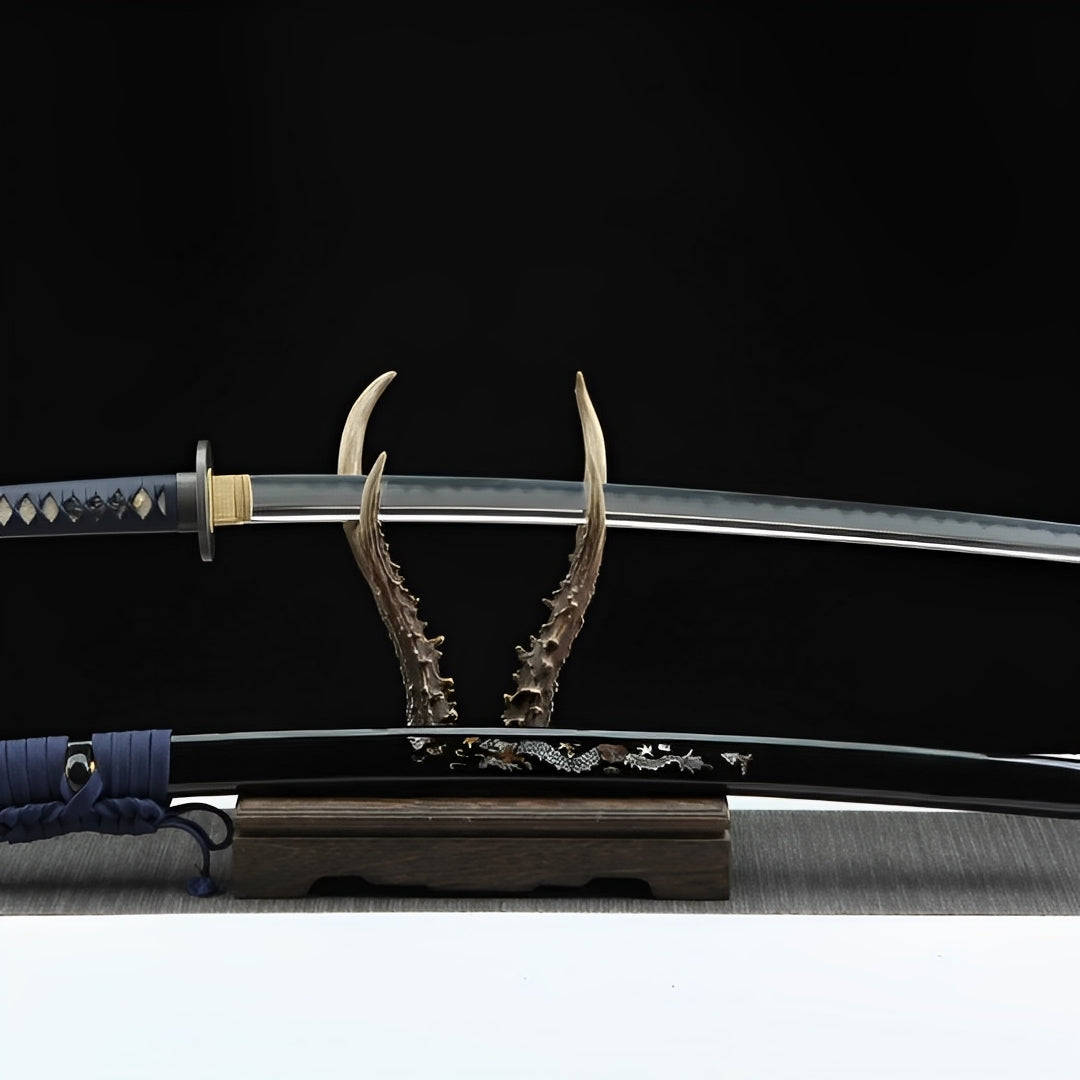
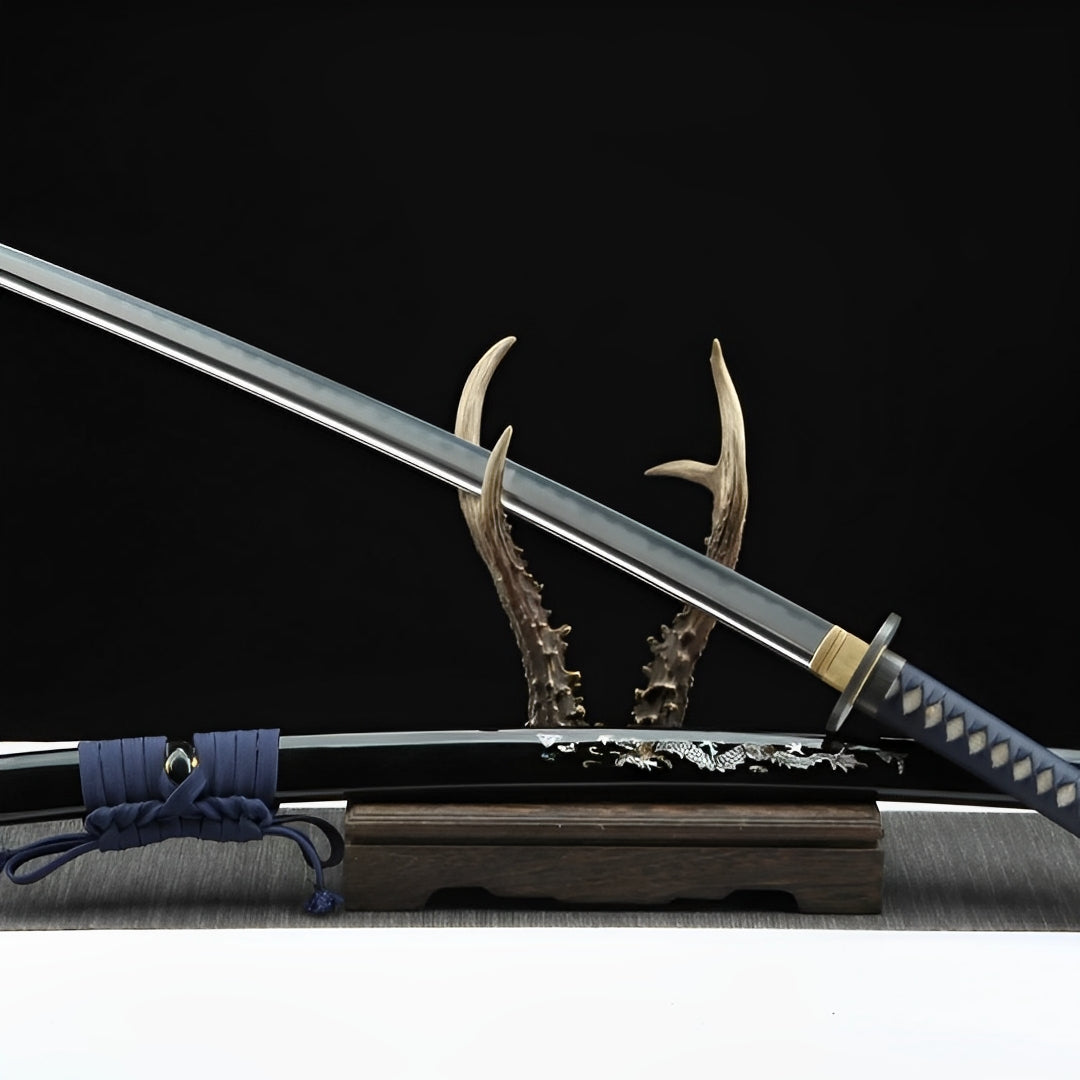
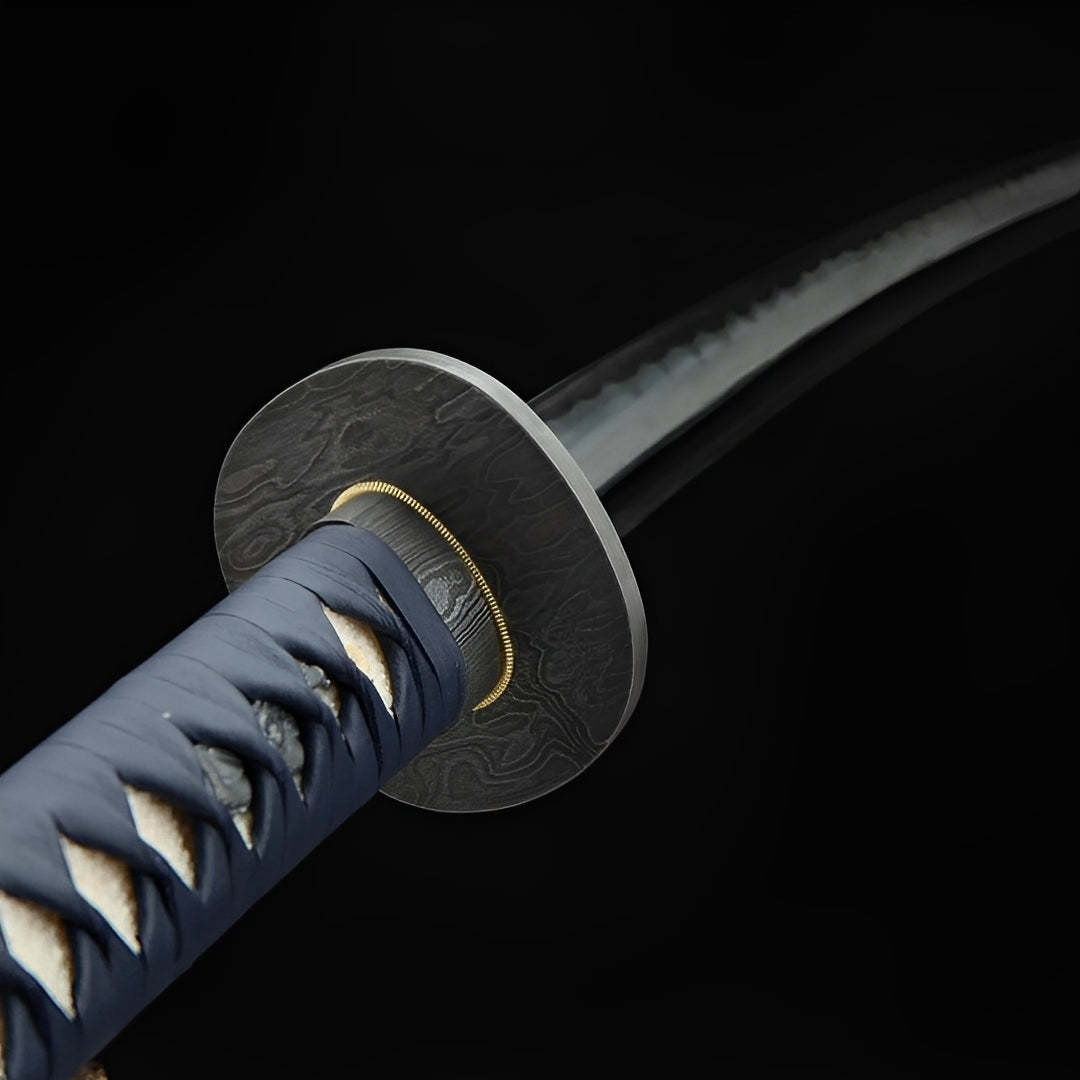
Hand-forged Atsu Katana (厚 — "Devoted Pressure") in clay-tempered Damascus steel with genuine hamon and bo-hi groove. Fully hand-polished, hand-shaped kissaki. Full tang, sharpened. Damascus steel tsuba with silver rim, Damascus steel fuchi and menuki, copper habaki, navy leather ito over genuine rayskin, shell-style saya with engraved dragon and abalone inlay, navy sageo, bamboo mekugi. Includes horn-style bronze display stand. The only katana in our catalog where even the tsuba is Damascus — the forging pattern runs from guard through blade.
Atsu Katana Specifications
| Blade Steel | Clay-Tempered Damascus Steel — Genuine Hamon |
| Blade Features | Bo-hi groove, hand-polished, hand-shaped kissaki |
| Construction | Full Tang, Hand-forged, Sharpened |
| Overall Length | 105 cm / 41 in |
| Blade Length | 72 cm / 28 in |
| Blade Width | 3.2 cm / 1.2 in |
| Blade Thickness | 0.7 cm / 0.27 in |
| Handle Length | 30 cm / 11.8 in |
| Tsuba (Guard) | Damascus steel — visible grain, silver rim |
| Fuchi & Menuki | Damascus steel |
| Habaki | Copper |
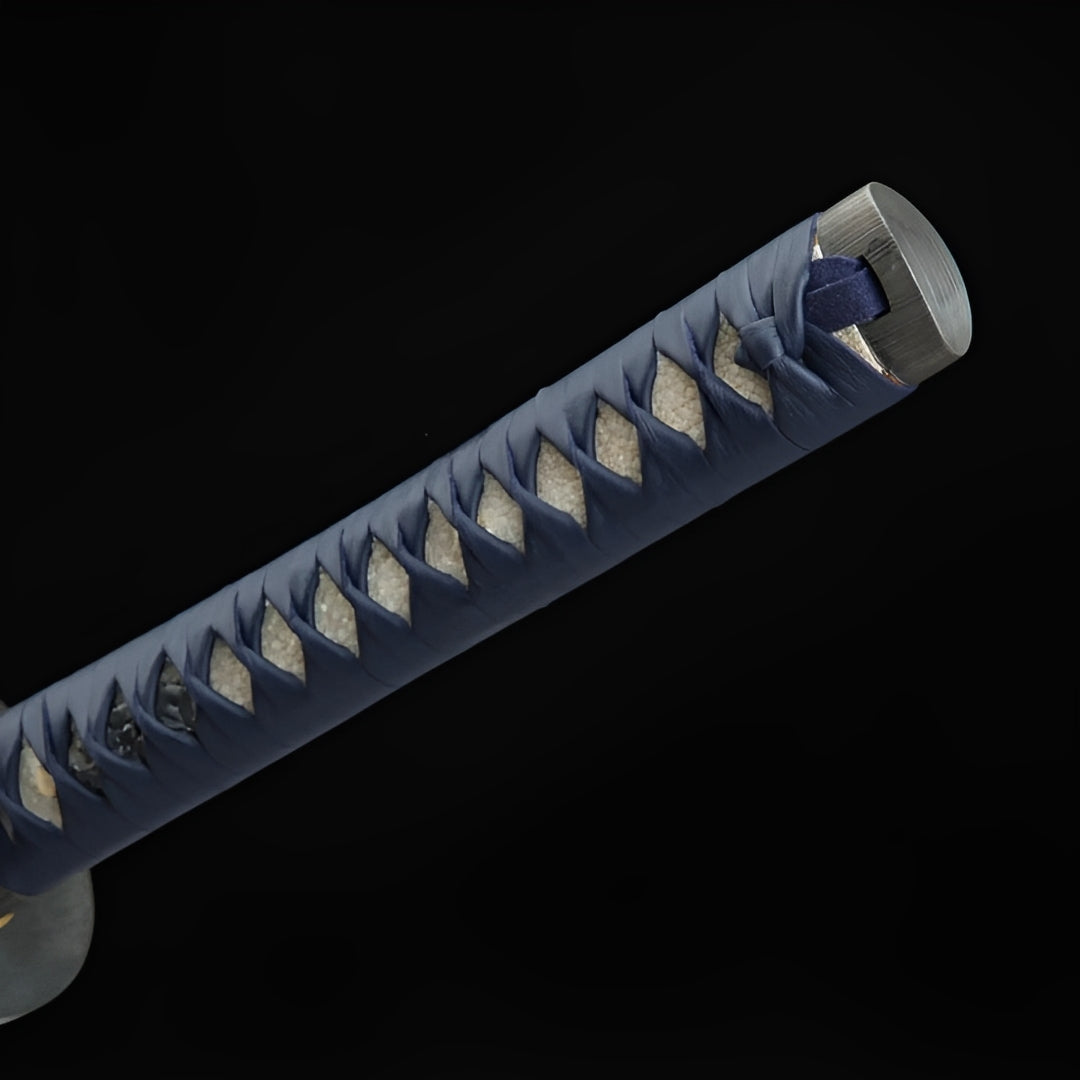
| Ito | Navy leather |
| Rayskin (Same) | Genuine (white) |
| Mekugi | Bamboo |
| Saya (Scabbard) | Shell-style with engraved dragon — abalone inlay |
| Includes | Katana + saya + horn-style bronze display stand |
Clay-Tempered Damascus with Bo-Hi
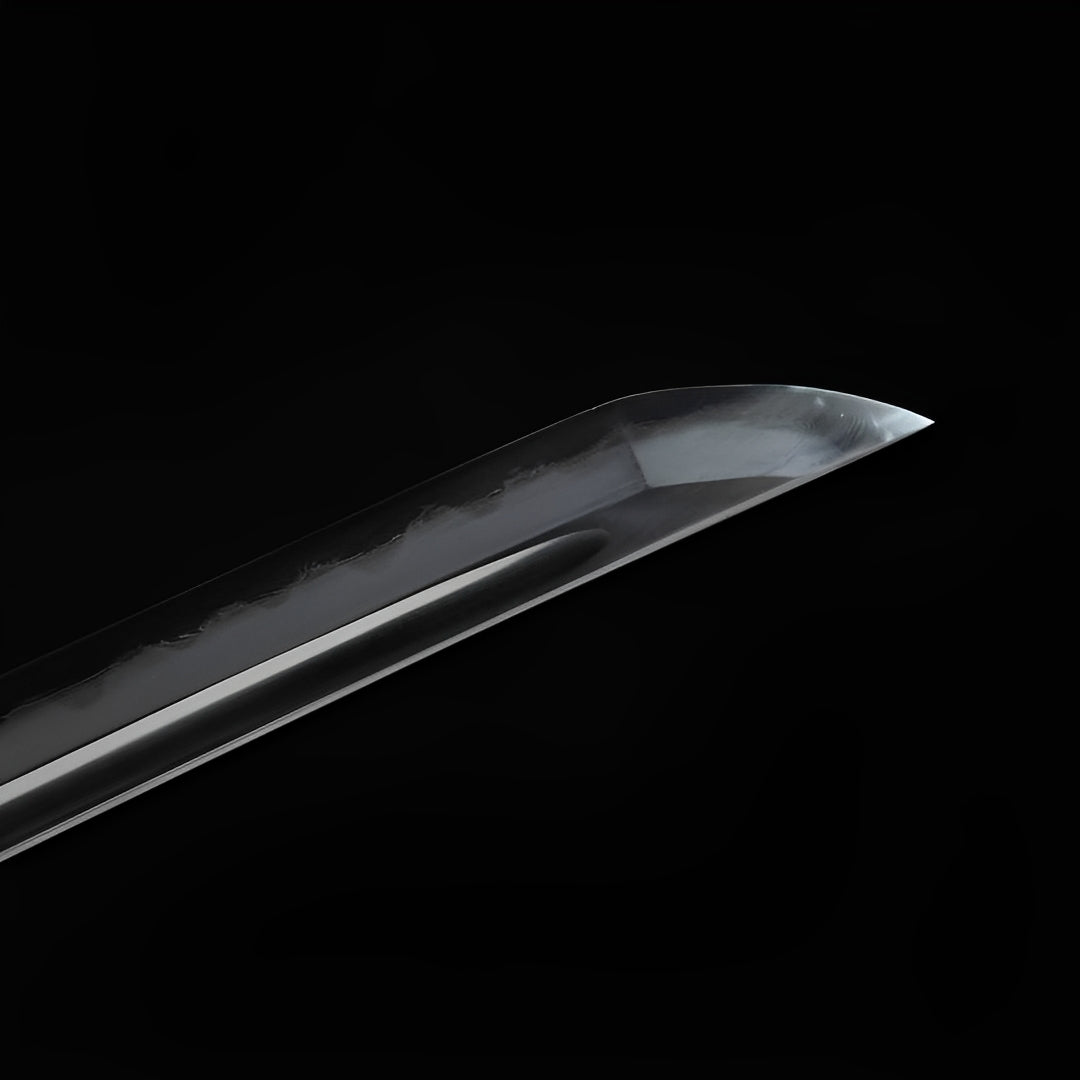
Three advanced features on one blade. The Damascus steel is folded and forge-welded from multiple layers, the genuine hamon is produced through traditional clay tempering (tsuchioki — clay on spine, exposed edge, water quench), and a bo-hi (樋 — fuller groove) runs the blade's length, reducing weight while producing the distinctive whistling sound during cuts. Bo-hi is the first new blade feature introduced since the Ginkai's horimono — and unlike decorative engravings, bo-hi serves a functional purpose: it lightens the blade by approximately 10% while maintaining structural rigidity. The forging process on the Atsu katana handles all three — Damascus folding, clay tempering, and groove cutting — in sequence.
Damascus Steel Tsuba — Matching Guard
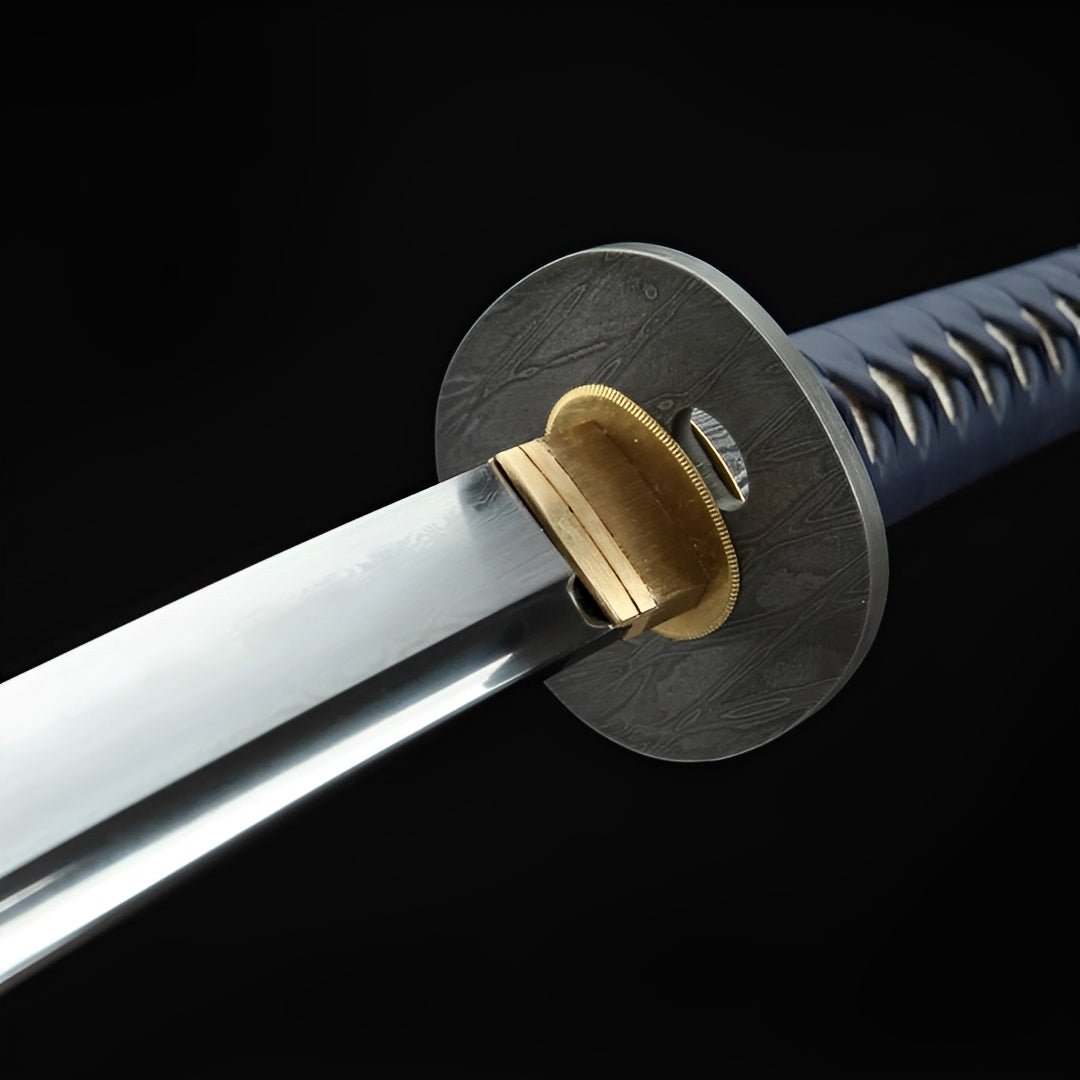
The tsuba is forged from the same Damascus steel as the blade — the folded grain pattern visible across the guard's face, framed by a silver rim. This is unique in our catalog. Every other tsuba uses iron, copper, brass, or silver — the Atsu is the only blade where the guard is Damascus. The visible grain on the tsuba matches the blade's pattern, creating material continuity from guard through blade. The Damascus fuchi (handle collar) and menuki (grip ornaments) extend that continuity onto the handle. The Atsu does not mix metals for visual variety — it commits to Damascus across every forged component.
Shell Saya with Engraved Dragon
The saya uses a shell-style finish — dark lacquer embedded with abalone fragments that catch light in shifting iridescent colors. An engraved dragon wraps the scabbard body in relief. The combination of shell inlay and dragon engraving on one saya puts the Atsu katana alongside the Ginkai in scabbard complexity. The navy sageo and leather ito tie the saya's dark palette to the handle, keeping the entire sword in a navy-silver-black register.
Leather Ito & Genuine Rayskin
Navy leather ito wraps over genuine white rayskin (samegawa). Leather grips firmer and warmer than cotton or silk, and ages into a burnished surface through handling. The white rayskin diamonds flash through the dark leather crossings. Damascus menuki sit beneath the wrapping as grip accents — small pieces of folded steel matching blade and tsuba. Bamboo mekugi pin the full-tang blade through the solid wood handle. The Atsu joins the Kuroki and Kill Bill as the only blades in our catalog using leather ito — each with a different leather type and color.
Atsu — Forge Pressure
Atsu (厚) means "pressure" or "devotion" — the force that transforms raw steel into a finished blade. Every element of the Atsu katana references that transformation: Damascus layers beaten together under hammering force, clay tempering subjecting steel to thermal shock, bo-hi groove carved into hardened steel, dragon engraved into the saya. Nothing on this blade was easy to make. The Damascus tsuba alone required forging a separate piece of pattern-welded steel specifically for the guard — a step most smiths skip because it doubles the metalwork.
Display
Ships with a horn-style bronze stand on a dark base. The Atsu sits alongside the Ginkai, Ryujin, Kumo, and Shirokuro in our premium tier. Display where the Damascus grain on the tsuba can be examined — it is the single feature that makes this blade unlike anything else in the catalog. Pair with the Kuroki (magnolia saya, Damascus blade) to show two different philosophies of Damascus craftsmanship: raw natural materials versus shell-inlay luxury.
Frequently Asked Questions
What is bo-hi?
Bo-hi (樋) is a fuller groove cut along the blade's length. It reduces the blade's weight by approximately 10% while maintaining rigidity, and produces a distinctive whistling sound (tachikaze) during cuts. It is both a functional and aesthetic feature found on many traditional Japanese swords.
Is the tsuba really Damascus steel?
Yes. The tsuba is forged from pattern-welded Damascus steel with the folded grain visible across its face. The fuchi and menuki are also Damascus. This is the only katana in our catalog where the guard matches the blade's steel.
Is this Atsu katana sharp?
Yes. The clay-tempered Damascus blade is hand-sharpened and functional. Handle with care, store in the saya, and check local regulations before ordering.
What does Atsu mean?
Atsu (厚) means "pressure," "thickness," or "devotion" in Japanese. The name references the forge pressure that transforms raw steel into a finished blade — the heat, hammering, and folding that create Damascus patterns and refine the steel's structure.
Is the rayskin genuine?
Yes. This katana uses genuine white rayskin (samegawa) beneath the navy leather ito wrapping.
Legal Disclaimer
By purchasing from Katana Corp, you acknowledge and agree that:
- You are at least 18 years of age (or the age of majority in your jurisdiction).
- You are solely responsible for verifying and complying with all local laws and import regulations before placing an order.
- Some countries prohibit the importation of swords entirely. Katana Corp is not responsible for orders delayed, seized, or refused by customs authorities.
- All katanas and related products are sold strictly as decorative and display items. They are not intended or certified for combat use.
- Depending on the jurisdiction, swords may legally be considered bladed weapons, subject to specific restrictions or prohibitions.
- Katana Corp disclaims all liability for any injury, damage, or legal consequences resulting from misuse, abuse, or unlawful use of its products.
For full details, please refer to our Terms of Service.
Care & Maintenance
To maintain your katana's appearance and performance over time, we recommend:
- Regularly wiping the blade with a soft cloth to remove fingerprints and moisture.
- Applying a light coat of choji oil to prevent rust (for carbon steel blades).
- Storing the sword in a dry place, preferably inside its saya.
- Avoiding direct contact with hard surfaces to preserve sharpness and finish.
For more care tips, check our full maintenance guide in the FAQ section.
Behind the Blade
Every katana we offer carries the essence of centuries-old craftsmanship.
More than just a weapon, the katana symbolizes discipline, honor, and mastery.
Our artisans draw inspiration from traditional forging methods to ensure each blade reflects the spirit of the samurai — strength, precision, and soul.
Owning one is not just about aesthetics — it’s about carrying a piece of that legacy.
User Experience
This katana is designed to offer a perfect balance between blade and handle.
Its ergonomic tsuka (handle) allows a secure two-handed grip, while the weight distribution ensures smooth, fluid movement.
Whether for training, display or cutting practice, handling feels natural and precise.
10M+
Total views
Our Katanas In Action
Real customers · TikTok & Instagram

TikTok
2.3M
views

TikTok
980K
views

5.1M
views

TikTok
1.8M
views

1.2M
views

850K
views

TikTok
1.5M
views
Excellent
Good sword, small issue on arrival
Saya mouth was slightly loose when I got it, fitting tape sorted it. Balance is great though. People at my dojo always ask about it.
Way better than I expected
Hamon is clean, handle wrap tight, saya closes solid. Came in a wooden box. No complaints at all for the price.
Got it as a gift, he was speechless
Bought for my boyfriend who does iaido. He said the fit and finish were legit. I knew nothing about swords, site made it easy to pick.
Nice blade but took 2 weeks to arrive
Damascus looks great. Shipping to Portland took forever and tracking was dead for a week. Quality is there, logistics need work.
Third order, still no complaints
Ordered three times over two years. Always well packed, matches the photos. Support replied same day. Will keep coming back.
7×
Reasons to choose us
Why Choose Katana Corp
The difference, line by line.
24/7 HUMAN SUPPORT
No bots · No AI · Real katana experts

The Art of Traditional Forging
Each katana we craft is born from centuries of samurai tradition.
Our master smiths shape every blade by hand, folding the steel to achieve unmatched strength, flexibility, and beauty.
This time-honored process is not just about creating a weapon? it’s about preserving a legacy of discipline, honor, and artistry.

Materials Chosen Without Compromise
We select only the highest-grade steels and authentic fittings to ensure every katana is both a masterpiece and a reliable companion.
From the flawless hamon line to the perfectly balanced tang, each detail is carefully inspected to meet the highest standards of performance and aesthetics.

More Than a Sword, A Lifelong Legacy
Owning a handmade katana is an experience that goes beyond the blade itself. It’s holding history, tradition, and craftsmanship in your hands.
Whether displayed as a work of art or wielded with precision, your katana will stand as a symbol of timeless skill and dedication for generations to come.
-
Key Destinations
United States: 5–7 days
Canada: 5–7 days
Australia: 6–9 days
Denmark: 4–6 days
Netherlands: 3–5 days
Sweden: 4–6 days
Switzerland: 3–5 days
Finland: 5–7 days
Singapore: 6–8 days -
Central European Partners
France: 2–3 days
Germany: 3–5 days
Spain: 4–6 days
Italy: 4–6 days
Belgium: 3–5 days
Austria: 4–6 days
Ireland: 4–6 days
Poland: 4–6 days
Portugal: 4–6 days -
Extended EU Network
Czechia: 4–6 days
Hungary: 4–6 days
Slovakia: 4–6 days
Slovenia: 5–7 days
Romania: 5–7 days
Bulgaria: 5–7 days
Croatia: 5–7 days
Serbia: 5–7 days
Estonia: 5–7 days
Latvia: 5–7 days
Lithuania: 5–7 days
Luxembourg: 3–5 days
Greece: 5–8 days -
FAQ’s
Visit our FAQs page to find answers to common questions.