Refund Guaranteed


Why choose us
Ships within 48/72h
Forged Blade
Collector Quality
Trusted Globally
Inspired by Japan
Royal Shinto Katana – 神皇刀
Included with your order
Note: Engraving placement and orientation may vary by blade model (hamon, geometry, and flat area).
Free Shipping over $250
No Bots, No AI
Refund Guaranteed
Free Shipping over $250
No Bots, No AI
Our team is here to help with any questions or concerns.
We’re always happy to assist you — don’t hesitate to reach out.
Why choose us
Ships within 48/72h
Forged Blade
Collector Quality
Trusted Globally
Inspired by Japan

Royal Shinto Katana – 神皇刀
Specifications
Specifications:
- Full tang construction
- SHARP blade
- Hand-forged
- Double BO-HI
- Blade material: 1060 carbon steel
- Habaki material: brass
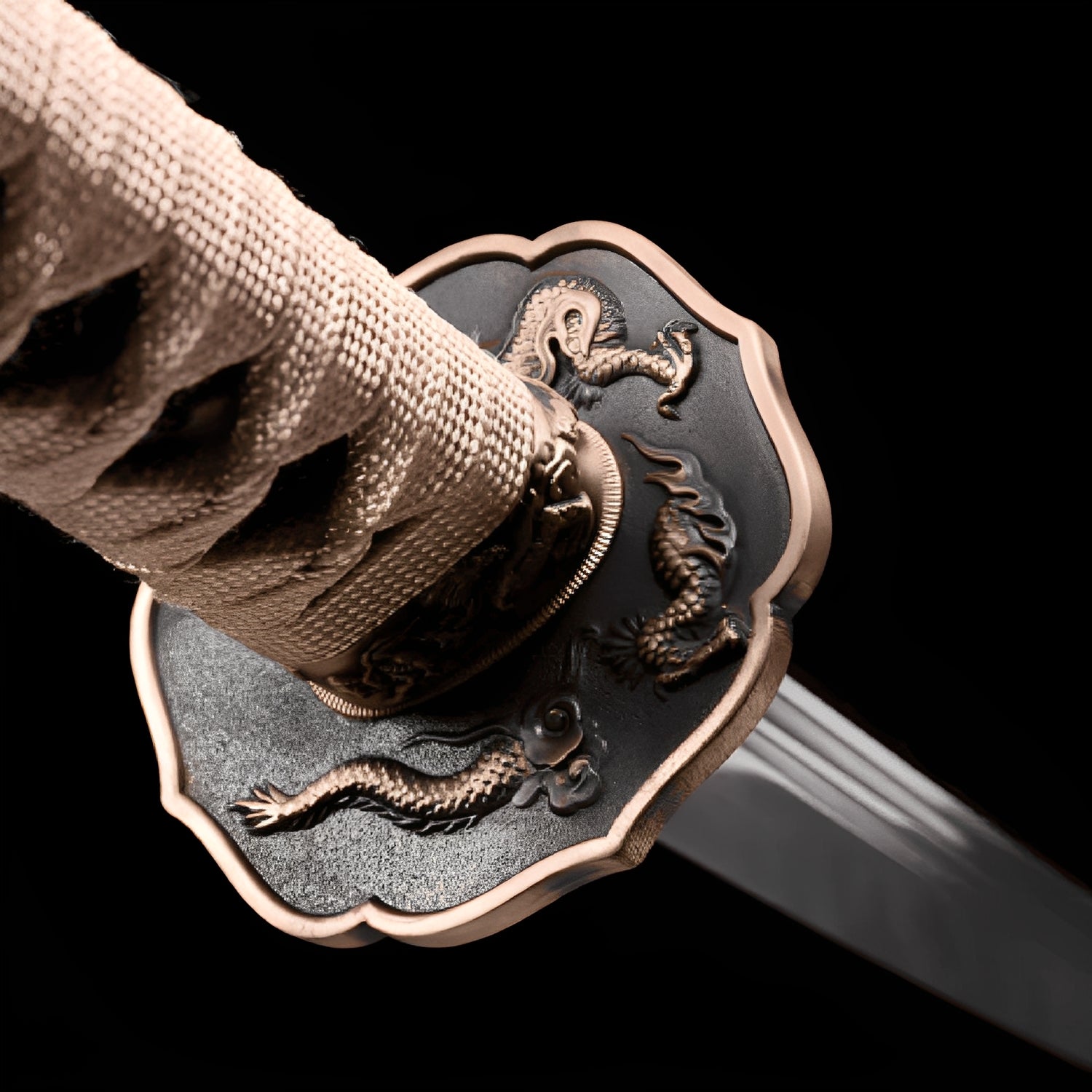
- Finely carved copper tsuba
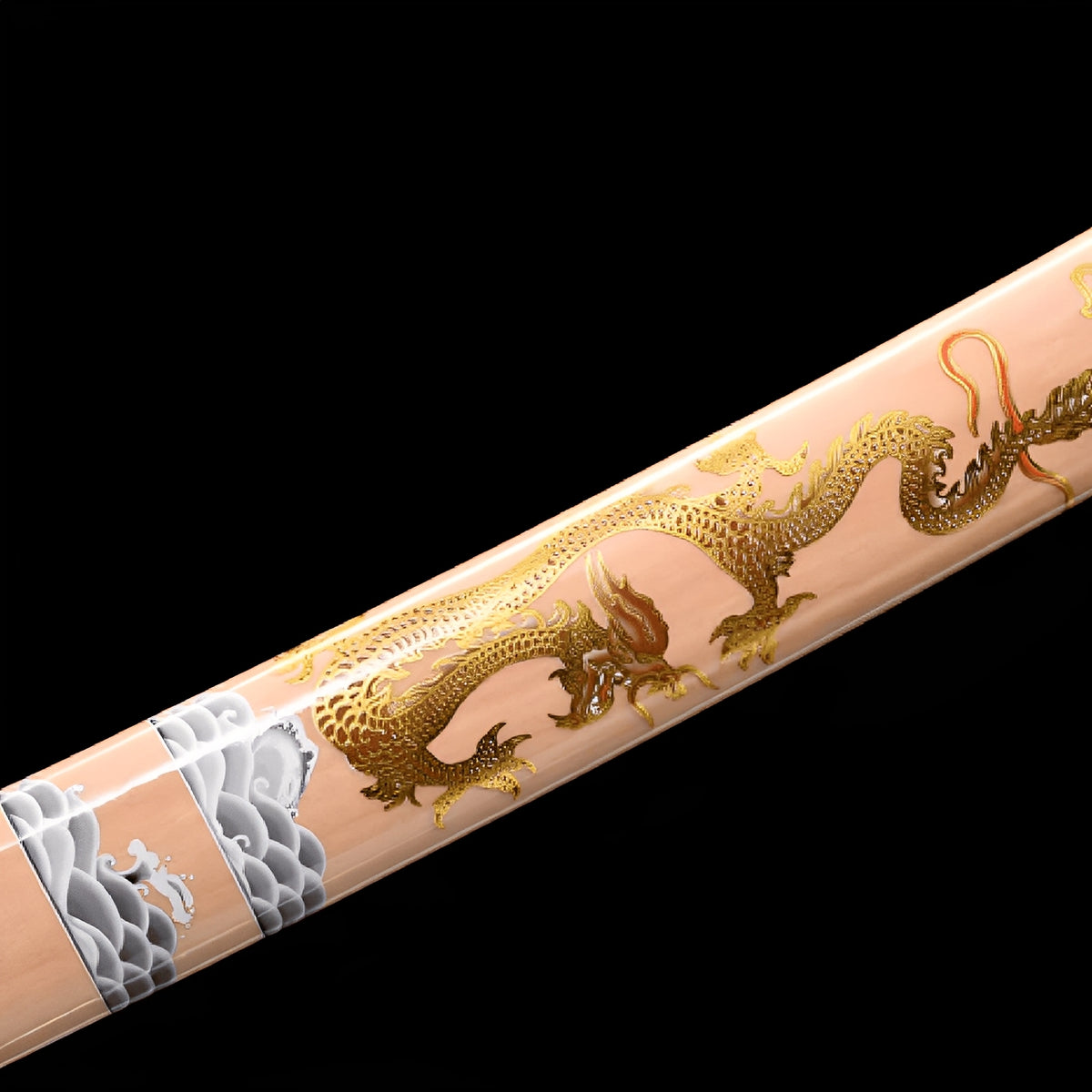
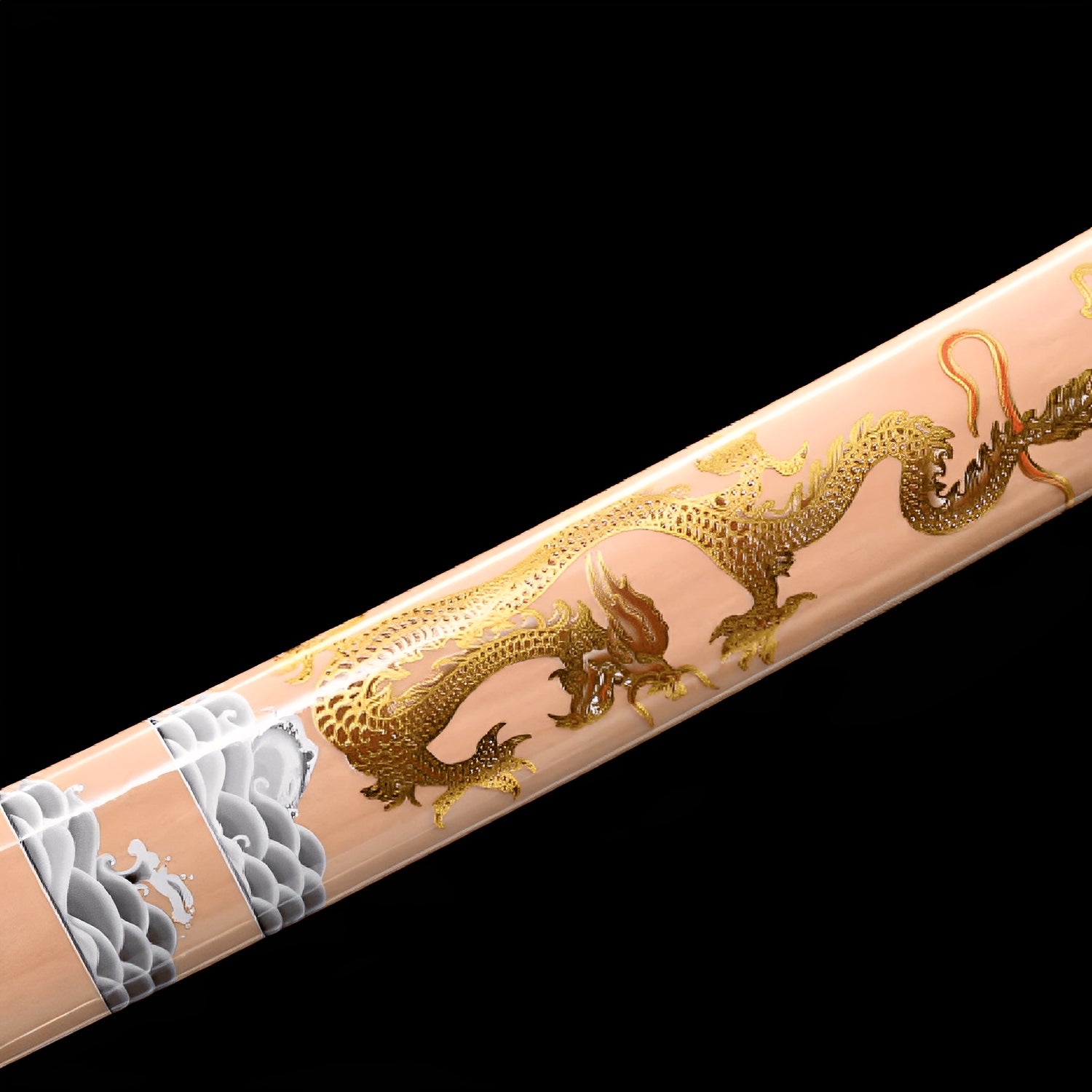
- Lacquered wooden saya with dragon motif and cotton sageo
- Cotton tsuka-ito
- Total length: 105 cm
- Blade length: 72 cm
- Blade width: 3.2 cm
- Blade thickness: 0.7 cm
- Handle length: 30 cm
-
Includes: Katana and matching scabbard
Royal Shinto Katana - Imperial Chrysanthemum Japanese Samurai Sword with Grooved Blade
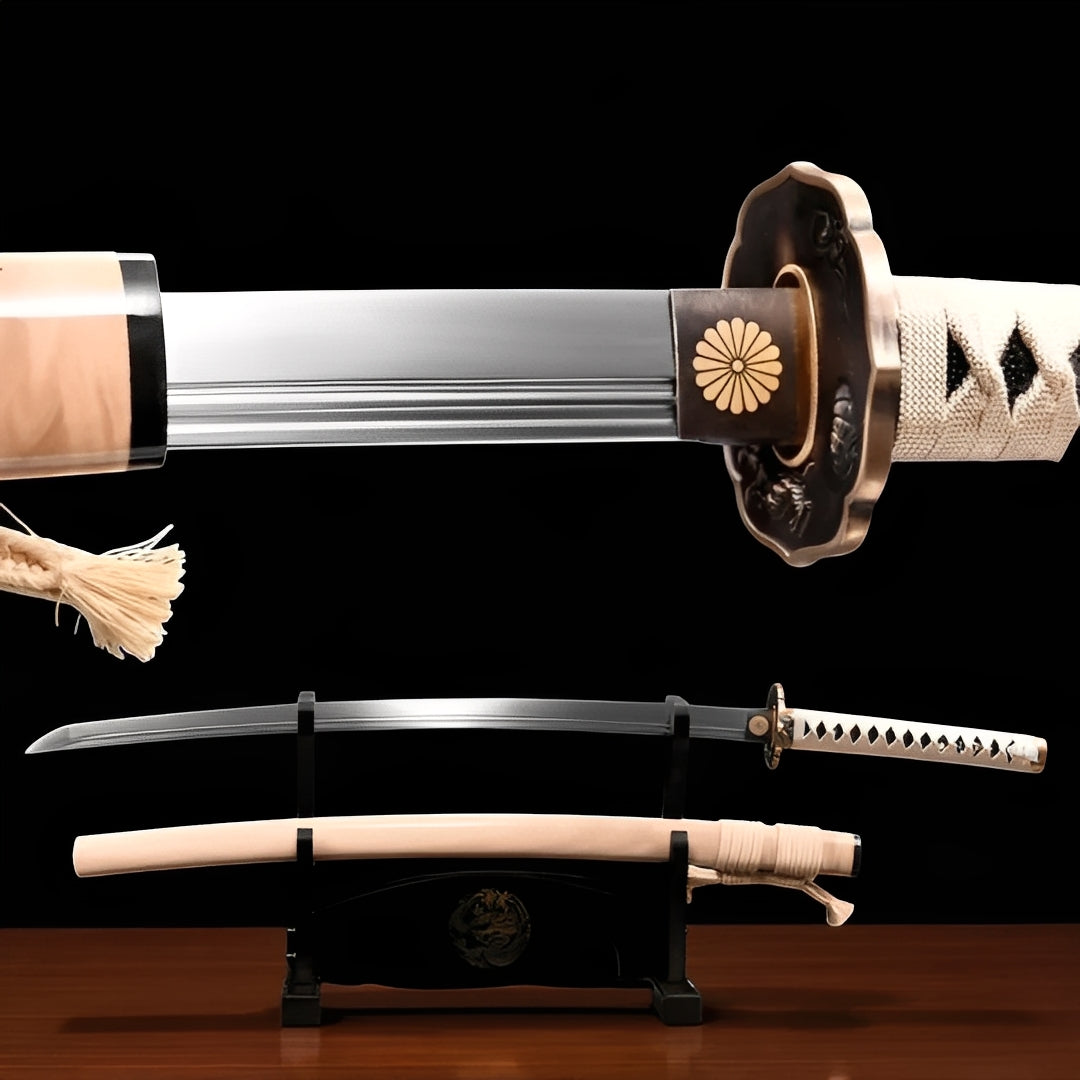
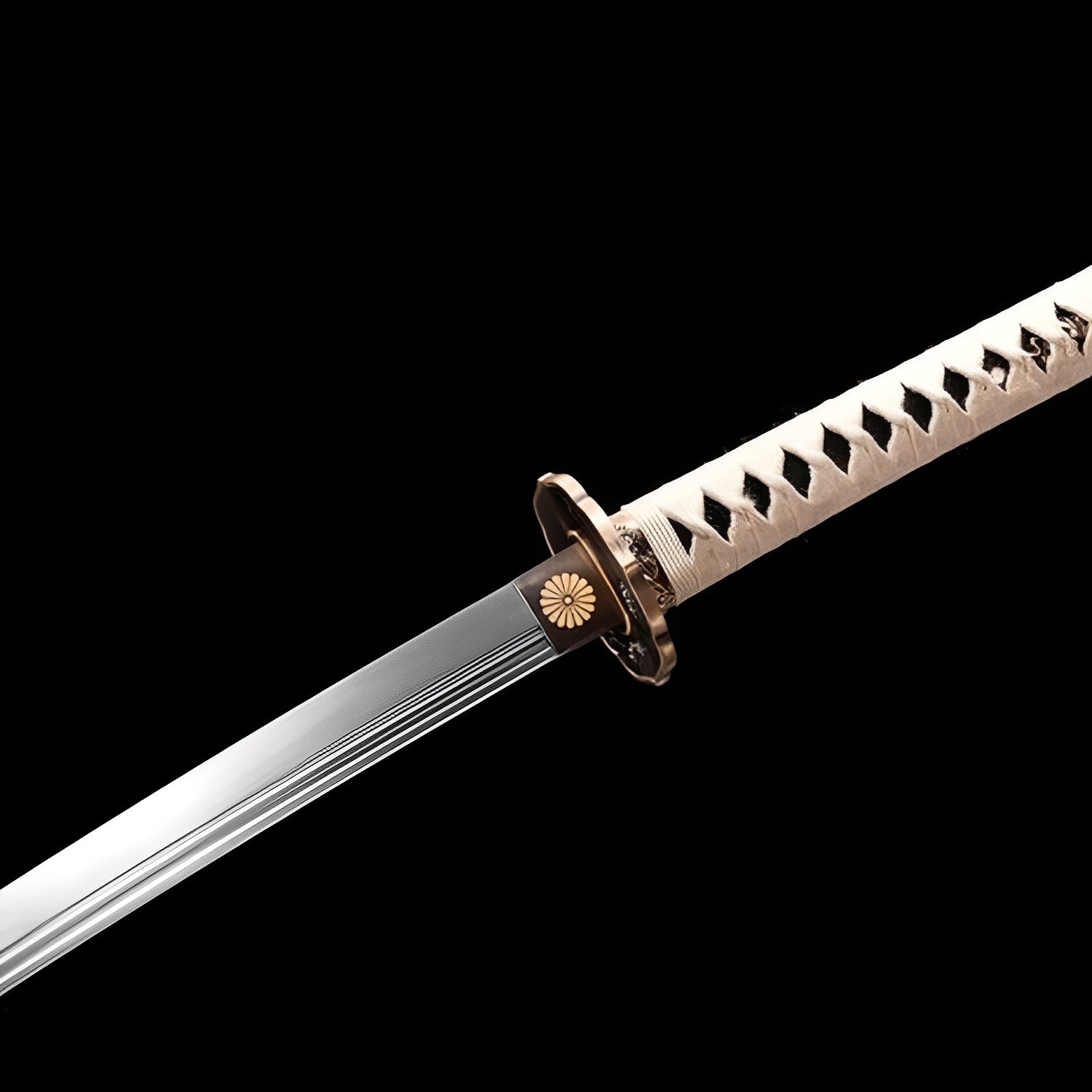
Command imperial dignity with our Royal Shinto katana featuring the sacred chrysanthemum crest. This museum-quality Japanese samurai sword showcases a pristine silver blade with distinctive grooved fuller, magnificent bronze guard adorned with the imperial sixteen-petal chrysanthemum (kiku mon), matching bronze habaki, cream white diamond-wrapped handle, and elegant cream scabbard, rendered in supreme craftsmanship that captures the essence of Japan's imperial heritage and the divine authority of warrior nobility who served the emperor directly.
Detailed Blade Description
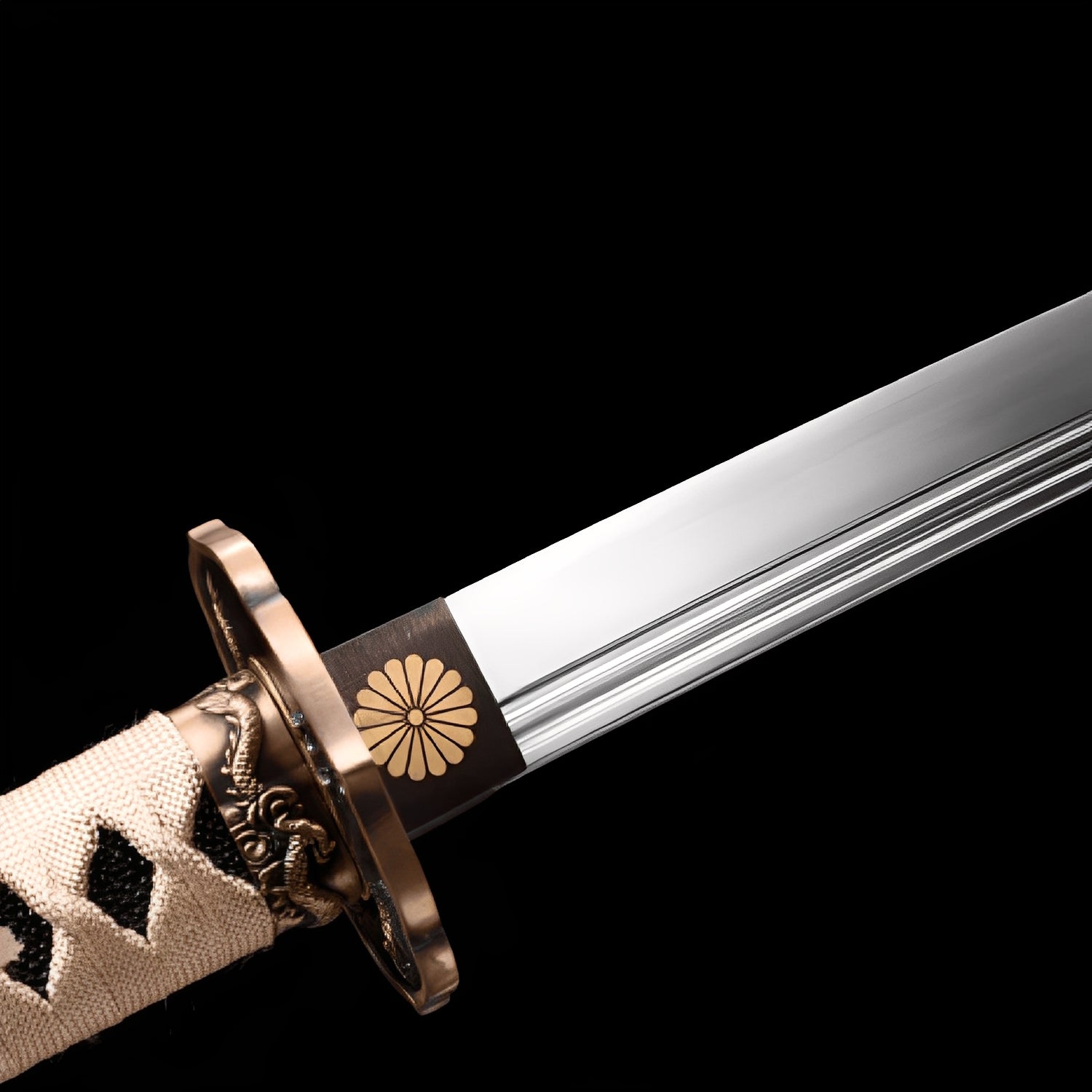
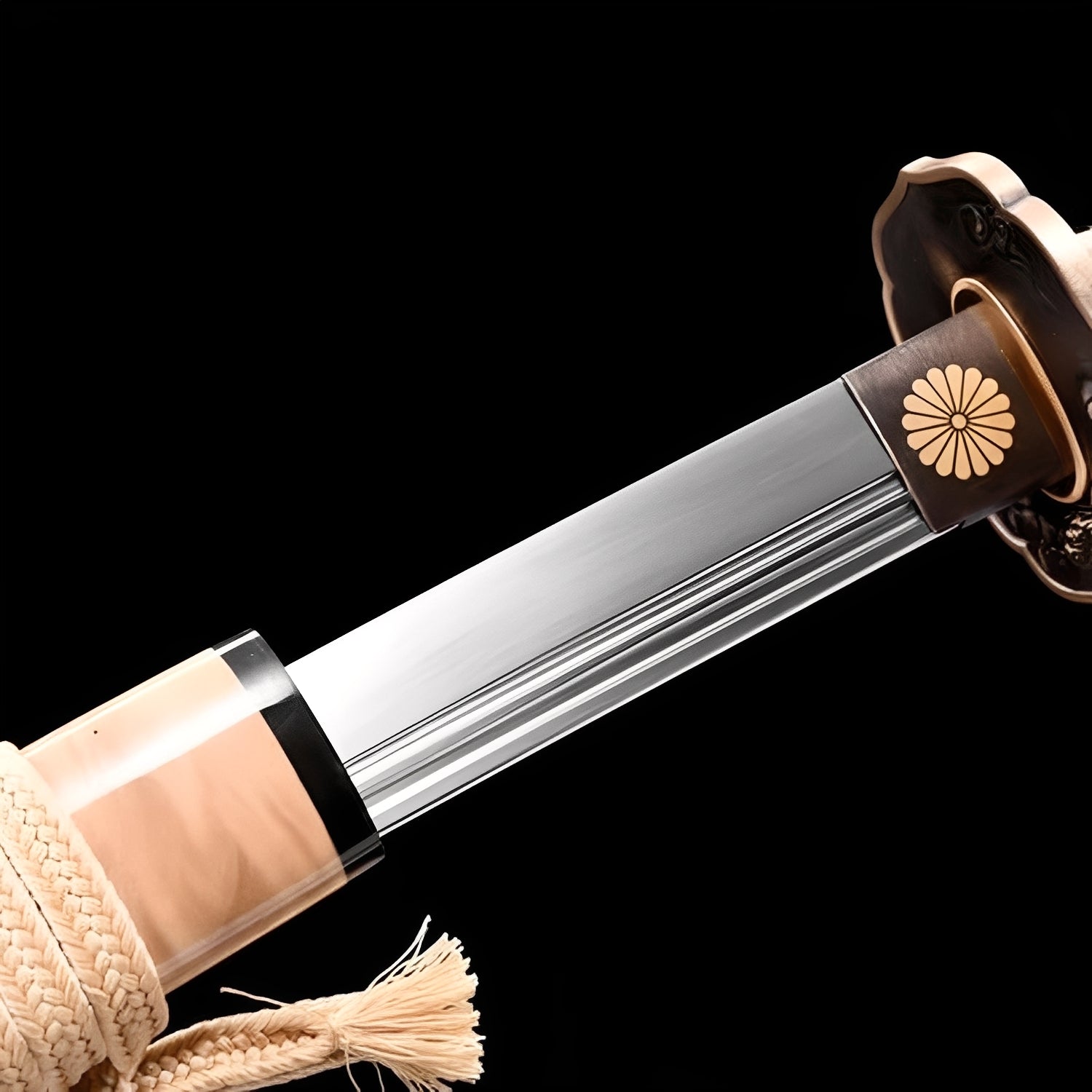
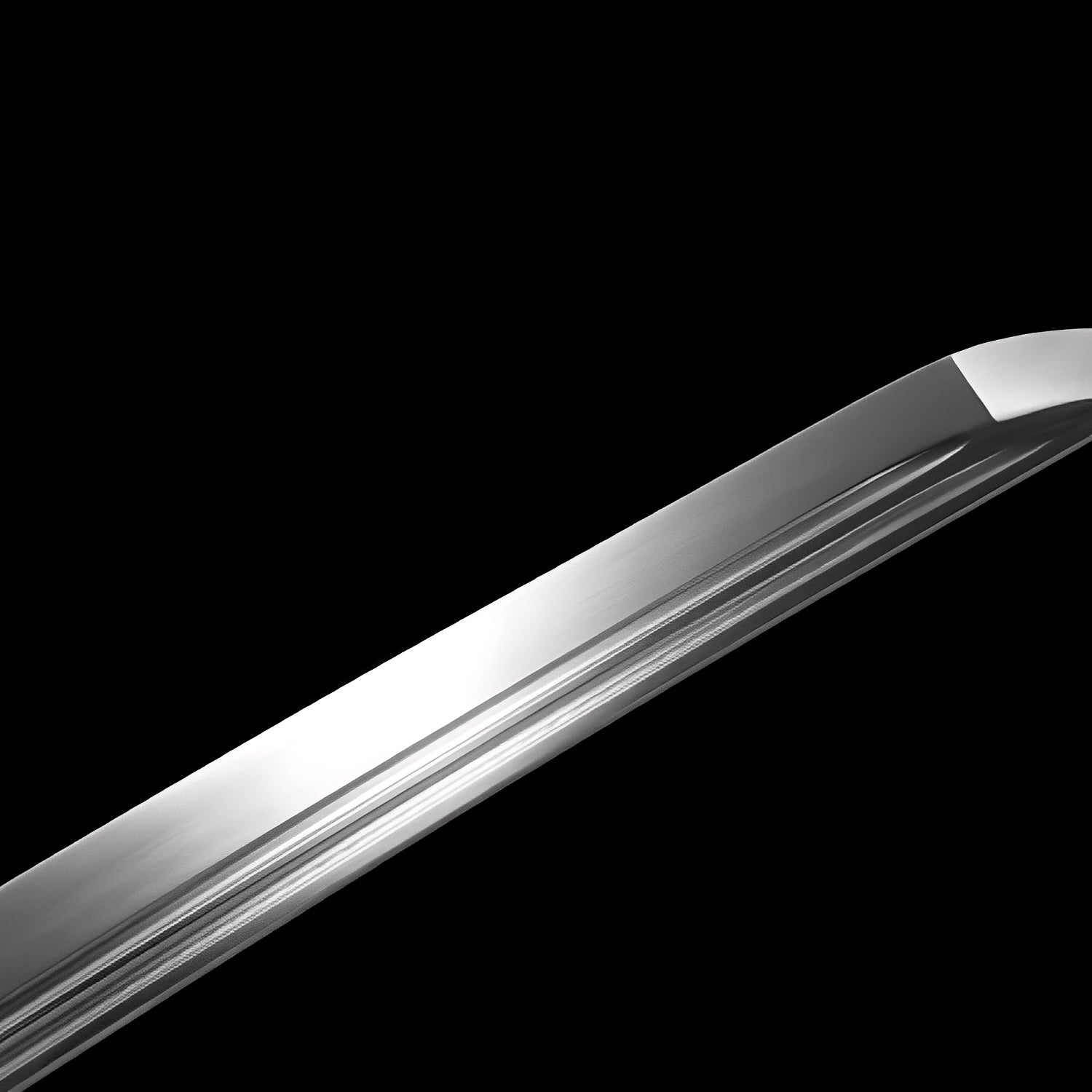
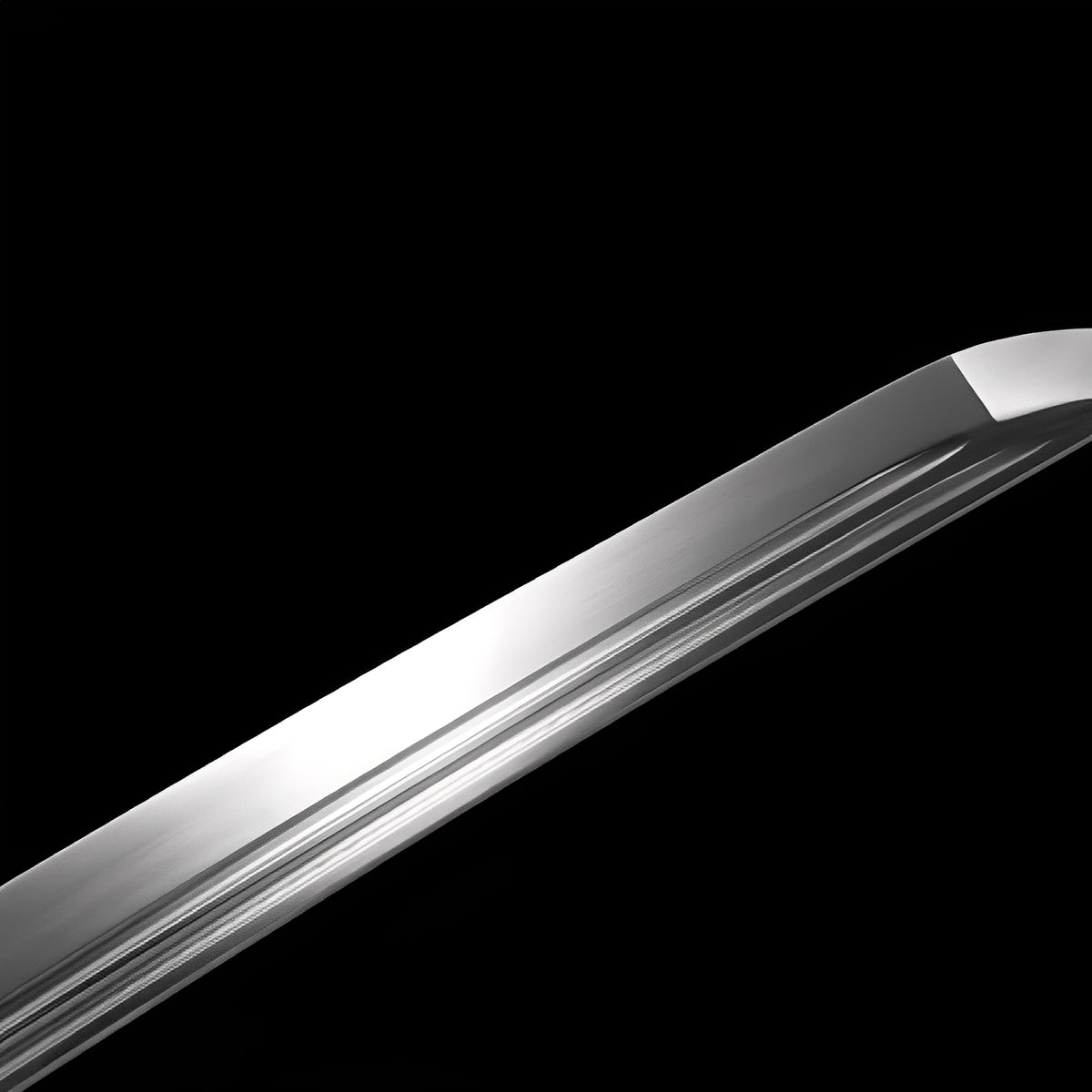
The centerpiece of this magnificent katana is its pristine mirror-polished silver blade featuring distinctive vertical grooves (bo-hi or fuller) running along its length. These parallel channels serve both functional and aesthetic purposes - they reduce blade weight without compromising structural integrity while creating elegant linear patterns that catch light beautifully.
The grooved design adds refined visual sophistication, transforming the blade surface into sculptural study of light and shadow. The channels create subtle depth and dimensional quality that distinguishes this blade from standard flat designs. Traditional Japanese swordsmiths carved these fullers to achieve perfect balance while maintaining cutting power.
The blade demonstrates authentic Japanese sword construction with traditional curvature, visible hamon (temper line), and proper kissaki (blade tip) geometry. The mirror-polished steel creates brilliant reflections that showcase superior polishing techniques, while the grooves add elegant detail that rewards closer inspection.
Imperial Chrysanthemum Guard
The magnificent tsuba (guard) features beautiful bronze or copper finish adorned with the sixteen-petal chrysanthemum (kikumon) - the sacred emblem of Japan's imperial family. This prestigious symbol has represented the emperor and imperial house for over a millennium, making its presence on a katana profoundly significant.
The chrysanthemum is rendered in golden relief against the bronze guard surface, with each of the sixteen petals precisely formed and radiating from the central disc in perfect symmetry. This geometric perfection reflects the divine order associated with imperial authority. The flower design creates elegant focal point that immediately signals this katana's connection to Japan's highest nobility.
The warm bronze tones create sophisticated aesthetic that evokes ancient court treasures and aristocratic refinement. The guard's octagonal or circular form maintains traditional Japanese design principles while the imperial crest elevates the weapon's cultural significance beyond mere martial tool to symbol of divine right and noble heritage.
The matching bronze habaki (blade collar) features smooth polished finish that coordinates perfectly with the guard, creating cohesive warm metallic accent theme.
Handle Construction
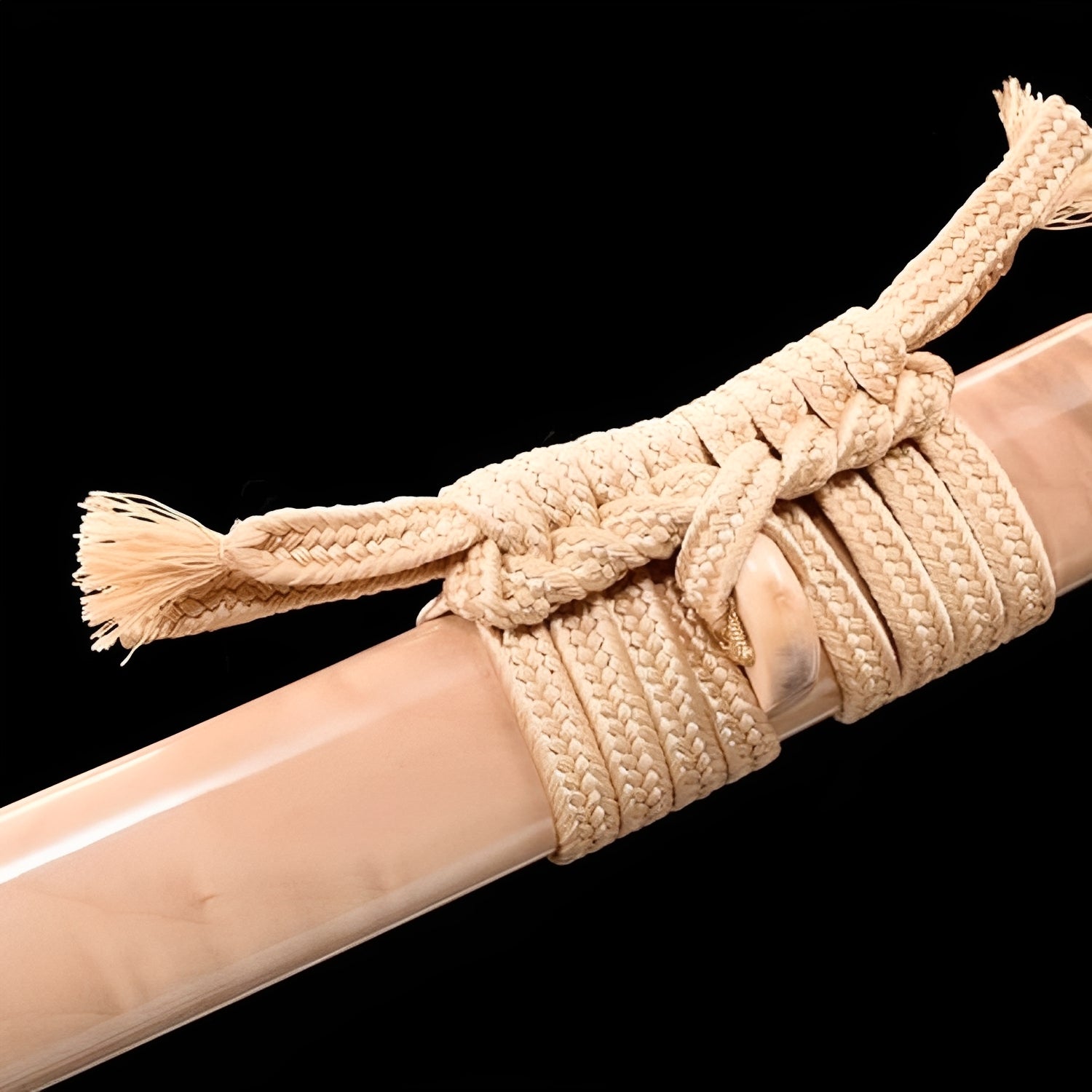
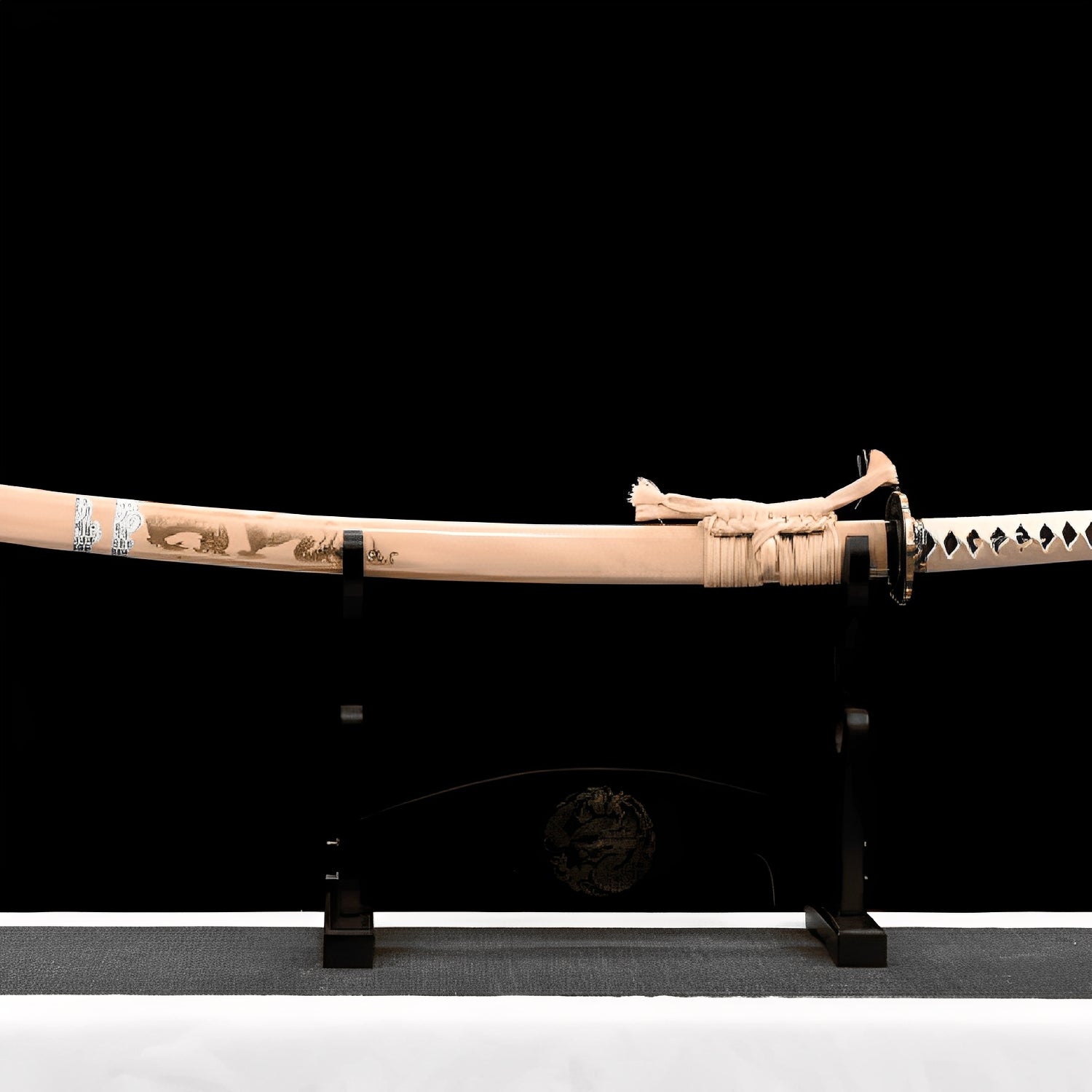
The tsuka (handle) features traditional diamond-pattern wrapping in pristine cream white cord over genuine same (ray skin), creating the classic criss-cross texture that provides secure grip and authentic samurai aesthetics. The all-white wrapping creates pure, elegant appearance that reflects the spiritual purity associated with Shinto shrines and imperial ceremonies.
This monochrome cream aesthetic suggests ceremonial purpose rather than battlefield function - a blade for court appearances, ritual occasions, and formal presentations rather than common warfare. The immaculate white wrapping must remain pristine, symbolizing the moral purity expected of warriors serving the imperial household.
White menuki (ornamental pins) blend seamlessly with the wrapping while providing subtle decorative elements beneath the cord. The handle's refined simplicity creates sophisticated restraint that allows the imperial chrysanthemum guard to remain the primary symbolic focal point.
Elegant Cream Scabbard
The saya (scabbard) showcases smooth cream lacquer finish that matches the handle's elegant white aesthetic. The pristine surface creates pure, refined appearance free from decorative distractions - this minimalist approach reflects the aesthetic principles of Shinto shrines where simplicity and purity are paramount.
The monochromatic cream color evokes sacred rice paper, ceremonial garments, and the natural wood of shrine architecture. This choice creates unified visual narrative celebrating purity, nobility, and spiritual refinement over ostentatious display.
Bronze metal fittings at the mouth (koiguchi) and tip (kojiri) coordinate perfectly with the guard and habaki, creating cohesive bronze accent theme against the cream base. Cream sageo (cord) maintains the immaculate white aesthetic throughout the entire weapon.
Imperial & Spiritual Significance
The Royal Shinto katana embodies the sacred connection between Japanese imperial authority and Shinto religious tradition. The sixteen-petal chrysanthemum is not merely decorative - it represents over a thousand years of imperial lineage and the belief that emperors descend from sun goddess Amaterasu. Warriors privileged to carry weapons bearing this crest served as direct extensions of imperial will.
The pure white color scheme reinforces Shinto concepts of cleanliness and spiritual purity, while the bronze fittings suggest ancient ritual objects preserved in shrine treasuries. This design celebrates the intersection of martial prowess, imperial service, and spiritual devotion.
Simple Black Display Stand
This katana comes with an elegant black display stand featuring traditional construction and simple aesthetic that allows the sword's refined beauty to command full attention. The dark stand creates perfect contrast for the cream and bronze elements, ensuring the imperial chrysanthemum remains visible focal point. Small family crest medallions on the stand reinforce the theme of noble heritage.
Style & Purpose
This Royal Shinto katana represents the highest levels of cultural and historical significance in Japanese sword design. The imperial chrysanthemum makes it perfect for collectors who appreciate Japan's imperial heritage and the sacred connection between emperor, shrine, and samurai, while the authentic construction ensures it remains a genuine samurai sword suitable for martial arts practice (iaido, kenjutsu) with proper training.
The refined aesthetic - grooved silver blade, bronze imperial chrysanthemum guard, cream white handle and scabbard - creates a design narrative celebrating purity, nobility, and divine authority. Perfect for serious collectors seeking historically significant pieces, those who appreciate minimalist Japanese aesthetics, or anyone who wants their katana collection to include representation of Japan's imperial tradition.
Care Instructions: Store in climate-controlled environment away from moisture. The pristine cream scabbard and handle require careful maintenance to preserve immaculate appearance - clean with soft cloth immediately after handling. Apply light oil to blade, taking care to clean grooves thoroughly. The bronze fittings benefit from occasional gentle polishing to maintain warm luster without damaging the chrysanthemum relief. This sacred imperial symbol deserves utmost respect in both display and care. Handle as both functional weapon and cultural treasure representing Japan's imperial legacy.
Honor the imperial chrysanthemum. Add this Royal Shinto katana to your collection today.
Legal Disclaimer
By purchasing from Katana Corp, you acknowledge and agree that:
- You are at least 18 years of age (or the age of majority in your jurisdiction).
- You are solely responsible for verifying and complying with all local laws and import regulations before placing an order.
- Some countries prohibit the importation of swords entirely. Katana Corp is not responsible for orders delayed, seized, or refused by customs authorities.
- All katanas and related products are sold strictly as decorative and display items. They are not intended or certified for combat use.
- Depending on the jurisdiction, swords may legally be considered bladed weapons, subject to specific restrictions or prohibitions.
- Katana Corp disclaims all liability for any injury, damage, or legal consequences resulting from misuse, abuse, or unlawful use of its products.
For full details, please refer to our Terms of Service.
Care & Maintenance
To maintain your katana's appearance and performance over time, we recommend:
- Regularly wiping the blade with a soft cloth to remove fingerprints and moisture.
- Applying a light coat of choji oil to prevent rust (for carbon steel blades).
- Storing the sword in a dry place, preferably inside its saya.
- Avoiding direct contact with hard surfaces to preserve sharpness and finish.
For more care tips, check our full maintenance guide in the FAQ section.
Behind the Blade
Every katana we offer carries the essence of centuries-old craftsmanship.
More than just a weapon, the katana symbolizes discipline, honor, and mastery.
Our artisans draw inspiration from traditional forging methods to ensure each blade reflects the spirit of the samurai — strength, precision, and soul.
Owning one is not just about aesthetics — it’s about carrying a piece of that legacy.
User Experience
This katana is designed to offer a perfect balance between blade and handle.
Its ergonomic tsuka (handle) allows a secure two-handed grip, while the weight distribution ensures smooth, fluid movement.
Whether for training, display or cutting practice, handling feels natural and precise.

The Art of Traditional Forging
Each katana we craft is born from centuries of samurai tradition.
Our master smiths shape every blade by hand, folding the steel to achieve unmatched strength, flexibility, and beauty.
This time-honored process is not just about creating a weapon? it’s about preserving a legacy of discipline, honor, and artistry.

Materials Chosen Without Compromise
We select only the highest-grade steels and authentic fittings to ensure every katana is both a masterpiece and a reliable companion.
From the flawless hamon line to the perfectly balanced tang, each detail is carefully inspected to meet the highest standards of performance and aesthetics.

More Than a Sword, A Lifelong Legacy
Owning a handmade katana is an experience that goes beyond the blade itself. It’s holding history, tradition, and craftsmanship in your hands.
Whether displayed as a work of art or wielded with precision, your katana will stand as a symbol of timeless skill and dedication for generations to come.
-
Key Destinations
United States: 5–7 days
Canada: 5–7 days
Australia: 6–9 days
Denmark: 4–6 days
Netherlands: 3–5 days
Sweden: 4–6 days
Switzerland: 3–5 days
Finland: 5–7 days
Singapore: 6–8 days -
Central European Partners
France: 2–3 days
Germany: 3–5 days
Spain: 4–6 days
Italy: 4–6 days
Belgium: 3–5 days
Austria: 4–6 days
Ireland: 4–6 days
Poland: 4–6 days
Portugal: 4–6 days -
Extended EU Network
Czechia: 4–6 days
Hungary: 4–6 days
Slovakia: 4–6 days
Slovenia: 5–7 days
Romania: 5–7 days
Bulgaria: 5–7 days
Croatia: 5–7 days
Serbia: 5–7 days
Estonia: 5–7 days
Latvia: 5–7 days
Lithuania: 5–7 days
Luxembourg: 3–5 days
Greece: 5–8 days -
FAQ’s
Visit our FAQs page to find answers to common questions.