

Slice a katana in half across the blade and look at the cross-section. What you see is not a sharpened wedge. It is a precise five-sided geometric shape with a name that has not changed in eight hundred years: shinogi-zukuri. That cross-section is why the katana cuts the way it does.
Most people focus on the curve when they think about katana blade shapes. The curve matters, but it is only one of three geometries that define a Japanese sword. The cross-section profile, the tip configuration, and the longitudinal curvature each tell you something different about what the blade was built to do, and against whom.
This guide covers the major katana blade shapes you will encounter, what each one was designed for, and how to recognize them on a sword you are considering buying.
Why Blade Shape Matters
A Japanese sword is the result of about a thousand years of incremental refinement. Each generation of smiths inherited the previous design, made small adjustments based on what worked in actual combat, and passed it on. By the time the Muromachi period (1336-1573) ended, the major katana blade shapes had stabilized into a small vocabulary of forms that have barely changed since.
The reason shape matters is that geometry determines behavior. A wider tip cuts armor better but is slower. A deeper curve favors slashing from horseback but compromises the thrust. A flat-sided cross-section is easier to forge but flexes more in the cut. Every shape in the Japanese sword tradition is an answer to a specific tactical problem.

If you have read our overview of types of Japanese swords, you already know the basic family - katana, wakizashi, tantō, tachi. Within that family, shape variations distinguish a Heian-era cavalry blade from an Edo-era city sword even when both are called "katana."
Shinogi-Zukuri and Beyond
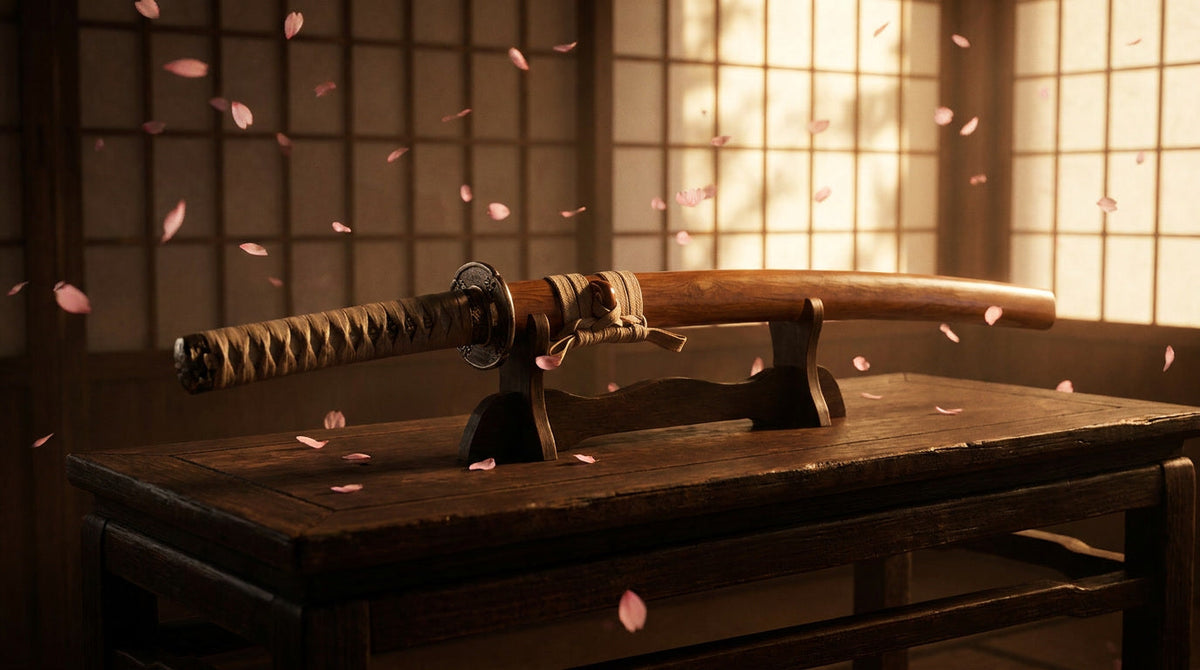
Each katana below showcases the classic blade geometry that defines Japanese steel.


Shinogi-Zukuri: The Standard
Shinogi-zukuri (鎎造) is the cross-section you picture when you think "katana." It has been the dominant katana blade shape since the late Heian period, and roughly 95% of all surviving Japanese swords use it.
The geometry: the blade has a sharpened cutting edge (ha) at one side, a thick blunt spine (mune) at the other, and a distinct ridge line (shinogi) running between them. Above the shinogi, the blade tapers gently toward the spine. Below it, the blade tapers more steeply toward the cutting edge. The result is a five-sided cross-section - sometimes described as an asymmetric diamond.
What does this geometry actually do? The thicker spine adds stiffness for blocking and parrying. The shinogi ridge concentrates mass slightly above the centerline, which makes the blade rotate cleanly around the cutting axis during a draw cut. The narrower section near the edge keeps the cutting wedge thin enough to slice efficiently. It is, in engineering terms, a good compromise between flexibility, cutting performance, and structural strength.
The position of the shinogi ridge on a blade is one of the first things a serious appraiser checks. A high shinogi (closer to the spine) suggests Bizen school work; a low shinogi (closer to the edge) suggests Yamashiro or Soshu lineage. Two katanas with identical exterior dimensions can be attributed to different smiths just from where the ridge sits.
Other Cross-Section Shapes
Shinogi-zukuri is dominant, but four other cross-sections appear regularly enough to recognize. Most are reserved for shorter blades, but a few katana smiths chose them deliberately.
Hira-Zukuri
A simple flat triangular cross-section. No shinogi ridge - the blade tapers in a single straight angle from spine to edge. Common on tantō and short wakizashi. Easier to forge but more flexible. A katana in hira-zukuri is unusual and almost always indicates a smith making a deliberate aesthetic statement.
Kiriha-Zukuri
A "broken" geometry where the blade is mostly flat (like hira-zukuri) but has a sudden bevel near the cutting edge. The transition line sits much closer to the edge than a true shinogi. Rare on katanas, more common on certain wakizashi and on early Heian-period blades that predate the standardization of shinogi-zukuri.
Shobu-Zukuri
Looks like shinogi-zukuri but with no kissaki - the tip flows smoothly into the cutting edge with no transition line at the point. Named after the iris leaf (shobu). Sometimes seen on long wakizashi and some specialty katanas. Aesthetically distinctive but slightly weaker at the tip.
Moroha-Zukuri
Double-edged. Both sides of the blade are sharpened, with a central spine running through the middle. Extremely rare on katanas - almost exclusively a tantō shape. If you see a "double-edged katana" advertised, you are probably looking at a fantasy reproduction rather than a traditional form.
| Cross-Section | Edges | Common Use |
|---|---|---|
| Shinogi-zukuri | Single, sharpened edge with ridge line | Standard katana, wakizashi |
| Hira-zukuri | Flat-sided, single edge | Tantō, short wakizashi |
| Kiriha-zukuri | Flat with edge bevel | Early blades, some wakizashi |
| Shobu-zukuri | Tipless taper | Specialty katanas, long wakizashi |
| Moroha-zukuri | Double-edged | Tantō, ritual blades |
Kissaki: The Tip Geometry
The kissaki (切先) is the tip portion of the blade - everything from the yokote line (the small transverse line near the point) to the very tip. The kissaki's size and curvature is one of the strongest indicators of when a katana was made.
Ko-Kissaki (Small Tip)
A small, almost stubby tip with gentle curvature. Characteristic of Heian and early Kamakura period blades (roughly 800-1200). These were primarily slashing weapons used from horseback against unarmored targets, a small tip cuts well and resists chipping when the slash glances off bone.
Chu-Kissaki (Medium Tip)
The middle ground, and the most common shape on production katanas today. Larger than ko-kissaki but proportionate to the rest of the blade. Versatile across slashing, thrusting, and dueling. If you buy a katana without specifically requesting tip geometry, you will receive chu-kissaki.
O-Kissaki (Large Tip)
A long, dramatic tip that takes up significantly more of the blade's length. Developed in the late Kamakura and Nanbokucho periods (1330s - 1390s) as a response to heavily armored opponents - the longer tip allowed for more controlled thrusting attacks aimed at gaps in armor. Aesthetically striking and often associated with high-end collector pieces.

Sori: The Curvature Profile
Sori (反り) refers to where along the blade the curvature peaks. All katanas are curved, but the curve is not symmetrical - it bulges more in some places than others, and where that bulge sits changes how the sword handles.
Koshi-Zori
The curvature peaks near the tang, in the lower third of the blade. This creates a "deep" looking curve and shifts the balance point closer to the hand. Characteristic of older tachi and early katanas. Excellent for drawing fast and slashing in a circular motion. Less effective at thrusting.
Tori-Zori
The curvature peaks in the middle of the blade - the most balanced and most common configuration on production katanas. Tori-zori translates roughly to "even curve." If you are buying a modern functional katana without specifying otherwise, this is what you will get.
Saki-Zori
The curvature peaks closer to the tip. The handle area is almost straight, with the curve developing in the upper half of the blade. A shape that emerged in the late Muromachi period for use against lightly armored opponents in foot combat. Favors thrusting and accurate point work.
Choosing a Blade Shape Today
If you are buying a katana for display or general practice, blade shape choices are largely aesthetic. The standard configuration - shinogi-zukuri with chu-kissaki and tori-zori - works for everything from tameshigiri to iaido kata. Most reputable manufacturers default to this shape because it is what the majority of customers want and what most martial arts schools train with.
Choose a non-standard shape only if you have a specific reason. O-kissaki and saki-zori work better for thrusting-heavy practice. Hira-zukuri makes sense on a tantō or short wakizashi but rarely on a katana. Moroha-zukuri double-edged blades belong in a tantō context, not a katana - if you see one marketed as a katana, it is a fantasy design.
Some manufacturers describe their swords as "shinogi-zukuri" without the actual ridge line being properly defined. A real shinogi is a sharp, visible edge running the length of the blade between the spine and edge bevel. If the ridge is rounded, indistinct, or absent, the sword is closer to a flat-ground knife profile than a traditional katana - even if the marketing copy uses the term.
Frequently Asked Questions
What is the most common katana blade shape?
Shinogi-zukuri cross-section, chu-kissaki tip, and tori-zori curvature. Approximately 95% of katanas, both antique and modern - use this configuration. It is the default that all other shapes are measured against.
Can the blade shape tell me when a katana was made?
To some extent. Older blades (pre-1300) often have small ko-kissaki tips and pronounced koshi-zori curvature. Late Kamakura through Nanbokucho swords (1300s) often feature large o-kissaki. Edo-period swords (1603-1868) tend toward shallower curves and standardized chu-kissaki. A trained appraiser uses these features as part of dating, but they are not definitive on their own.
Is a flat blade (hira-zukuri) weaker than a shinogi-zukuri katana?
Slightly. Without a shinogi ridge, the blade has less beam stiffness and flexes more under lateral load. This is why hira-zukuri is mostly reserved for shorter blades like tantō and wakizashi. On a full-length katana, the lack of a shinogi makes the blade noticeably more flexible and less suitable for serious cutting.
What blade shape does a fantasy or anime katana usually use?
Most movie and anime swords are loose interpretations of shinogi-zukuri but with exaggerated proportions - wider blades, more dramatic curves, oversized kissaki, sometimes double-edged hybrids. They are aesthetic choices first, functional shapes second. Real Japanese sword shapes are more restrained and follow strict geometric proportions developed over centuries.
Does blade shape affect how I sharpen a katana?
Yes. The angle of the cutting bevel, the height of the shinogi, and the kissaki geometry all dictate the sharpening approach. Improper sharpening can flatten the shinogi, alter the yokote line at the kissaki, or change the cutting angle. This is why traditional sharpening is left to certified togishi rather than DIY tools.
Geometry Made Visible
A katana blade shape is not arbitrary. Every cross-section, every tip configuration, every degree of curvature was selected, tested, and refined by smiths who watched their swords come back from battle. The shape on the wall is the answer to a question someone asked nine centuries ago.
Browse our katana collection for traditional shinogi-zukuri swords, and read our overview of types of Japanese swords to see how blade shape varies across the wider sword family.
Shape is the silent record of every fight the design survived.
See the Shape, Feel the Steel
Hand-forged blades with traditional cross-sections - engineered for cutting, not just for show.
Share:
Kusanagi no Tsurugi: Japan's Sacred Sword of Myth and Empire