

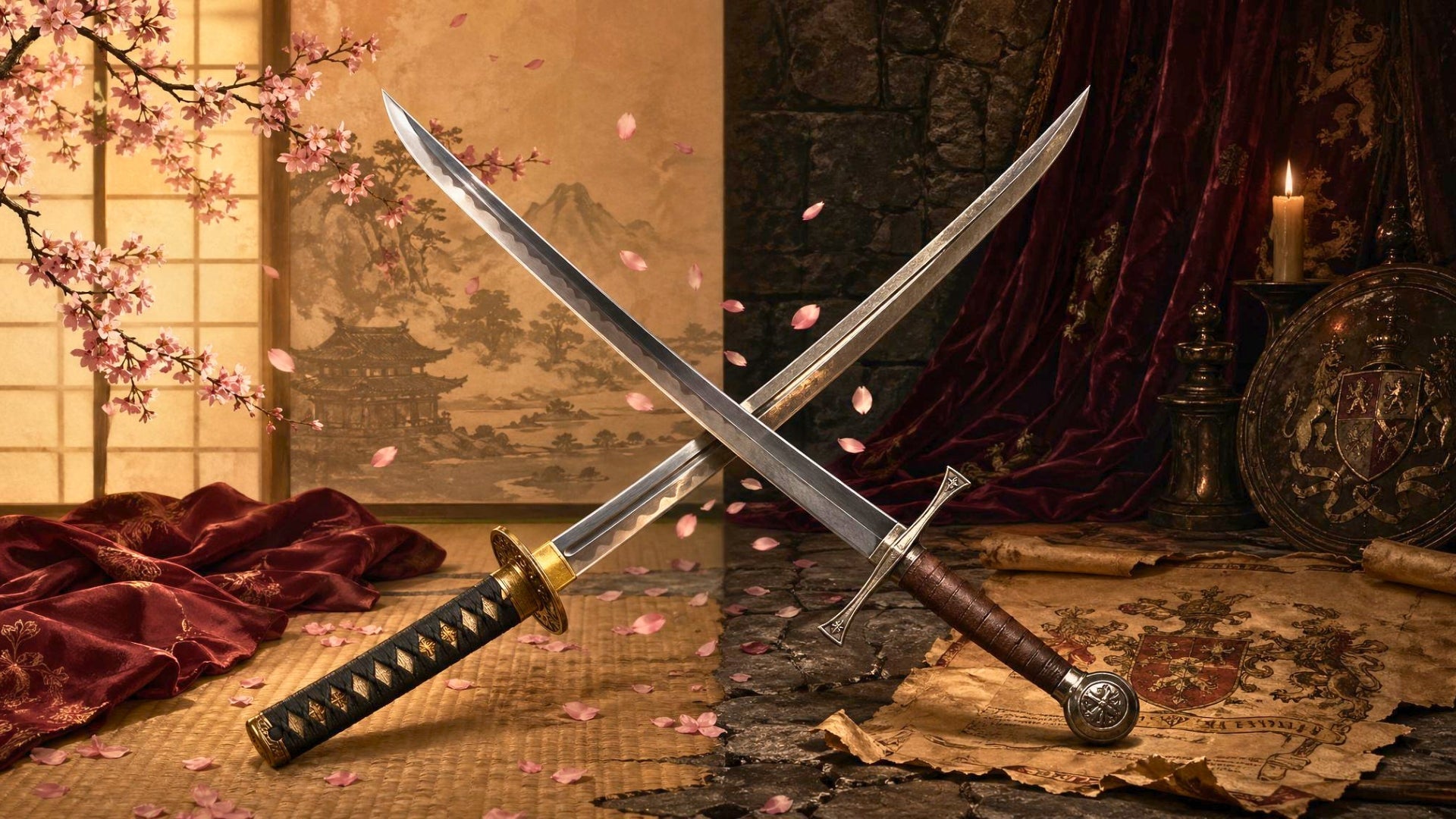
October 1600. On one side of the world, Tokugawa Ieyasu's samurai draw their katanas at the Battle of Sekigahara — 160,000 warriors fighting for the future of Japan. On the other side, European knights are still training with the longsword in the tradition of Johannes Liechtenauer's Kunst des Fechtens, a fighting system that had dominated Western martial arts for two centuries.
These two swords never met on a battlefield. They didn't need to. Each was perfected in isolation, shaped by its own wars, its own armor, its own philosophy of violence. And yet the internet insists on asking: which one wins?
Honest answer: neither. But the comparison reveals something fascinating about how two civilizations solved the same engineering problem — kill without being killed — and arrived at completely different solutions. This guide breaks it down: dimensions, weight, cutting mechanics, thrusting ability, armor penetration, martial arts traditions, and the real verdict that most articles are afraid to give.
- Different Wars, Different Swords
- Dimensions & Weight Compared
- Cutting: Where the Katana Excels
- Thrusting: Where the Longsword Dominates
- Against Armor: Two Different Realities
- Fighting Systems: Kenjutsu vs HEMA
- Durability & Metallurgy
- Head-to-Head Comparison
- The Real Verdict
- Frequently Asked Questions
- Choose Your Blade
Different Wars Forged Different Swords
The katana emerged in 14th-century Japan during a shift from mounted cavalry warfare to close-quarters infantry combat. Samurai needed a weapon they could draw fast, cut with precision, and carry all day. The result: a curved, single-edged blade optimized for slashing unarmored or lightly armored opponents — then finishing them at close range.
The longsword evolved in 13th–16th century Europe in a world dominated by plate armor. Knights needed a weapon that could thrust through gaps in steel, bash with the pommel, grapple in close quarters, and switch between one-handed and two-handed grips. The result: a straight, double-edged blade built for maximum versatility against the heaviest protection the medieval world could produce.
Same problem — armed combat between elite warriors. Completely opposite solutions. That divergence is what makes this comparison interesting, not the tired "which one is better" framing.

The Eastern Answer
Hand-forged katanas — the curved, cutting alternative to the European longsword.


Dimensions & Weight: The Numbers
| Spec | Katana | Longsword |
|---|---|---|
| Blade Length | 60–80 cm (24–31") | 85–110 cm (33–43") |
| Overall Length | 100–110 cm (39–43") | 115–140 cm (45–55") |
| Weight | 1.0–1.4 kg (2.2–3.1 lbs) | 1.2–2.0 kg (2.6–4.4 lbs) |
| Blade Edges | Single | Double |
| Curvature | Curved (1–2 cm sori) | Straight |
| Guard | Tsuba (small, round/square) | Crossguard (large, cruciform) |
| Grip | Two-handed (long tsuka) | Two-handed (or hand-and-a-half) |
The longsword has a clear reach advantage — typically 15–25 cm more blade. In a fight where distance control matters, that's significant. The katana compensates with its draw speed: the edge-up carry position means a trained practitioner can draw, cut, and re-sheath faster than a longsword can be brought to guard from rest.
Weight is closer than most people think. Despite its longer blade, a well-made longsword is only marginally heavier than a katana. Both were designed to be wielded for extended periods without exhausting the user.
Cutting Power: The Katana's Domain
If the contest is a clean cut through an unarmored target, the katana wins. This is not debatable — it's geometry and physics.
The katana's curvature concentrates force along a narrower contact arc during a slashing strike. The single edge is ground to an acute angle that slices rather than chops. Combined with the differential hardening that gives the edge a HRC of 58–62, the result is a blade that can pass through tatami mats, bamboo, and flesh with devastating efficiency.
Modern tameshigiri (test cutting) consistently demonstrates this. A practitioner with good hasuji (edge alignment) can cut through multiple rolled tatami targets in a single pass with a katana. Longsword cuts on the same targets tend to be effective but messier — the straight blade chops more than it slices.
The Japanese tested katana sharpness on human cadavers — a practice called tameshigiri literally means "test cut." Swords were rated by how many bodies they could cut through in a single stroke. A blade rated "futatsu-dō" could cut through two stacked torsos. The results were inscribed on the tang as a mark of quality.
The longsword can cut effectively — European sources describe devastating wounds — but it was never designed to be a pure cutting instrument. It's a multi-tool. The katana is a scalpel.

Thrusting: The Longsword's Advantage
Reverse the scenario — a thrust into a specific target — and the longsword takes over. Its straight, tapered blade with a pointed tip concentrates all force onto a single point. The double edge means the blade can enter from any angle without needing alignment. European fencing manuals devote enormous attention to thrusting techniques precisely because the thrust was considered the most lethal attack in armored combat.
The katana can thrust — the kissaki (tip) is designed for it — but its curved blade disperses the force across a wider area. A katana thrust is effective against an unarmored torso, but against chainmail or plate armor gaps, the longsword's geometry gives it a real mechanical advantage.
The half-sword technique — gripping the blade with one hand to use the longsword like a short spear — has no equivalent in Japanese swordsmanship. It was developed specifically to thrust through the gaps in plate armor with surgical precision. The leather gloves worn by medieval knights made this possible without cutting the hand.
Against Armor: Two Completely Different Realities
This is where the comparison becomes unfair — because the katana and longsword were designed for fundamentally different protection levels.
Japanese armor (primarily lamellar — small plates laced together with cord) was effective but lighter than European plate. It had gaps by design, and katana techniques exploited those gaps through precise cuts to the neck, wrists, inner thighs, and armpits. The katana was also part of a combined-arms system: samurai used bows, spears, and polearms on the battlefield. The katana was often the finishing weapon, not the primary one.
European plate armor by the 15th century was nearly impervious to cutting. Longsword technique evolved to answer this directly: thrusting into visor slits and armpit gaps, using the pommel as a bludgeon (a technique called mordhau or "murder strike"), and grappling to wrestle an armored opponent to the ground.
A katana against full European plate armor is essentially useless. The curved, single-edged blade cannot penetrate steel plates and would likely chip or bend on impact. A longsword against lamellar armor would be devastatingly effective. But neither scenario is historically relevant — these weapons never faced each other's armor in real combat.
Fighting Systems: Kenjutsu vs HEMA
The weapons shaped the martial arts, and the martial arts shaped the weapons. They are inseparable.
Kenjutsu & Iaido (Japan)
Japanese swordsmanship emphasizes the decisive cut — one strike, one kill (ikken hissatsu). Training focuses on draw speed, edge alignment, distance management, and the mental state of the swordsman. Kata (forms) train the body to deliver perfect cuts under pressure. There is less emphasis on prolonged exchanges and more on ending the fight in as few motions as possible.
Historical European Martial Arts (HEMA)
European longsword systems — documented in manuals by masters like Johannes Liechtenauer, Fiore dei Liberi, and Hans Talhoffer — teach a broader repertoire. Cuts, thrusts, grapples, disarms, pommel strikes, blade grabs, and transitions between offensive and defensive postures (guards). A HEMA practitioner trains for extended exchanges where adaptability matters more than the perfect single cut.
Fiore dei Liberi's Fior di Battaglia (1409) describes over 300 techniques for the longsword alone — including throws, joint locks, and dagger counters. It's one of the most complete combat manuals ever written, and HEMA practitioners still train from it today.
Durability & Metallurgy
The katana's differential hardening creates a hard edge (58–62 HRC) paired with a softer spine (38–42 HRC). This means incredible sharpness but a risk of chipping if the edge contacts a hard surface at the wrong angle. A poorly executed cut on a hard target can damage a katana permanently.
Most European longswords were through-hardened to a uniform 50–54 HRC — not as hard at the edge, but far more resistant to lateral stress, impact, and edge-on-edge contact. A longsword can clash with another sword repeatedly without significant damage. A katana cannot — and was never designed to.
Neither approach is "better." They're optimized for different combat realities. The katana maximizes cutting performance. The longsword maximizes overall durability. Both excel at what they were built for.
For more on how katana steels achieve differential hardening, our steel guide covers the full range from 1045 to T10, and our hamon guide explains the tempering process in detail.
Head-to-Head: Katana vs Longsword
| Category | Katana | Longsword | Edge |
|---|---|---|---|
| Cutting (unarmored) | Exceptional — curved blade slices cleanly | Good — chops more than slices | Katana |
| Thrusting | Capable but less efficient | Excellent — straight blade, pointed tip | Longsword |
| vs Light Armor | Very effective at exploiting gaps | Devastating — cuts and thrusts | Longsword |
| vs Heavy Armor | Ineffective against plate | Designed for it (half-sword, mordhau) | Longsword |
| Draw Speed | Extremely fast (iaijutsu) | Slower — no edge-up carry | Katana |
| Reach | ~100–110 cm overall | ~115–140 cm overall | Longsword |
| Technique Variety | Focused: cuts, draws, kata | Broad: cuts, thrusts, grapples, bashing | Longsword |
| Edge Durability | Hard edge, chips on hard contact | Tough edge, tolerates clashing | Longsword |
| Aesthetics | Hamon, curvature, polished finish | Simpler, functional beauty | Draw |
| Cultural Legacy | Soul of the samurai | Symbol of knighthood | Draw |
The Real Verdict: It Depends on the Fight
If you've read this far hoping for a definitive winner, here's the honest answer: both swords are perfect at what they were designed to do. Declaring one "better" is like saying a scalpel is better than a wrench — it depends entirely on whether you're performing surgery or fixing a pipe.
The opponent is unarmored or lightly armored. Speed and decisiveness matter more than sustained exchange. The fight happens at close range. Draw speed can determine the outcome. You value the philosophy of ikken hissatsu — one strike, one life.
The opponent wears heavy armor. The fight demands versatility — thrusting, grappling, bashing. Reach is a factor. The engagement is prolonged. Edge-on-edge contact is likely.
The real takeaway for collectors and practitioners: these swords complement each other. Understanding both traditions deepens your appreciation of each one. And if you're choosing a blade for your wall or your practice, the question isn't which is "better" — it's which tradition calls to you.
Frequently Asked Questions
Would a katana beat a longsword in a fight?
It depends entirely on context — armor, terrain, distance, and the skill of the wielder. Against an unarmored opponent, the katana's cutting speed is devastating. Against an armored opponent, the longsword's thrusting and grappling versatility gives it the edge. In a hypothetical duel between equally skilled fighters without armor, the longsword's reach advantage makes it slightly favored — but it's far from a guaranteed outcome.
Is the katana sharper than the longsword?
Generally yes. The katana's differential hardening produces an edge of 58–62 HRC, harder than most longswords (50–54 HRC). Combined with the curved, single-edged geometry, the katana delivers cleaner cuts on soft targets. The longsword compensates with a double edge and superior thrusting capability.
Which sword is heavier?
They're closer than most people think. A katana weighs 1.0–1.4 kg. A longsword weighs 1.2–2.0 kg. The heaviest longswords are about 50% heavier than the heaviest katanas, but average specimens of each overlap significantly in the 1.1–1.4 kg range.
Can a katana cut through a longsword?
No. This is a persistent myth. A katana cannot cut through a steel longsword blade. Edge-on-edge contact would likely damage the katana's harder but more brittle edge before affecting the longsword's tougher steel. Neither sword was designed for blade-on-blade contact — both traditions taught practitioners to avoid it.
Which is better for a beginner collector?
A katana. The market for functional, hand-forged katanas is larger, more accessible, and better priced than the longsword market. Quality katanas start around $200. Quality longsword replicas tend to start higher. Plus, katana maintenance resources and martial arts schools are more widely available.
Choose Your Blade
Now you know what each sword was built for. If the katana speaks to you — the discipline, the decisive cut, the centuries of Japanese craftsmanship — you're in the right place.
Browse our full collection of hand-forged katanas from entry-level to high-end. Every blade is built to honor the tradition this article celebrates.
New to the world of Japanese swords? Our beginner's guide will help you find the right blade for your goals and budget.
East or West — respect the steel.
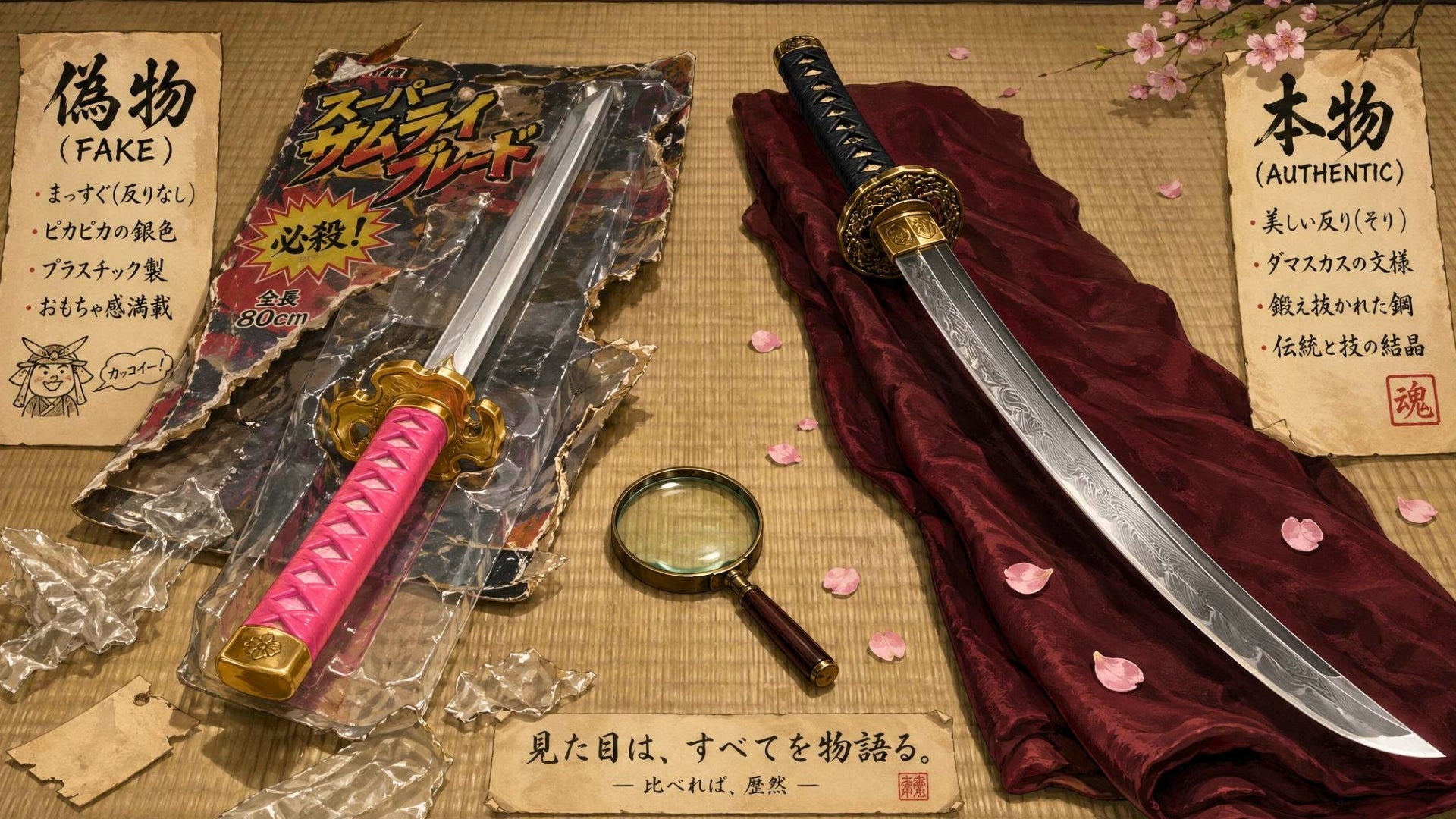
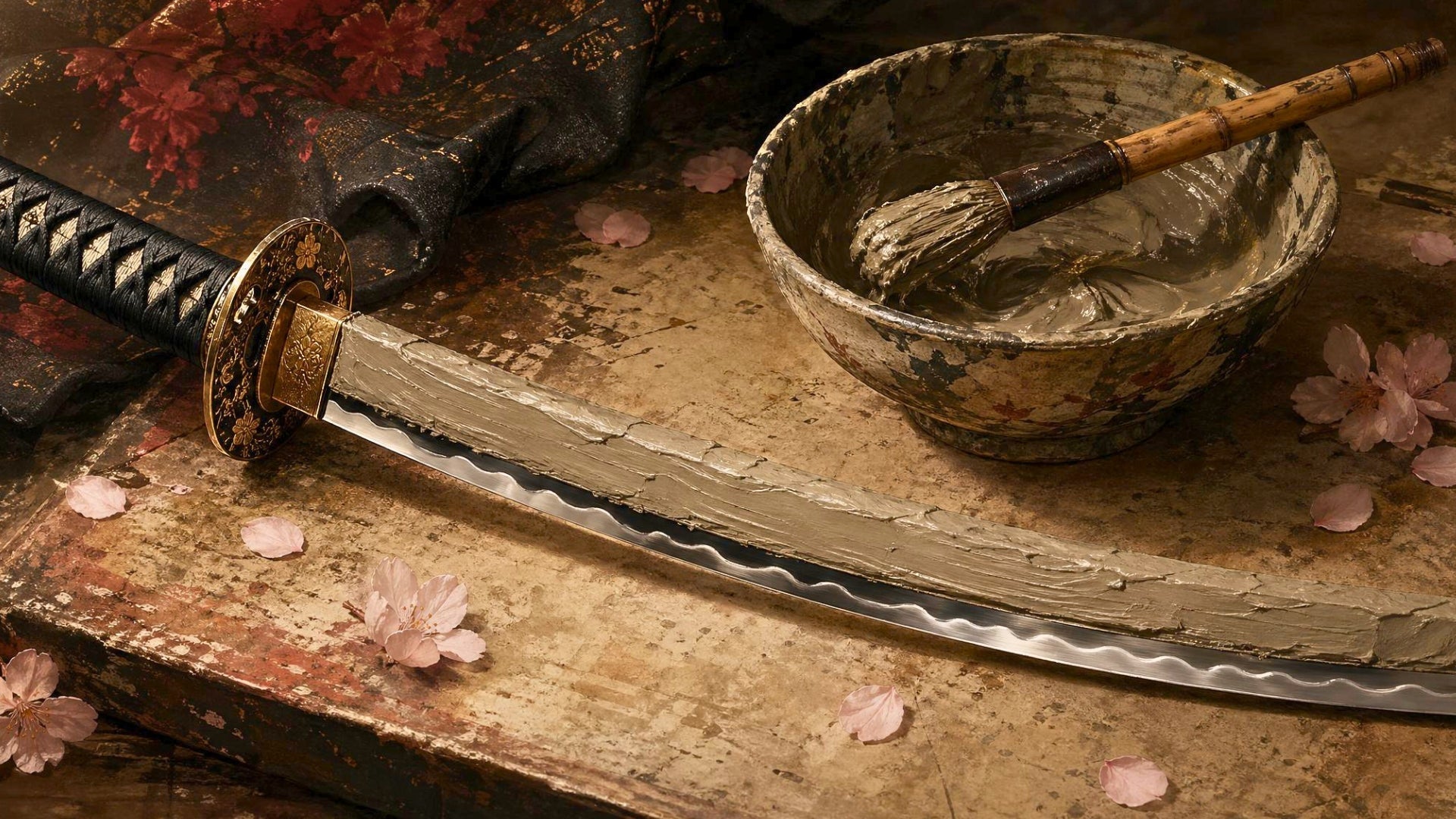
East Meets Steel
Each katana below represents what makes Japanese steel different — and why it captivates collectors worldwide.
Share:
What Is a Hamon? The Science Behind a Katana's Temper Line
Why Are Katanas Curved? The Science Behind the Sori
1 comment
Not a particularly good analysis.
1) Cutting ability is a red-herring. An unarmored fighter with a longsword who hits you will kill you just as well as someone armed with a katana and the superior reach means that they’re more likely to get the hit.
2) Any clash of the two swords is likely to destroy the katana.
3) The draw speed is another red-herring. Your opponent needs to stay close enough to be in range of the first strike, why would they? By the time the katana user goes for a second cut the longsword is in use and 1 + 2 above come into play. The theoretical advantage of the draw cut is about the skill of the fighter not the sword and is irrelevant for average fighters.
4) you don’t need heavy armour to stop the katana, lightweight plate will do it, however the Longsword works whatever your opponent is wearing.
It’s pretty clear that if there ever had been a pitched battle between even unarmored average Longsword users against Katana users the Longswords would have won.