

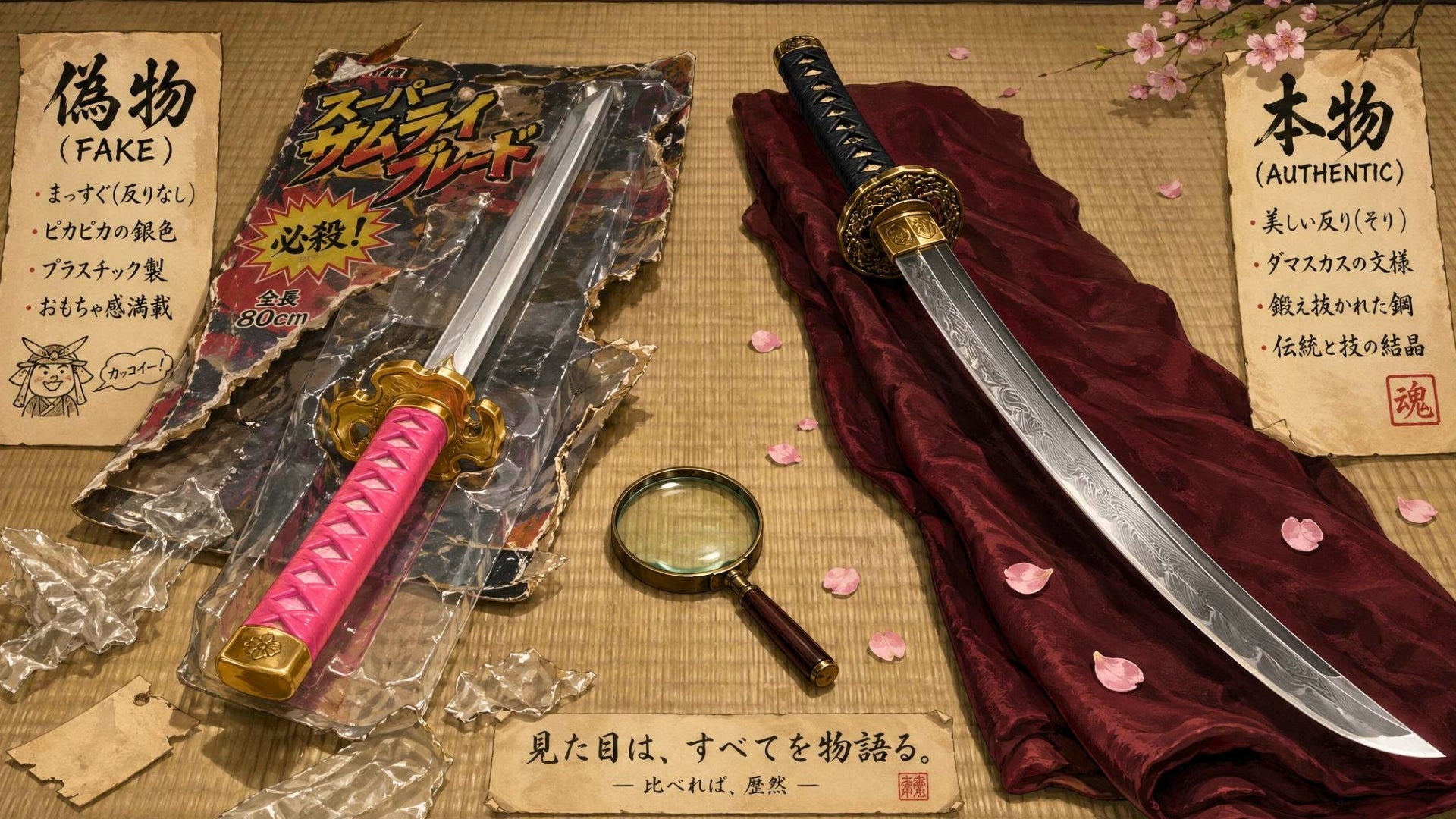
Last year, a collector paid $800 for what he believed was a hand-forged, clay tempered T10 katana from an online seller with glowing reviews. When a friend, an experienced practitioner - examined it, the verdict took about 30 seconds: acid-etched fake hamon. Rat-tail tang hidden inside the handle. Stainless steel blade with a painted-on grain pattern. Total value: maybe $40.
He's not alone. The katana market, especially online - is flooded with counterfeits, misleading claims, and outright scams. Sellers use buzzwords like "hand-forged," "battle ready," "1000-fold Damascus," and "authentic samurai sword" on blades that are factory-stamped, never heat-treated, and dangerous to swing.
This guide gives you the 8 checks that separate a real katana from a fake one, whether you're spending $200 or $2,000. Learn these, and you'll never get burned.
- Red Flag #1: The Tang (Nakago) - Where Fakes Always Fail
- Red Flag #2: The Hamon - Real vs Etched vs Brushed
- Red Flag #3: Steel Type - Stainless Is a Dealbreaker
- Red Flag #4: Fittings - Plastic, Pot Metal, and Fake Ray Skin
- Red Flag #5: Weight and Balance - Too Light = Too Cheap
- Red Flag #6: Price - The $100 Rule
- Red Flag #7: The Product Listing - Vague = Fake
- Red Flag #8: The Seller - No Reputation = No Trust
- Quick Checklist: Before You Buy
- Frequently Asked Questions
- Buy With Confidence
1 The Tang (Nakago): Where Fakes Reveal Themselves
If you can only check one thing, check the tang. Remove the handle (tsuka) by pushing out the bamboo pin (mekugi) and sliding it off. What you see underneath tells the whole story.
Full Tang (Real)
The blade and tang are one continuous piece of steel, running the full length of the handle. The tang should be roughly the same width as the blade's base, tapering slightly. On a well-made katana, you might see the smith's signature (mei) or file marks (yasuri-me) on the tang. This is the only construction that's safe for functional use.
Rat-Tail Tang (Fake / Dangerous)
A thin rod of metal - often a different alloy than the blade - welded or threaded onto the blade's base. It's hidden inside the handle and invisible until you disassemble. Under stress (a hard cut, a fast swing), a rat-tail tang will eventually snap. When it does, you have a loose blade flying through the air. This is not hypothetical - it happens.
Never swing or cut with a katana that has a rat-tail tang. It is a decoration, not a weapon. The only acceptable construction for functional use is a full tang secured with bamboo mekugi pins. If the seller doesn't mention tang construction at all, assume the worst.

What a Real Katana Looks Like
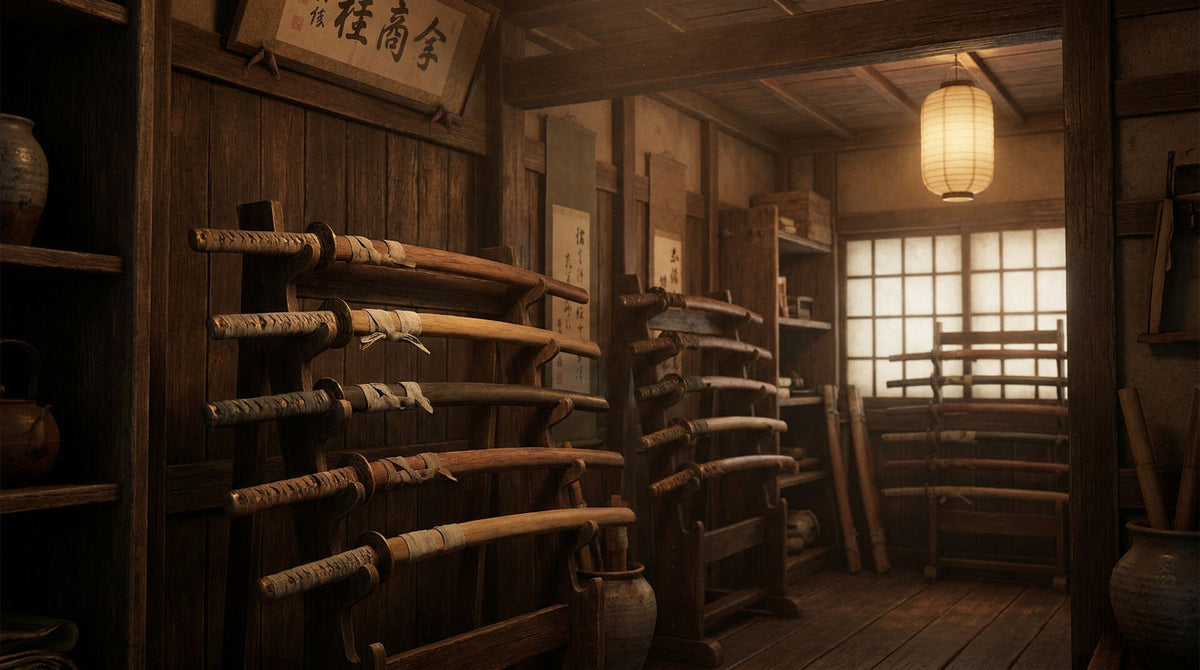
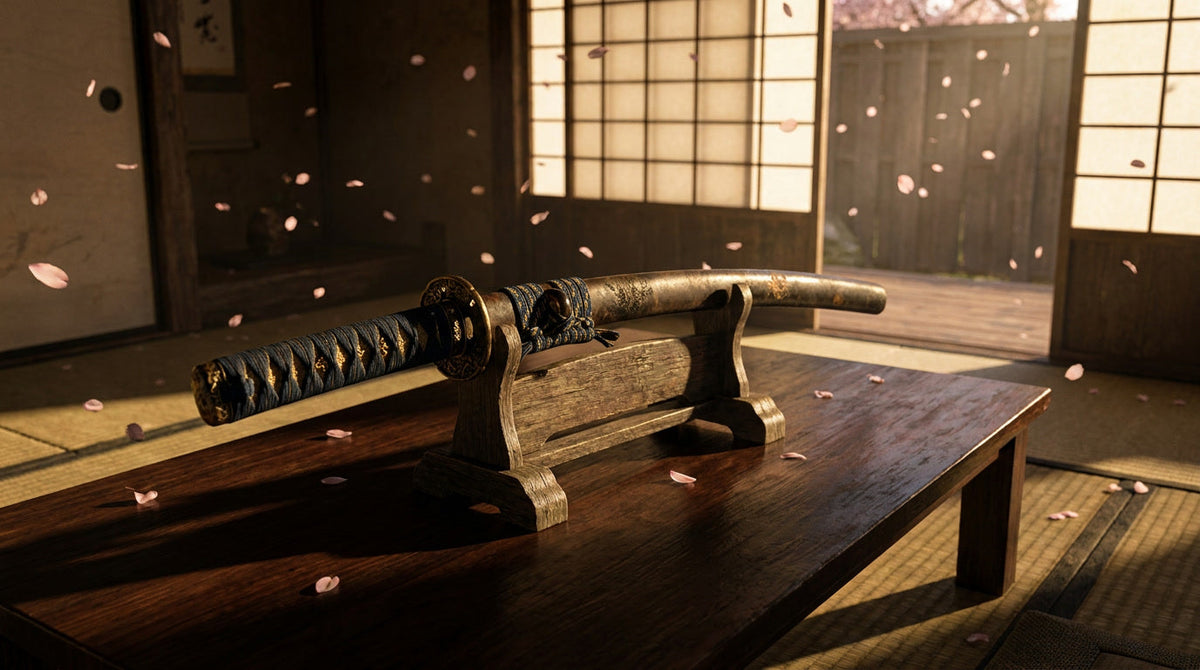
Each blade below shows the marks of authentic craftsmanship - no fake hamons, no rat tails, no shortcuts.


2 The Hamon: Real, Etched, or Brushed?
The hamon is the temper line along the blade's edge, and the single best visual indicator of quality. But it's also the most commonly faked feature.
A real hamon comes from differential hardening - the clay tempering process we covered in our complete hamon guide. It exists through the full thickness of the blade. A fake hamon is a surface treatment that disappears with polishing.
Quick test: look under magnification. Real hamon shows tiny sparkling particles (nie) and a misty, irregular transition. Fake hamon looks flat, perfectly uniform, and "printed on." If it looks too clean - it's fake.
3 Steel Type: If It's Stainless, Walk Away
Stainless steel is excellent for kitchen knives. For a katana, it's a dealbreaker. Any stainless steel blade longer than 30 cm (12 inches) is too brittle for functional use. It can snap under stress and send fragments flying. Stainless steel also cannot be clay tempered, so any "hamon" on a stainless blade is cosmetic.
What to look for instead: high-carbon steel - 1045, 1060, 1095, or T10. These are the industry standards for functional katanas. Our complete steel guide explains every grade in detail.
A common trick: sellers list "high-quality steel" or "carbon steel" without specifying the grade. If the listing doesn't say 1060, 1095, T10, or a specific steel name, it's usually stainless or very low-grade carbon. Legitimate sellers always specify.
4 Fittings: Plastic, Pot Metal, and Fake Ray Skin
The blade gets all the attention, but the fittings tell you just as much about quality.
Handle (Tsuka)
A real tsuka has genuine samegawa (ray skin) underneath the ito (cord wrap). Ray skin has a rough, pebbly texture with an organic pattern. Fakes use printed plastic sheets with uniform dots. Peel back the wrap slightly and touch it - real ray skin has unmistakable texture.
Guard (Tsuba)
Quality tsuba are iron, brass, or copper alloy - solid and heavy. Cheap fakes use "pot metal" (zinc alloy) that's light, brittle, and tarnishes poorly. A real tsuba rings when tapped. A pot metal one thuds.
Scabbard (Saya)
Genuine saya are carved from wood (usually honoki) and may be lacquered. Plastic saya are an instant indicator of a sub-$50 wall-hanger.
For a full breakdown of every katana component, see our 24-part anatomy guide.
5 Weight and Balance: Too Light Means Too Cheap
A functional katana weighs between 900g and 1,400g (2.0-3.1 lbs) depending on blade length and steel. If a "katana" feels unusually light - under 800g - it's almost certainly thin stainless steel or aluminum alloy. These blades are decorative at best.
Balance matters too. A well-made katana has its balance point (point of balance, or POB) about 12-15 cm ahead of the tsuba. If the blade feels wildly tip-heavy or handle-heavy, the geometry is off, a sign of factory mass production rather than thoughtful forging.
6 Price: The $150 Rule
This isn't snobbery - it's math. A hand-forged, full-tang, high-carbon steel katana with proper fittings requires hours of skilled labor and quality materials. Below $150, the economics don't work. Something was cut: the steel, the tang, the heat treatment, or all three.
Our katana pricing guide breaks down exactly what you get at each price point.
7 The Product Listing: Vague Descriptions = Red Flags
A trustworthy seller tells you exactly what you're getting. A scammer keeps it vague. Here's the difference:
| Legitimate Listing | Red Flag Listing |
|---|---|
| "T10 tool steel, clay tempered, 58-60 HRC edge" | "High-quality steel blade" |
| "Full tang secured with bamboo mekugi" | "Strong construction" |
| "Real hamon from differential hardening" | "Beautiful hamon pattern" |
| "Genuine ray skin (samegawa) under silk ito" | "Traditional handle wrap" |
| "Blade length: 72cm, weight: 1.15kg, POB: 14cm" | "Standard katana size" |
| Real photos of the actual sword | Stock photos or 3D renders |
If a product listing doesn't specify the steel grade, tang type, and hardening method, don't buy it. Period.
8 The Seller: No Reputation = No Trust
Before you hand over money, check these:
Reviews: Not just on the seller's website (those can be faked) - check independent review platforms, Reddit (r/swords, r/katanas), and Sword Buyers Guide forums.
Return policy: A seller confident in their product offers a no-questions return window. If returns are "not accepted" or the policy is buried - that's suspicious.
Contact info: A real business has a phone number, email, and physical location. A "swordsmiths" shop with only a Gmail address and a PO box is a gamble.
Photos: Real sellers show photos of the actual swords they sell, including close-ups of the hamon, tang, fittings, and saya. Stock photos or identical images across 50 different "models" means factory production with no quality control.
Marketplace platforms like eBay and Amazon are the most common sources of fake katana complaints. While legitimate sellers exist on both, the volume of cheap counterfeits makes them risky for first-time buyers. Specialist sword retailers - with their own websites, return policies, and review histories - are almost always safer.
Quick Pre-Purchase Checklist
☐ Tang type specified (must be full tang)
☐ Steel grade specified (1060, 1095, T10, not "stainless" or "high-quality steel")
☐ Hamon described as real / clay tempered (not just "beautiful pattern")
☐ Fittings detailed (ray skin, brass/iron tsuba, wood saya)
☐ Weight listed (900g - 1,400g for functional katana)
☐ Price above $150 for a functional blade
☐ Real photos of the actual product (not stock images)
☐ Seller has verifiable reviews, return policy, and contact info
Frequently Asked Questions
How can I tell if a katana is real or fake?
Check the tang (full vs rat-tail), the hamon (real clay tempered vs acid-etched), the steel type (high-carbon vs stainless), and the fittings (genuine ray skin and iron/brass vs plastic and pot metal). If the product listing is vague about any of these, it's a red flag.
Are cheap katanas dangerous?
Yes - if used for anything beyond wall display. Rat-tail tangs can snap mid-swing, launching a loose blade. Stainless steel blades over 30 cm can shatter on impact. Cheap katanas should never be swung, cut with, or used for martial arts practice.
What is the minimum price for a functional katana?
Around $150-$200 for a basic full-tang, high-carbon steel blade with proper heat treatment. Below that, corners are cut on safety-critical components. For clay tempered blades with real hamon, expect $250+.
Can I trust katana sellers on Amazon or eBay?
Some are legitimate, but these platforms have the highest concentration of counterfeit and misleading listings. Look for specialist retailers with their own websites, detailed product specifications, real photos, and verifiable customer reviews on independent platforms.
What's the difference between a replica and a fake?
A replica is honestly marketed as a reproduction - it doesn't claim to be something it isn't. A fake is sold as "authentic," "hand-forged," or "battle ready" when it's actually mass-produced stainless steel with cosmetic hamon. Replicas at honest prices are fine. Fakes at inflated prices are scams.
Clear descriptions distinguish decoration from a stated heat treatment: Starfall identifies a machine-made blade line, while Enbanaito lists a clay-tempered hamon. Compare the written specification with the photos instead of assuming every wavy line proves the same process.
Buy With Confidence
Now you know the 8 red flags. You know what to check, what to ask, and what to avoid. The next step is simple: buy from someone who doesn't make you guess.
Every katana in our collection lists the exact steel type, tang construction, hardening method, and measurements. Real photos. Full specs. Real customer reviews. 14-day returns. No guesswork.
Not sure where to start? Our beginner's guide walks you through every decision, including how to avoid the exact traps this article describes.
Know what you're buying. Then buy what you trust.
Buy from a Trusted Source
Real katanas, fully transparent specs, and zero misleading marketing.

Share:
Clay Tempered Katana: What It Is & Why Collectors Love It
Famous Samurai and Their Legendary Katanas: The Complete Guide