


In 1899, a Japanese scholar named Nitobe Inazō sat down to answer a question his Belgian wife had asked him: why do Japanese people behave the way they do? Where does the moral framework come from, without a dominant church, without a single religious text that everyone follows? His answer was a book called Bushido: The Soul of Japan, and it introduced the Western world to a code of conduct that had governed the samurai for centuries.
That code - Bushido, "The Way of the Warrior" - isn't a written scripture. It was passed down orally for generations, refined through centuries of warfare, and shaped by Confucianism, Zen Buddhism, and Shinto. Nitobe distilled it into seven virtues that captured the essence of the samurai's moral universe. These seven principles didn't just guide how a warrior fought - they governed how he lived, how he died, and how he was remembered.
This guide breaks down each virtue: its meaning, its kanji, its historical context, and how it connects to the katana - the physical embodiment of everything Bushido represented.
1. Gi (義): Righteousness
Gi is the foundational virtue - the bedrock on which all others rest. It is the ability to decide upon a course of action based on reason and moral principle, without wavering. Not because it's easy. Not because it's popular. Because it's right.
A famous samurai definition: "Righteousness is the power to decide upon a course of conduct in accordance with reason - to die when it is right to die, to strike when it is right to strike." Without gi, a samurai is nothing but a mercenary with a sword. With it, every action carries moral weight.
Gi is also the virtue most directly tied to the katana. A blade used without righteousness is a murder weapon. A blade guided by gi is an instrument of justice. The difference is never in the steel - it's in the mind of the wielder.
Walk the Path of the Samurai
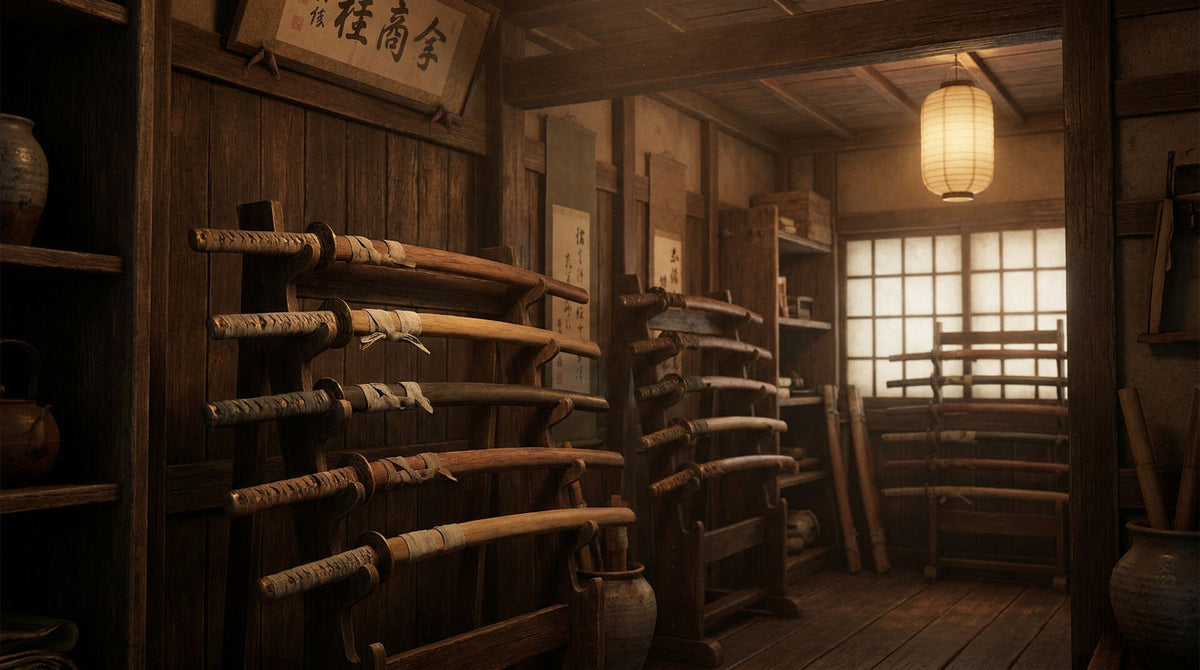
Each katana below carries the spirit of the warriors who lived by the Bushido code.


2. Yū (勇): Courage
Courage in Bushido is not the absence of fear. It's the mastery of it. Confucius wrote: "Perceiving what is right and doing it not reveals a lack of courage." In other words, knowing the right thing and failing to act on it is the truest form of cowardice.
For the samurai, physical bravery in battle was expected - that was the minimum. True yū meant having the courage to speak the truth to a superior, to admit fault, to accept death with composure, and to make morally difficult decisions when every option involved sacrifice. Miyamoto Musashi, who fought over 60 duels without defeat, embodied this, not because he was fearless, but because he channeled his fear into focus. Read his full story in our famous samurai guide.
Bushido distinguishes between "brute courage" (reckless aggression) and "true courage" (intelligent bravery). A samurai who charged blindly into a hopeless battle wasn't courageous - he was foolish. A samurai who assessed the situation, recognized the danger, and chose to act anyway - that was yū.
3. Jin (仁): Benevolence
This is the virtue that surprises most people. The samurai - trained killers, professional warriors - were expected to cultivate compassion? Yes. Precisely because they had the power to kill, jin demanded they also develop the wisdom to show mercy.
Jin is rooted in Confucian philosophy: the kanji combines the character for "person" (人) with the number two (二), suggesting the relationship between one person and another. It's the recognition that strength without compassion is tyranny, and that true power includes the ability to spare, to protect, and to uplift.
This is the virtue Himura Kenshin embodies with his sakabato, a blade that chooses mercy by default. Fiction borrowed it from Bushido, not the other way around.
4. Rei (礼): Respect
Rei is the virtue that makes all other virtues visible. A samurai could be righteous, courageous, and compassionate, but without respect in how he expressed those qualities, they remained internal and invisible. Rei is bushido made manifest in daily behavior.
This goes far beyond simple manners. In its highest form, Nitobe wrote, politeness approaches love. It's treating every person, from the emperor to the servant, from the ally to the enemy - with the dignity they deserve as a human being. A samurai who defeated an opponent was expected to show that opponent respect, even in death.
In sword culture, rei governs how a katana is handled: always with both hands, never stepped over, always presented with the edge facing oneself (not the recipient). Every interaction with the blade is an expression of respect for what it represents. Our katana anatomy guide reflects this tradition in how we describe each component.

5. Makoto (誠): Honesty
For the samurai, speaking and doing were the same action. Makoto demanded that a warrior's words and deeds be perfectly aligned - no gap between what he said and what he did. A samurai's word was his bond, literally. Written contracts were considered beneath a warrior's dignity. If he said he would do something, it would be done. If he said he would die, he would die.
This virtue also governed commerce: samurai were expected to disdain money and material wealth. Talking about prices was considered vulgar. This created a cultural paradox - the warrior class that governed Japan's political structure was deliberately ignorant of its economic structure. It was idealistic, impractical, and deeply sincere.
6. Meiyo (名誉): Honor
Honor is the virtue that binds all others together. Every decision a samurai made was filtered through one question: does this uphold or diminish my honor? If an action served his cause but violated his principles, it was dishonorable - regardless of the outcome. If an action failed but was taken with integrity, it was honorable - regardless of the consequences.
The most extreme expression of meiyo was seppuku - ritual suicide performed when a samurai's honor was irrevocably compromised. It was not an act of despair but an act of agency: choosing death on one's own terms rather than living with shame. The story of the 47 Rōnin - masterless samurai who avenged their lord's death knowing they would be ordered to commit seppuku afterward - is the most famous illustration of meiyo in Japanese history.
The katana played a central role in seppuku. The specific blade used - typically a tantō or wakizashi - was carefully selected and prepared. The act itself was highly ritualized, and a trusted friend (the kaishakunin) stood behind to deliver a swift finishing blow with a katana. Even in death, the samurai code demanded precision, dignity, and respect for the blade.
7. Chūgi (忠義): Loyalty
Loyalty was the glue that held feudal Japan together. A samurai's primary duty was to his lord (daimyō) - above self, above family, above personal desire. This loyalty was unconditional: a samurai who failed in this duty became rōnin, a masterless warrior, stripped of status and purpose. The very word "rōnin" (浪人, "wave person") suggests aimless drifting, a man without anchor.
The kanji for chū (忠) is built from "middle" (中) placed above "heart" (心) - faithfulness to what is felt in the center of the heart. Gi (義) adds righteous duty. Together, chūgi means loyal action guided by moral principle, not blind obedience, but devotion grounded in justice.
This is the virtue that connects bushido to the katana most directly. The sword was the physical symbol of the bond between samurai and lord. To draw it meant you were willing to die for that bond. To break it meant your sword, and your honor - were meaningless.
Bushido and the Katana: The Soul of the Samurai
The phrase "the katana is the soul of the samurai" (武士の魂) isn't poetic exaggeration - it's a direct expression of Bushido. The sword embodied every virtue simultaneously: it was forged with discipline (gi), wielded with courage (yū), tempered with compassion (jin), handled with respect (rei), presented with honesty (makoto), defended with honor (meiyo), and carried in loyalty (chūgi).
This is why the forging of a katana was treated as a sacred act, not just a craft. The swordsmith purified himself before forging. The workspace was blessed. The act of yaki-ire (quenching) was performed with ritual solemnity. The result wasn't just a weapon - it was a physical manifestation of the samurai code itself.
To hold a katana today, whether a museum piece or a modern hand-forged blade - is to hold an artifact of this philosophy. The steel carries the tradition. The hamon marks the line between hard and soft, strength and flexibility, violence and restraint - the same tensions that Bushido spent centuries trying to balance.
Frequently Asked Questions
What are the 7 virtues of Bushido?
The seven virtues are: Gi (義, Righteousness), Yū (勇, Courage), Jin (仁, Benevolence), Rei (礼, Respect), Makoto (誠, Honesty), Meiyo (名誉, Honor), and Chūgi (忠義, Loyalty). Together they formed the moral code that governed the samurai class in feudal Japan.
Where does the Bushido code come from?
Bushido evolved over centuries, drawing from Confucianism, Zen Buddhism, and Shinto. It was formalized during the Tokugawa era (1603-1868) and introduced to the West through Nitobe Inazō's 1899 book Bushido: The Soul of Japan. The code was passed down orally before being written - it was carved in the heart, not on paper.
Is Bushido still practiced today?
Not as a formal code, but its influence permeates modern Japanese culture - in business ethics (loyalty to company), social behavior (respect and politeness), martial arts (discipline and honor), and the concept of ganbaru (perseverance). Elements of Bushido appear in organizations like the Japan Self-Defense Forces and in traditional martial arts dojos worldwide.
How does Bushido relate to the katana?
The katana was called "the soul of the samurai" because it physically embodied Bushido's virtues. How it was forged (discipline), carried (loyalty), drawn (courage), and used (righteousness and compassion) all reflected the code. The sword wasn't just a weapon - it was the samurai's moral identity made tangible in steel.
Was Bushido real, or is it romanticized?
Both. Samurai ideals of honor and loyalty certainly existed, but real samurai often fell short of them - betrayal, political scheming, and cruelty were common. Nitobe's book presented an idealized version, and critics note it was partly shaped by Western chivalric concepts. The truth lies between the ideal and the reality: Bushido was an aspiration, not a guarantee.
The code also appears in contemporary graphic clothing: the Bushido T-Shirt and Bushido Hoodie use it as a design reference. These are modern garments, separate from historical samurai clothing.
Carry the Code
The samurai are gone. Bushido, as a living system, faded with them. But the values - righteousness, courage, compassion, respect, honesty, honor, loyalty - transcend any era. They're not outdated. They're harder to practice now than they were in feudal Japan, because there's no lord to serve, no code to enforce, no sword at your side reminding you who you're supposed to be.
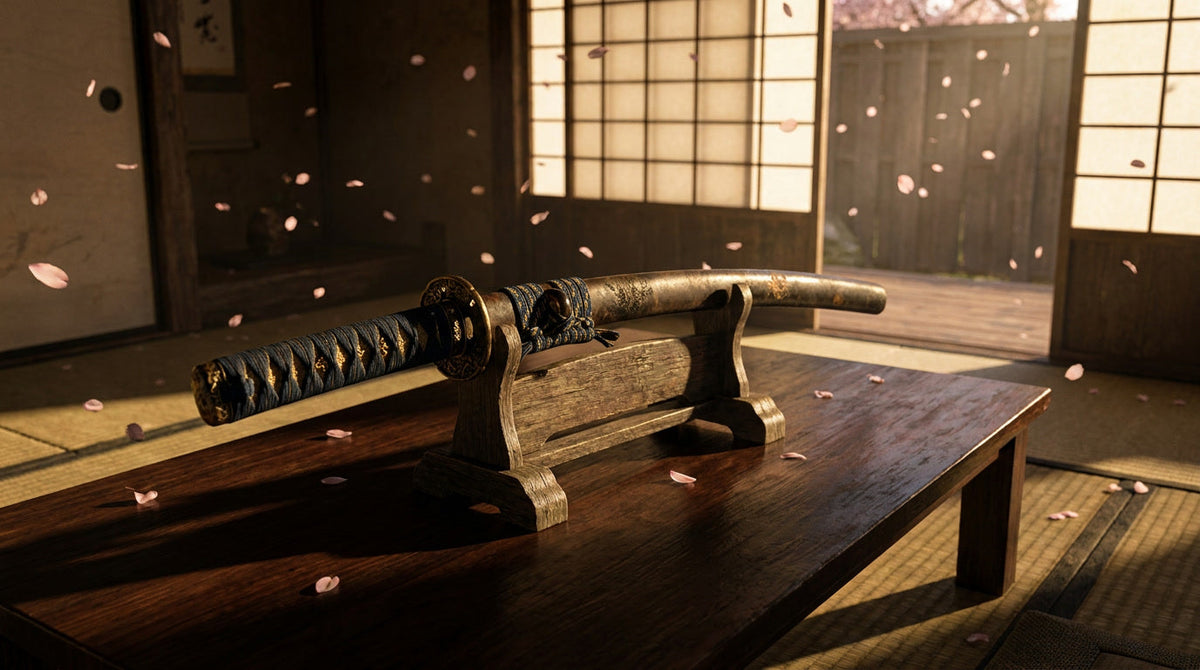
The katana was how the samurai carried their principles into the world. If you want to carry something of that tradition yourself, explore our hand-forged collection - each blade built with the discipline and craftsmanship that Bushido demands.
To understand the warriors who lived this code, read our guide to famous samurai. To understand their swords, start with our history of the katana.
The way of the warrior is found in dying. But living by it - that's the real challenge.
Carry the Code
Hand-forged katanas inspired by the warriors who shaped Japanese history.

Share:
The 10 Most Iconic Katanas in Anime
Miyamoto Musashi: The Greatest Swordsman Who Ever Lived