

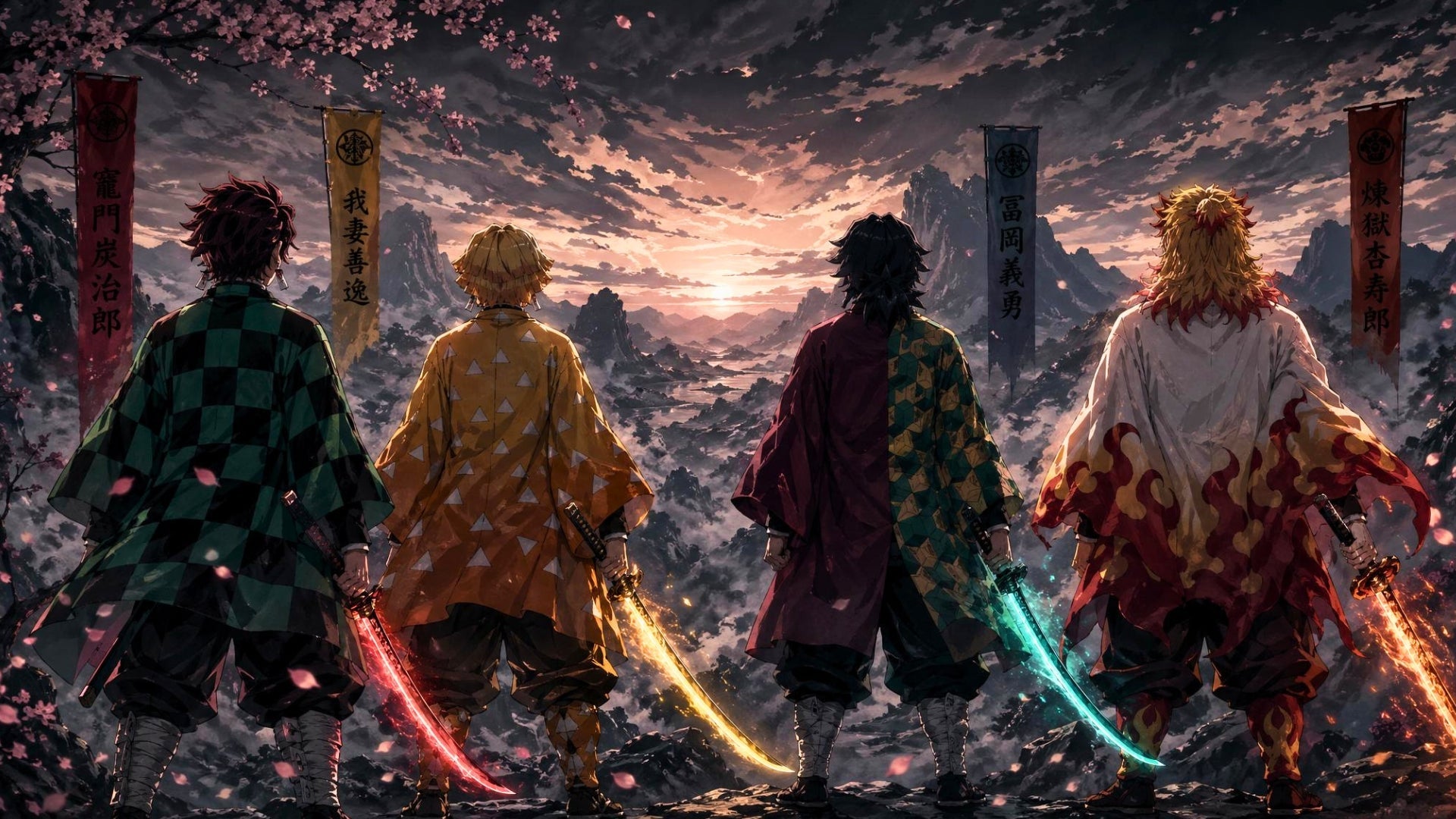
The moment Tanjiro Kamado grips his first Nichirin sword, the blade turns black, and his swordsmith, Hotaru, is furious. Black is the rarest color. The most misunderstood. And historically, every Demon Slayer who wielded a black blade died young. Of course, Tanjiro proceeds to do the opposite of dying - he becomes one of the most powerful demon slayers in history.
That scene captures everything that makes Demon Slayer's sword system brilliant: every Nichirin blade changes color based on its wielder's personality, breathing style, and potential. The color isn't just aesthetic - it's destiny, forged into steel.
With the Infinity Castle Arc hitting theaters, now is the perfect time to break down every Nichirin blade color, what each one means, which characters wield them, and how they connect to real-world Japanese swordsmithing.
What Are Nichirin Blades? The Lore Explained
In the Demon Slayer universe, Nichirin blades (日輪刀, Nichirin Tō - literally "Sun Blades") are the only weapons capable of permanently killing demons. They're forged from two special materials - Scarlet Crimson Iron Sand and Scarlet Crimson Ore - found on mountaintops that sit above the clouds, perpetually bathed in sunlight.
Because the raw materials have absorbed centuries of sunlight, Nichirin blades carry that solar energy within them. Decapitating a demon with a Nichirin sword causes the demon to disintegrate - the same way sunlight would destroy them. No other weapon can do this.
After passing Final Selection - the brutal entrance exam for the Demon Slayer Corps - each recruit chooses their ore, which is then forged by a swordsmith from the Swordsmith Village. When the wielder first grips the completed blade, it changes color. That color is permanent and reflects the user's innate affinity for a specific Breathing Style.

The Hashira Blades Forged in Our Workshop
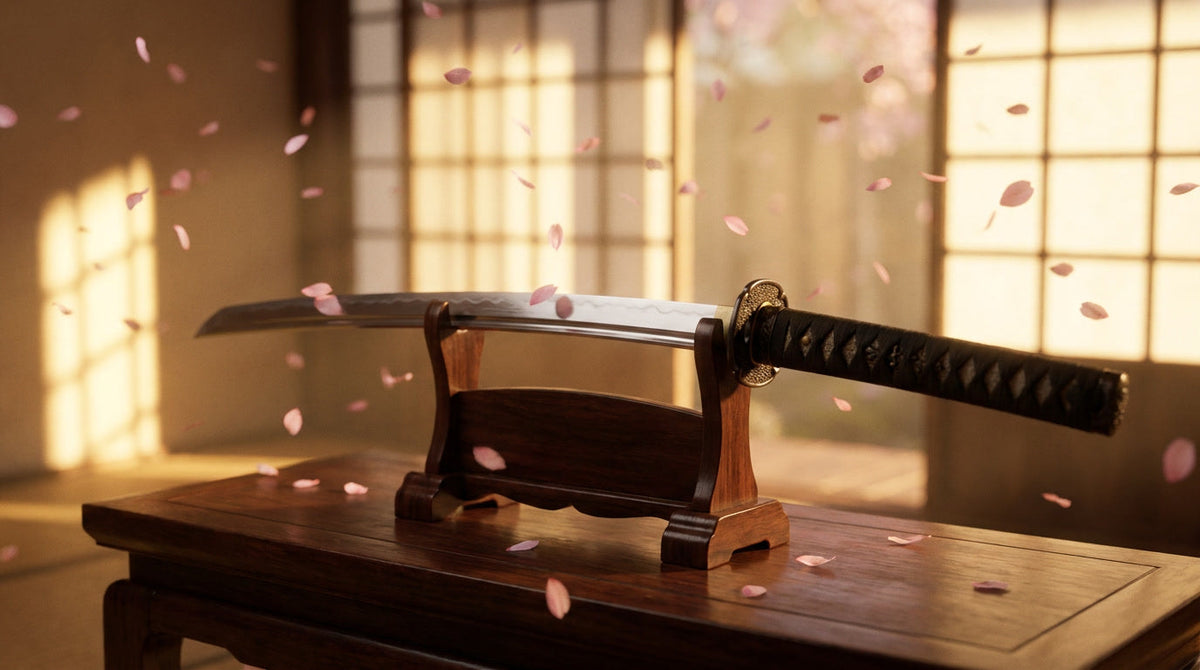
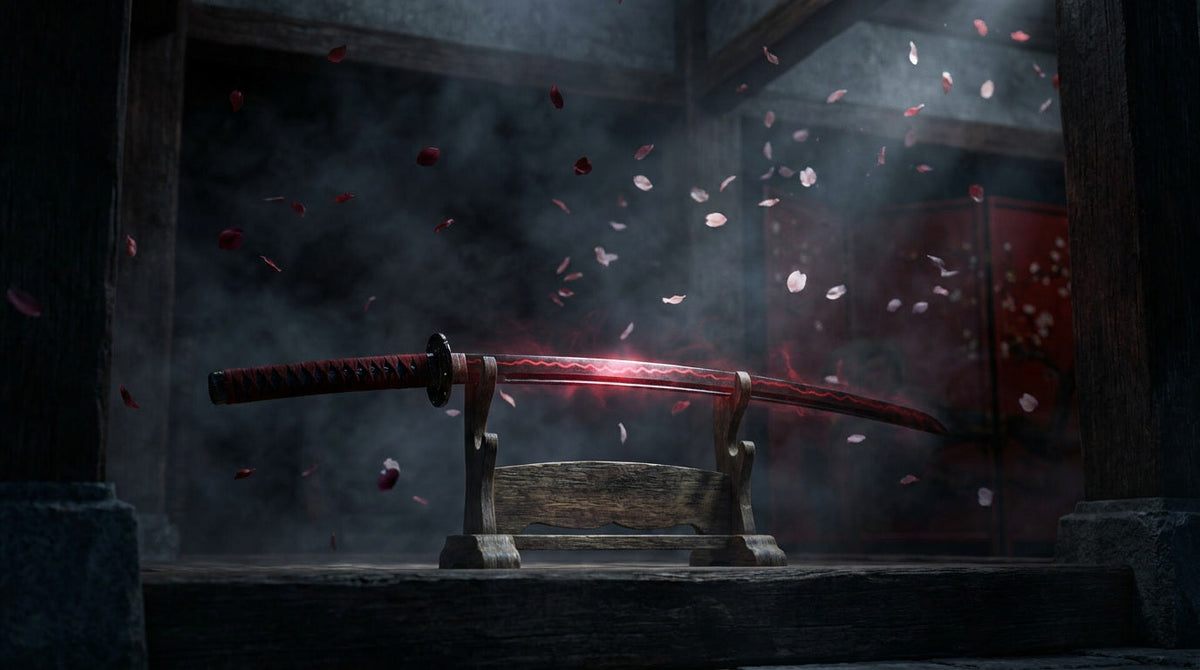
Hand-forged replicas of the Nichirin katanas wielded by the Demon Slayer Corps.


Every Nichirin Blade Color: Complete Guide
| Color | Breathing Style | Wielder | Symbolism |
|---|---|---|---|
| Black | Sun Breathing | Tanjiro Kamado | Mystery, adaptability, absorption of all colors. Rarest color - considered an omen, but actually linked to the most powerful breathing style. |
| Blue | Water Breathing | Giyu Tomioka | Calm, precision, fluidity. Water breathing emphasizes adaptability and flowing technique over brute force. |
| Red / Orange | Flame Breathing | Kyojuro Rengoku | Passion, courage, ferocity. Flame breathing is aggressive and overwhelming - pure offensive power. |
| Yellow | Thunder Breathing | Zenitsu Agatsuma | Speed, lightning, explosive decisiveness. Zenitsu's blade has a lightning-bolt pattern rather than solid color. |
| Green | Wind Breathing | Sanemi Shinazugawa | Freedom, fury, relentless aggression. Wind breathing launches cyclone-like slashing attacks. |
| Grey | Stone Breathing | Gyomei Himejima | Stoicism, immovable strength. Gyomei wields an axe-and-flail, not a traditional katana. |
| White | Mist Breathing | Muichiro Tokito | Purity, transcendence, death. White represents both holiness and mortality in Japanese culture. |
| Pink | Love Breathing | Mitsuri Kanroji | Passion, flexibility, emotion. Mitsuri wields a whip-like blade - as unconventional as her personality. |
| Light Pink | Flower Breathing | Kanao Tsuyuri / Kanae Kocho | Innocence, grace, quiet determination. A derivative of Water Breathing with elegant, precise technique. |
| Lavender | Insect Breathing | Shinobu Kocho | Poison, precision, lethality through subtlety. Shinobu's blade is a stinger that injects wisteria poison. |
| Lavender (twisted) | Serpent Breathing | Obanai Iguro | Unpredictability, precision. His blade physically bends and curves like a snake. |
| Indigo-Grey | Beast Breathing | Inosuke Hashibira | Instinct, wildness, self-taught brutality. Inosuke dual-wields chipped blades - deliberately jagged. |
Tanjiro's black blade was considered a bad omen because historically, every Demon Slayer who wielded one died young - meaning nobody lived long enough to discover its true potential. In reality, black represents Sun Breathing - the original technique from which all other Breathing Styles derive. Tanjiro's "unlucky" color was actually the rarest and most powerful.
The Red Blade: The Ultimate Weapon Against Muzan
Beyond the personal colors, there's one blade state that transcends all others: bright red. This isn't a permanent color - it's a temporary transformation that occurs during the most intense moments of combat.
A Nichirin blade turns bright red when its wielder raises the blade's temperature through extreme grip strength, overwhelming willpower, or the use of Nezuko's Blood Demon Art. The red blade gains a devastating ability: it hampers demon regeneration, making wounds significantly harder to heal. Against Muzan Kibutsuji, this is the difference between a wound that heals in seconds and one that lingers.
In the final battle of the manga, four Hashira and Tanjiro all achieve the red blade simultaneously, a moment of collective willpower that symbolizes the unity of all Breathing Styles converging back to their origin: Sun Breathing, the technique created by Yoriichi Tsugikuni, the strongest Demon Slayer who ever lived.
Yoriichi Tsugikuni - the inventor of all Breathing techniques - wielded a blade that started black and turned red during combat. He was so powerful that Muzan, the Demon King, experienced genuine fear for the first and only time in a thousand years when facing him. Yoriichi's blade was later found inside the training doll Yoriichi Type Zero - over 300 years after his death.
Unique Nichirin Weapons: Not All Demon Slayers Use Katanas
While most Demon Slayers wield a standard katana, several Hashira carry weapons that break the mold entirely:
| Character | Weapon | Description |
|---|---|---|
| Gyomei Himejima | Axe + Chain + Flail | No blade at all. A massive stone axe connected by chain to a spiked flail. The strongest Hashira uses the most unconventional weapon. |
| Mitsuri Kanroji | Whip-like sword | An extremely thin, flexible Nichirin blade that moves like a whip. Only someone with Mitsuri's unique muscle density can wield it. |
| Shinobu Kocho | Stinger blade | A modified sword with a needle-like tip designed to inject wisteria poison. Shinobu lacks the physical strength to decapitate demons, so she kills them chemically. |
| Tengen Uzui | Dual cleavers | Two massive Nichirin cleavers connected by a chain. Designed for Sound Breathing's explosive, flamboyant fighting style. |
| Inosuke Hashibira | Dual chipped katanas | Two standard Nichirin blades deliberately chipped and jagged. Inosuke uses them to "saw" through demons with his self-taught Beast Breathing. |
How Nichirin Blades Connect to Real Japanese Swords
Demon Slayer's sword system is deeply rooted in real Japanese swordsmithing tradition - with some creative liberties. Here's what the anime gets right and where it diverges:
What's Real
The forging process: Nichirin blades are forged by dedicated swordsmiths in a hidden village - mirroring the real tradition where Japanese swordsmiths (katana-kaji) train for 5-7 years and forge blades using closely guarded techniques. Hotaru's obsessive dedication to his craft is authentic to real swordsmithing culture.
The katana design: Most Nichirin blades are standard katanas - curved, single-edged, with a tsuba (handguard), tsuka (handle), and saya (scabbard). The proportions, grip, and carry style are accurate to real katana design. Our katana anatomy guide maps every component.
The swordsmith-warrior relationship: In feudal Japan, samurai had personal relationships with their swordsmiths - exactly like Tanjiro and Hotaru. A good swordsmith was as valued as a good retainer.
What's Fictional
Color-changing blades: Real katanas don't change color based on the wielder. However, the concept parallels the real hamon, a visible pattern unique to each blade created by differential hardening. Our hamon guide explains how every real blade has its own "fingerprint."
Scarlet Crimson Iron Sand: Fictional. Real katanas are forged from tamahagane - steel smelted from ordinary iron sand (satetsu) in a tatara furnace. No sunlight-absorbing properties required.
Demon-killing properties: Obviously fictional. But the idea that a blade's material and forging process define its power is very real - it's the entire foundation of our steel comparison guide.
Frequently Asked Questions
Why did Tanjiro's sword turn black?
Black represents Sun Breathing - the original Breathing Style from which all others derive. It was considered a bad omen because previous black-blade wielders died young, but this was simply because the connection to Sun Breathing had been lost for centuries. Tanjiro's blade mirrors Yoriichi Tsugikuni's, the strongest Demon Slayer in history.
What is the rarest Nichirin blade color?
Black is the rarest. It's associated with Sun Breathing, which is the ancestor of all other techniques. Because so few Demon Slayers have wielded black blades, and those who did died before the connection could be studied - it remained the least understood color until Tanjiro.
What is the strongest Nichirin blade?
The bright red blade - achieved by raising a Nichirin sword's temperature through extreme grip strength, Demon Slayer Mark activation, or Nezuko's Blood Demon Art. Red blades hamper demon regeneration and are the most effective weapon against upper-rank demons and Muzan. It's not a permanent color but a combat-activated state.
Are Nichirin swords based on real Japanese katanas?
Yes - the design, proportions, and terminology are based on real katana. The forging culture (dedicated swordsmiths, personalized blades, the Swordsmith Village) closely mirrors real feudal Japanese sword culture. The color-changing and demon-killing properties are fictional, but the foundation is authentic.
Can I buy a real Demon Slayer sword?
You can buy hand-forged replicas made from real high-carbon steel with full-tang construction. These are functional swords inspired by the anime designs, not toys or wall-hangers. Our Demon Slayer collection features Tanjiro, Rengoku, Zenitsu, Giyu, and more - each built to real katana standards.
The Inosuke replica pair brings the character's notched silhouette into a steel display set. For a smaller format, compare the separate Tanjiro V3 miniature; its size and finish are those shown on its own product page.
Own a Blade from the Series
Nichirin blades are fiction. But the katana behind them is real, and so are ours. Every Demon Slayer replica in our collection is hand-forged from high-carbon steel with full tang, a real edge, and the iconic designs from the series.
Browse the Demon Slayer katana collection - Tanjiro's black blade, Rengoku's flame sword, Zenitsu's thunder katana, and every Hashira represented.
New to swords? Our beginner's guide helps you pick between display and functional grades.
The color of the blade reveals the soul of the wielder. What color is yours?
Claim Your Nichirin Blade
Each katana captures the soul of a Hashira - built to be displayed, handled, and admired.
Share:
Famous Samurai and Their Legendary Katanas: The Complete Guide
Zoro's Swords Explained: Every Blade in One Piece